







DOE to resume Semirara coal mine auction under new rules
Published Jul 20, 2026 12:00 am
|
Updated Jul 18, 2026 01:38 pm


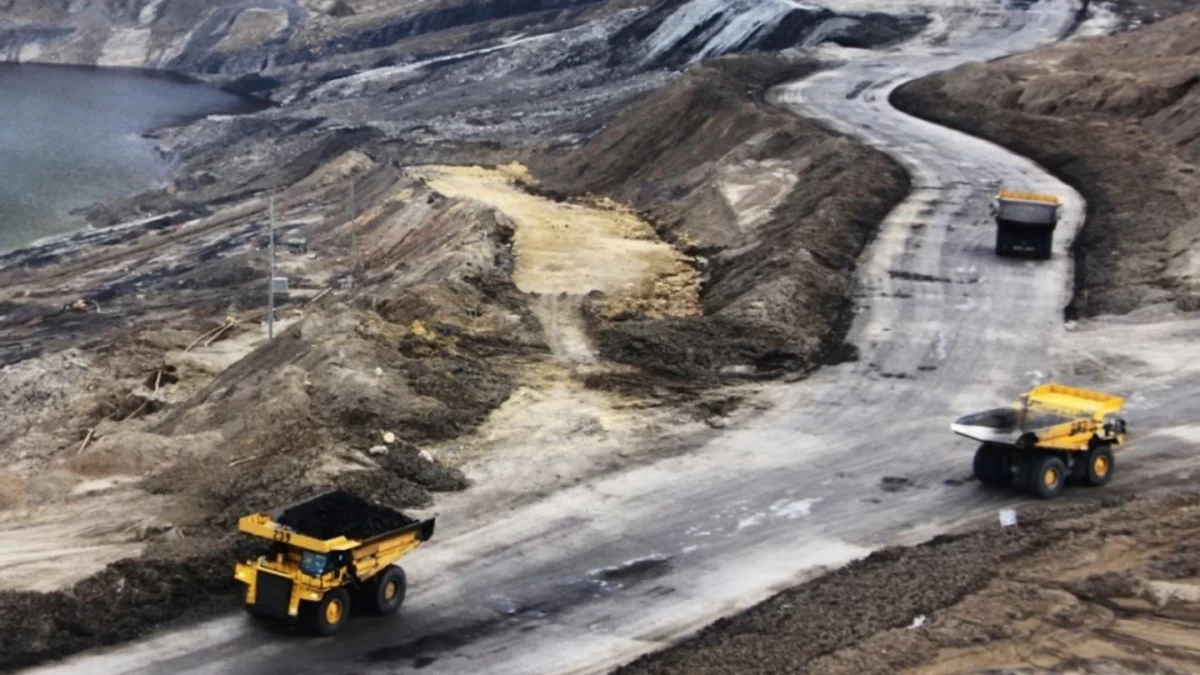
One of the coal pits of Semirara Mining and Power Corp. (SMPC), the country’s largest coal producer, is in Caluya town, Antique province. (Tara Yap I Manila Bulletin)
The Department of Energy plans to resume the competitive auction for the country’s largest coal reserve on Semirara Island before the end of July, following a regulatory pause to draft new guidelines for brownfield assets.
Energy Secretary Sharon Garin said the government has temporarily put the multi-block coal bidding round on hold while calibrating its framework for existing, operational assets.
Garin stated that the agency is collaborating with the Department of Finance, the Department of Economy, Planning, and Development, and the Department of Environment and Natural Resources to establish rules specifically tailored for contract renewals and extensions of mature resource blocks.
Unlike untapped greenfield frontiers, Semirara presents a unique investment profile due to its proven, decades-long operational history. The upcoming bidding process covers roughly 18,000 hectares of coal-producing tracts across the country.
The marquee offering remains the long-awaited Antique block on Semirara Island, but the agency is also pushing to award frontier exploration blocks in Amulung and Iguig within the Cagayan province, alongside tracts in Benito Soliven, Naguilian, and Cauayan in Isabela.
The regulatory recalibration coincides with escalating friction between the government and the incumbent operator. Semirara Mining & Power Corp. (SMPC) filed a petition for declaratory relief in a Makati court to block the DOE’s directives.
The government has ordered the Consunji-led miner to turn over exhaustive geological data, technical materials, and asset inventories so that prospective competitors can evaluate the blocks.
SMPC argued that the DOE’s demands infringe upon its proprietary rights, given that its current Coal Operating Contract No. 5 remains legally valid until July 2027.
The country’s dominant coal producer also asserted that rival bidders must generate their own technical feasibility studies rather than leveraging the extensive infrastructure, specialized dewatering pumps, and technical models developed through billions of pesos in private capital.
While the DOE maintained that assets become state property once a contractor recovers its initial capital expenditure, Garin downplayed the litigation’s threat to the policy timeline, noting that the legal dispute will proceed independently in court and will not derail the government’s auction schedule.
The DOE expects to conclude the mandatory public consultations and finalize the revamped bidding framework within a matter of weeks.