






 Philippines
National
Philippines, OECD push stronger public finance to build resilient communities
Philippines
National
Philippines, OECD push stronger public finance to build resilient communities
Philippines, OECD push stronger public finance to build resilient communities


At A Glance
- The Philippines and the OECD are holding a four-day mission to identify ways to strengthen public finance for climate resilience and sustainable development.
- Government officials said climate-responsive budgeting, stronger governance, and better coordination are needed to improve disaster resilience.
- Local governments presented best practices that could be replicated to strengthen resilience nationwide.
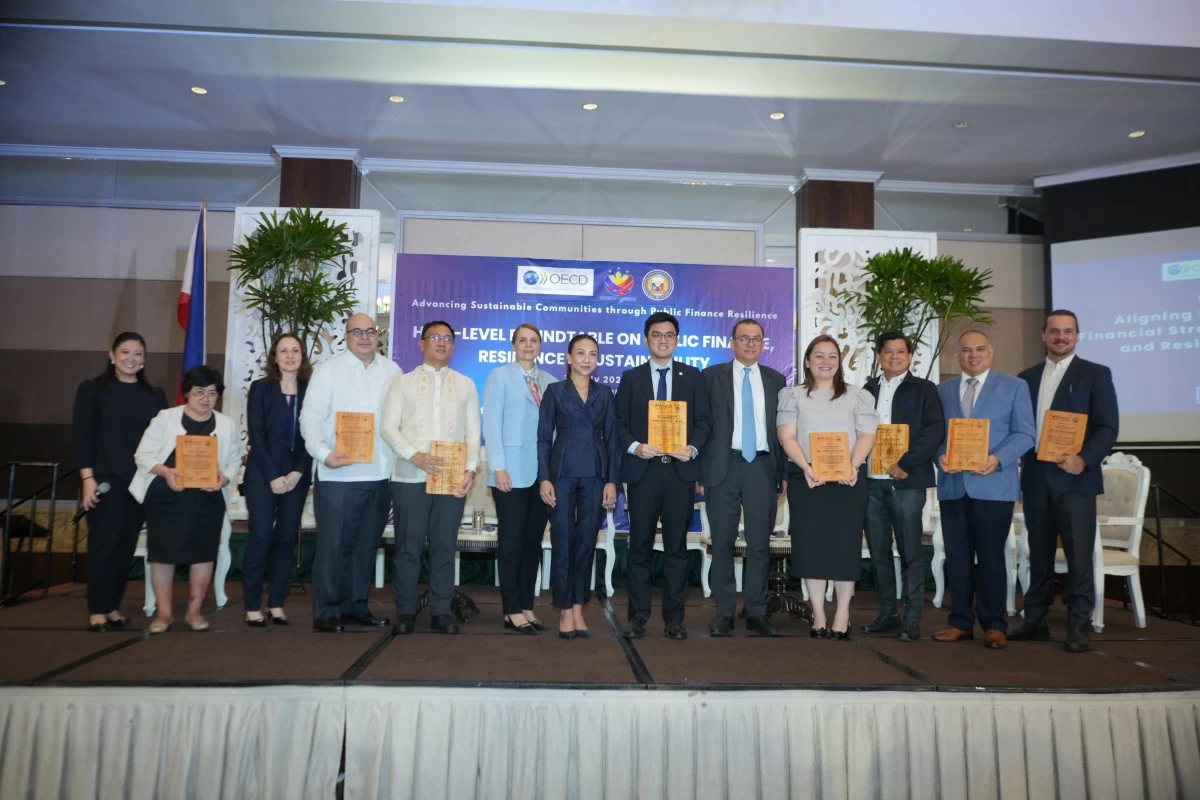
The Philippines and the Organisation for Economic Co-operation and Development (OECD) are strengthening cooperation on public finance reforms to help communities better prepare for disasters and climate change during a four-day mission in Manila.
The mission, jointly organized by the Office of the Presidential Adviser for Sustainable and Resilient Communities (OPASRC) and the OECD under a European Union-funded project, held from July 13 to 16, brought together government officials, local leaders, development partners, financial institutions, the private sector, civil society, and academia.
Presidential Adviser for Sustainable and Resilient Communities Christina Garcia Frasco said the initiative supports President Marcos' priority of building sustainable and resilient communities through stronger public finance, governance, and collaboration.
"Advancing sustainable and resilient communities is among President Ferdinand R. Marcos Jr.'s foremost priorities because resilience is ultimately about people," she said.
The first two days of the mission were devoted to technical consultations on how public finance can better support resilience and sustainable development.
Participants said the Philippines already has strong policy and institutional foundations for climate action but identified opportunities to improve implementation, interagency coordination, climate-responsive financing, local government capacity, accountability, and private sector participation.
OECD Public Governance Directorate Senior Adviser Stéphane Jacobzone said financial resilience depends on sound public financial management, effective institutions, coordination across levels of government, and transparent reporting.
The consultations informed a high-level roundtable attended by senior government officials, local executives, development partners, and representatives from the private sector and civil society.
Department of Finance Undersecretary Joven Balbosa, representing Finance Secretary Frederick Go, said prudent fiscal management, strategic investments, and a whole-of-government approach are essential to strengthening resilience and protecting development gains.
The Department of Finance also highlighted the government's disaster risk financing strategy, including the use of contingency funds, the People's Survival Fund, and the Local Government Support Fund to strengthen disaster preparedness, response, and recovery.
Department of Budget and Management Secretary Kim Robert de Leon said around 10 percent of the 2026 national budget has been allocated to climate-responsive programs, with the government aiming to increase the share to 12 percent by 2028.
Local government officials presented resilience initiatives, including Bataan's Green Mobility Program, San Francisco, Cebu's community-based Purok System, Del Carmen's mangrove conservation efforts, Tagbilaran City's ecological solid waste management program, and Quezon City's digital disaster risk management initiatives.
Participants said resilience efforts should integrate climate-responsive public finance, resilient infrastructure, social protection, risk-informed land use planning, stronger data systems, and broader access to climate finance.
The OECD mission concluded on July 16, with OPASRC and OECD officials expected to consolidate recommendations and identify areas for continued cooperation on strengthening public finance and resilience in the Philippines.