






Manila Bulletin
 Lifestyle
Health and Wellness
Why diabetes cases keep rising despite medical advances
Lifestyle
Health and Wellness
Why diabetes cases keep rising despite medical advances
Lifestyle
Health and Wellness
Why diabetes cases keep rising despite medical advances
Why diabetes cases keep rising despite medical advances
From healthier habits to early screening, experts explain why prevention should begin long before blood sugar levels rise
Published Jul 15, 2026 01:42 pm



FIGHT AGAINST DIABETE (from left)Dr. Jon-Benedict Pimentel, Servier Medical Affairs manager; Dr. Elaine Cunanan, president, Philippine College of Endocrinology, Diabetes and Metabolism (PCEDM); Aymeric Menard, general manager and Managing Director, Servier Philippines; Dr. Augusto Litonjua, founder and president, Philippine Center for Diabetes Education Foundation (PCDEF); Corazon Lim, vice president for Merchandising, Mercury Drug Corporation; and Kulay Malazarte, Commercial director, Servier Philippines. (Photo: Servier Philippines)
According to the latest data from the Philippine Statistics Authority, diabetes remains among the top five leading causes of death in the Philippines. Despite decades of advances in medical science and treatment, the number of cases continues to rise, prompting an important question: Why are more Filipinos still dying from a disease that is largely preventable and manageable?
This was one of the key issues raised during the media briefing at the 50th anniversary celebration of Servier Philippines held on July 4, 2026, at the Fairmont Hotel in Makati City. Servier, a global pharmaceutical company and one of the pioneers in bringing oral anti-diabetes medication to the Philippines, gathered medical experts to discuss the country's growing diabetes burden.
According to Dr. Augusto Litonjua, founder and president of the Philippine Center for Diabetes Education Foundation, Inc., healthcare has become too focused on reacting to elevated blood sugar levels instead of preventing the disease before it develops.
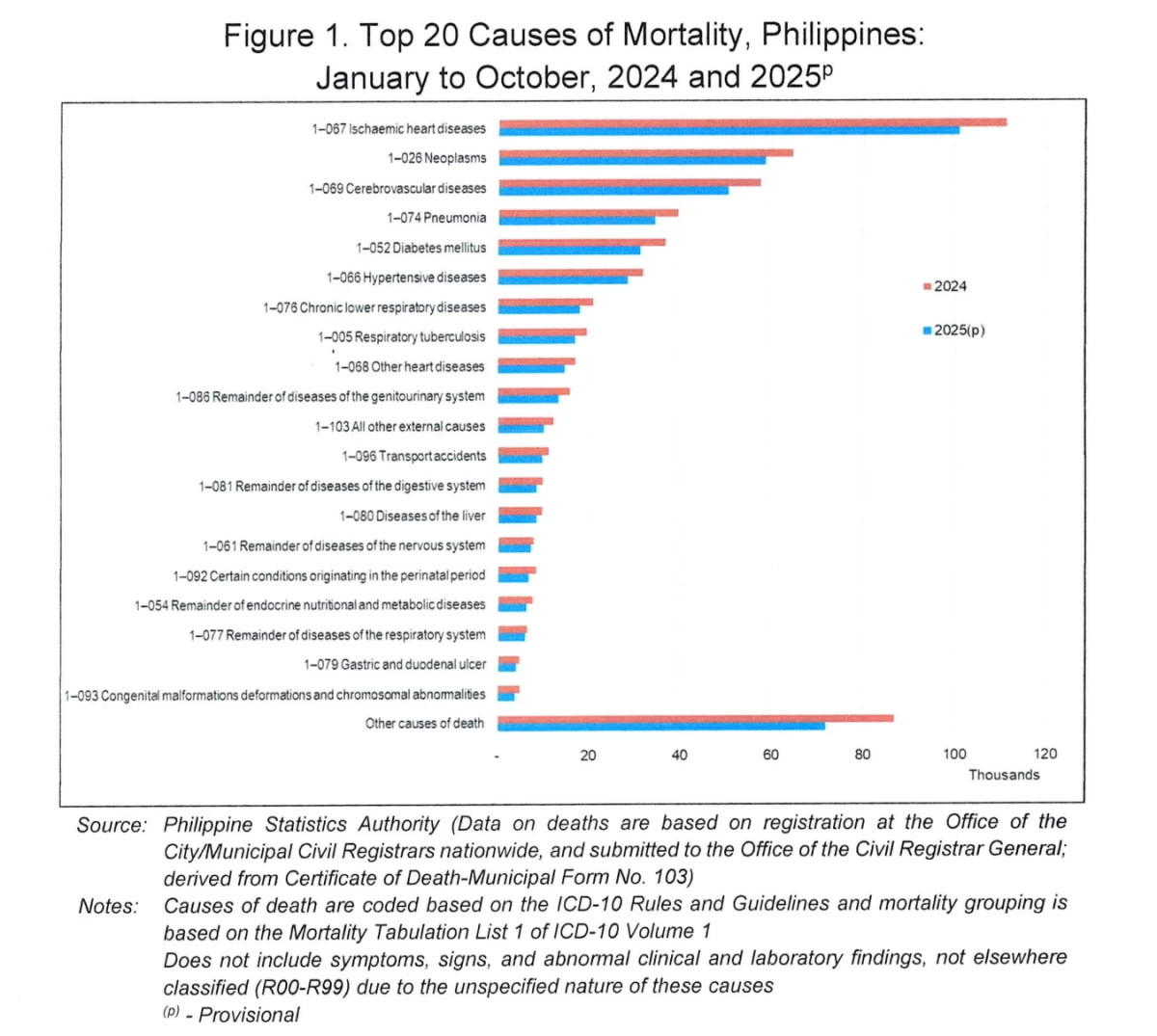
2025 Causes of death in the Philippines (Provisional as of 28 February 2026) (Photo: PSA)
"We are treating it incorrectly….we are probably doing it wrong," he said. "We are waiting for the blood glucose to go up and treat that. We are waiting for the blood glucose to go up, although not necessarily diabetic levels. And we are treating that. And that is wrong. We are not preventing diabetes."
Dr. Augusto cited recommendations from the Lancet Commission, which emphasize identifying and treating people who are already at high risk of developing diabetes, even if their blood sugar levels remain within the normal range. These include people living with obesity, women who previously had gestational diabetes, children born to mothers with gestational diabetes, individuals with hypertension, and those with a family history of the disease.
"In other words, those who have very normal glycemic levels at this time, but who have risk factors for diabetes, this is when we should diagnose them, and this is when we should treat them," he explained.
For Dr. Elaine Cunanan, president of the Philippine College of Endocrinology, Diabetes, and Metabolism, access to healthcare also plays a major role in diabetes-related deaths. Based on her clinical experience, she said diabetes complications are more commonly seen among lower-income Filipinos who often seek medical care only after their condition has become severe.
"I see these numbers occurring more in those in the class CDE or D or E, particularly because they tend to come in late. They don't know that they have diabetes. They are usually the ones whose sugars are not controlled," she said. "They come into the hospital already in a severe situation. So of course, this is just based on my experience; I don't have the actual numbers."
Dr. Elaine encouraged Filipinos to maximize government health programs, particularly free screening services available through PhilHealth-accredited facilities. She stressed that early detection, combined with healthy lifestyle choices, remains one of the most effective ways to reduce diabetes complications.
"I think the government is now trying to focus on solving these issues, particularly for those who cannot afford to be screened early, and even those who cannot afford the medications to control their sugar," she said. "We have universal healthcare and PhilHealth benefits, so hopefully this is a start. Some tests like the FBS, HBA1C, these are tests that are easily accessible; they're actually part of the PhilHealth package. Our patients can actually avail them for free in the different institutions that we're accredited with, so they just need to go there."
Beyond screening, experts also highlighted another challenge: ensuring patients consistently take their prescribed medication. Aymeric Menard, senior managing director of Servier, said medication adherence remains a global issue, even in countries where diabetes treatment is fully subsidized.
"With the broader view worldwide, the country where I come from is France, where the treatments for type 2 diabetes are fully reimbursed, 100 percent. Nevertheless, we still see only half of the patients taking their medicine every day properly," he shared. "So adherence is as low as 50 percent despite full availability and full reimbursement. I think if we want to continue to improve, adherence is an essential component as well in order to improve outcomes when it comes to type 2 diabetes. Same as hypertension, every chronic disease is a silent disease that feels at the beginning you don't see yourself."
For Dr. Elaine, preventing diabetes should begin long before adulthood. She emphasized that children should be taught healthy eating habits, regular physical activity, and proper sleep from an early age. She also pointed to today's increasingly sedentary lifestyle as another contributor to the country's growing diabetes burden, saying that lasting change requires both medical guidance and personal commitment.
"I think that education has to also start early, even as young as they are. So I believe even in our schools, even in elementary, it's not really as inculcated in them," she said. "We as doctors can always try to educate you. But if we, as individuals, don't have that paradigm shift in terms of how we behave, then those activities will actually be useless as well. The best solution there is, as young as they are, even at the kinder elementary stage, gets inculcated in them that, still, the right nutrition, exercise, and good sleep would be the best way forward to prevent diabetes."