







'Moana' is worth the journey
Published Jul 13, 2026 09:23 am


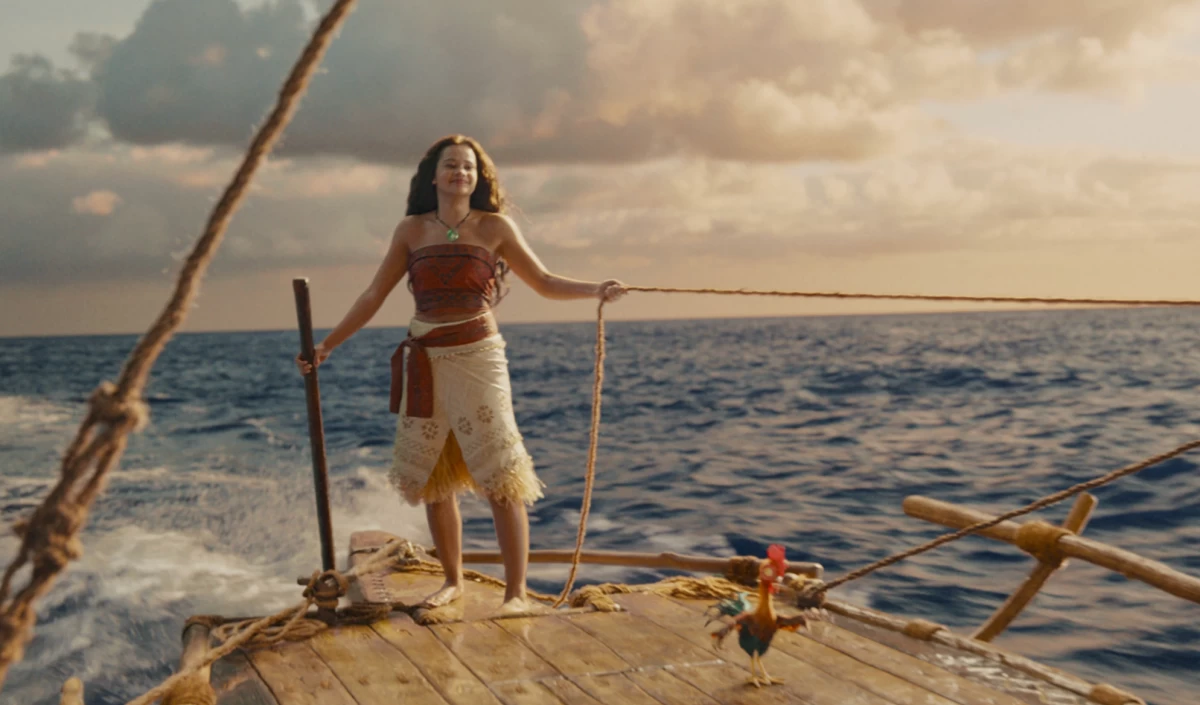
A scene from the film "Moana" (Disney)
Disney's decision to remake "Moana" as a live action film was always going to divide audiences.
The original animated film, released in 2016, remains one of Disney's most beloved modern classics. It has been replayed countless times in homes around the world, and audiences only recently returned to that universe with "Moana 2." Understandably, many questioned whether another version of the same story was really necessary.
After watching the film, I came away with a very different perspective.
I've spent most of my life watching Disney movies. Some I've seen once. Others I've watched so many times I've honestly lost count. That lifelong affection probably makes me one of the easiest people to please when it comes to Disney. Even so, enjoying a Disney film and recommending one are two different things, and I don't automatically recommend a movie simply because it carries the Disney name.
I've heard people say they already know the story, so why watch it again? Knowing the story has never stopped people from enjoying a great retelling. "Cinderella" alone has been told in countless versions across different countries, cultures and generations, and audiences keep coming back — not because they're expecting a different ending, but because every retelling offers a different experience.
That was exactly my experience with "Moana." What surprised me most about the live-action version was that it never tried to replace the animated original. Instead, it reminded me why that original became so special in the first place.
One concern many fans had was whether Disney would make unnecessary changes to the story. I never felt that happened. The film remains remarkably faithful to the animated version. Its themes are still centered on family, courage, identity, friendship and finding your place in the world. More importantly, I never felt like the story was trying to make a statement beyond what "Moana" has always been. It respected the heart of the original, and I think longtime fans will appreciate that.
I already knew the songs, the characters and the ending, yet that familiarity never took away from the film. If anything, it made me appreciate how carefully Disney handled a story so many people already love. Rather than trying to reinvent it, the filmmakers chose to bring that familiar world to life in a different medium, and for me, that made all the difference.
That difference is most obvious in how the film looks.
The visuals are breathtaking, but what impressed me even more was that every beautiful moment carried an emotion with it. That's what separates "Moana" from so many other visually spectacular movies. Normally, when people recommend watching a film in 3D, they're talking about the effects — they want you to notice objects flying toward the audience or marvel at how realistic everything looks. "Moana" certainly looks beautiful, but I don't think that's why the 3D works so well. It works because every major visual moment means something.
When the islands slowly lost their life, I felt it. When they came alive again, I felt that too. Gramma Tala's return as the stingray wasn't just another beautiful scene — it reminded me of everything she represented in Moana's life and why she had become the emotional heart of the story.
Then came my favorite sequence in the entire movie. When the ancient wayfinders appeared around Moana, encouraging her to keep moving forward, I honestly forgot I was watching a movie. The combination of the visuals, the music and the emotion created one of those rare moments where all I could do was sit back and smile.
It reminded me of the first time Disney made us stop and say "wow." I remember watching "Beauty and the Beast" and being amazed by the sweeping library and ballroom scenes. I remember "Tarzan" making us feel like we were flying through the trees. Technology has come a long way since then, and we've all seen incredible visual effects in the years that followed. Even so, "Moana" gave me that feeling again — not because it was trying to outdo every movie that came before it, but because it remembered that spectacle by itself isn't enough. Every beautiful image had a purpose. Every major visual moment was connected to a feeling, and I think that's why the movie stayed with me long after the credits rolled.
If you've decided that Disney's live-action remakes simply aren't for you anymore, I understand. Some have worked better than others, and everyone has their favorites. All I would ask is that you give "Moana" a chance before deciding where it belongs on your list. Watch it in 3D if you can — this is one of those movies where the format genuinely adds something to the experience. It isn't there simply to impress your eyes. It draws you into Moana's world and makes you feel like you're part of the journey.
None of it would work, though, without the cast carrying it.
Catherine Lagaʻaia had the difficult task of bringing one of Disney's most beloved modern princesses to life, and I honestly don't think they could have picked anyone better. She's cute without trying too hard, instantly likable, sings beautifully and gives Moana exactly the warmth and determination she needs. Before long, I wasn't comparing her to the animated version anymore. She simply became Moana.
Dwayne Johnson slips back into Maui as though he never left. I'll admit I laughed the first time I saw him with all that hair, because we're so used to seeing The Rock without it. Fortunately, that thought disappears pretty quickly. Before long, you're no longer looking at Dwayne Johnson. You're watching Maui.
The person who stayed with me the longest, though, was Rena Owen as Gramma Tala. In the animated movie, Gramma Tala was the heart of Moana's journey — her biggest source of encouragement, the person who believed in her long before Moana believed in herself. She also had that quiet sense of humor that made her impossible not to love. Rena Owen may not look exactly like the animated Gramma Tala, but somewhere between her voice, the expression in her eyes and that gentle sense of humor, I stopped noticing. She captured the spirit of the character so well that, for me, she became one of the highlights of the entire movie.
The smaller characters hold up too. I enjoyed every scene with the Kakamora — they were just so entertaining. The ocean was every bit as adorable as I remembered from the animated movie; it's amazing how a playful little wave with no dialogue can have so much personality. And Heihei... well, he's still Heihei. If you loved him ten years ago, you're going to love him now.
A couple of practical notes. Te Kā can be a little scary for younger children, especially in 3D — if your kids have already seen the animated movie, they'll probably know what's coming, but there is one jump scare and a few tense moments worth mentioning. As for the music, I was so caught up in everything happening on screen that, looking back, I honestly can't tell you if there were many new songs. If I remember correctly, I only noticed one Hawaiian chant, but I could easily be wrong — I was paying much more attention to what I was seeing than trying to keep track of the soundtrack.
I walked into the theater hoping to enjoy another Disney movie. I walked out understanding why this one was made.
Ten years after the original, revisiting Moana's world didn't feel unnecessary at all. It felt like coming home to an old friend, only to discover there was still something new to see.
There's really only one word for it. Wonderful. I've been trying to think of a better one ever since I left the theater, and I still can't.
By the end of the film, I wasn't questioning why Disney made a live-action "Moana." I was simply grateful they did. (Margaret Rose Siytangco)