






Manila Bulletin
 Philippines
National
House think tank says Philippines' economic growth can be sustained if...
Philippines
National
House think tank says Philippines' economic growth can be sustained if...
Philippines
National
House think tank says Philippines' economic growth can be sustained if...
House think tank says Philippines' economic growth can be sustained if...
Published Jul 5, 2026 07:45 pm


At A Glance
- The House think tank says the Philippines' economic growth can be sustained if Congress passes pending LEDAC bills.
- The House has already approved 26 of 52 measures, while amendments to the AMLA and Bank Secrecy Law are identified as attainable reforms this year.
- CPBRD chief Novel Bangsal stresses that progress now depends on the Senate, which must fast‑track the remaining priority bills despite its role as an impeachment court.
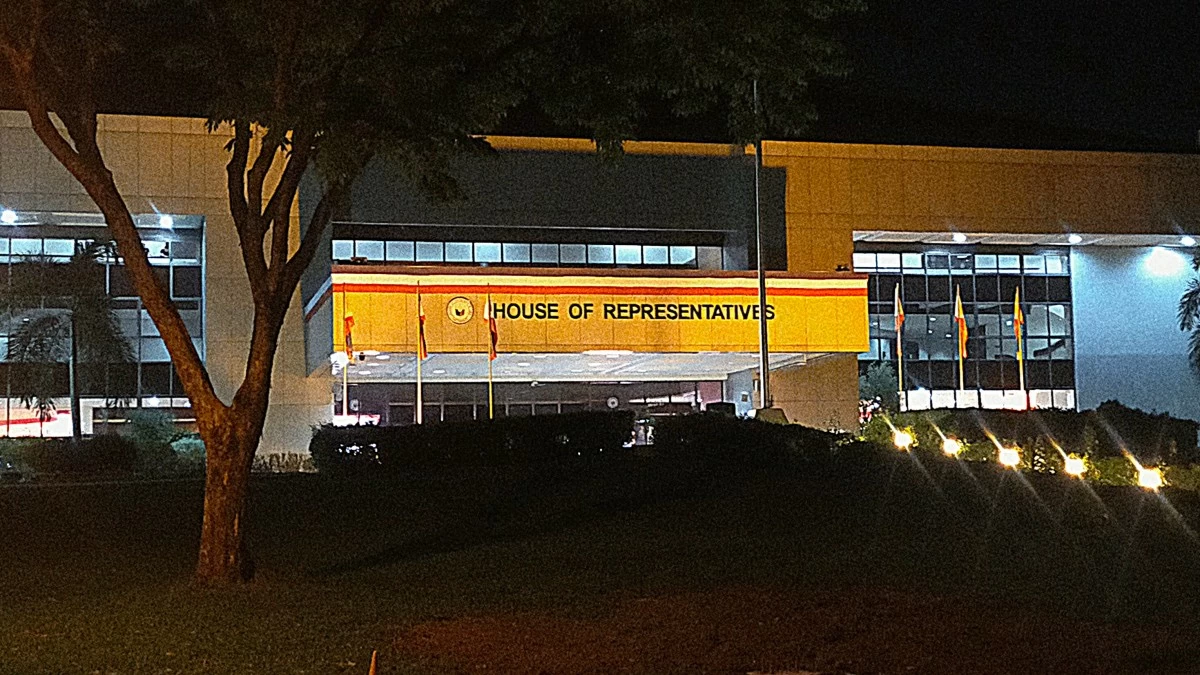
The House of Representatives (Ellson Quismorio/ MANILA BULLETIN)
The House of Representatives' own think tank reckoned that the Philippines' economic growth can be maintained and even bolstered if the bicameral legislature manages to pass pending priority measures of the Marcos administration.
These measures have been grouped together as Legislative Executive Development Advisory Council (LEDAC) bills, with President Marcos himself serving as head of the council.
Congressional Policy and Budget Research Department (CPBRD) Executive Director Novel Bangsal pointed out over the weekend that in Congress (House and Senate), it's the House that had significant accomplishments as far as the LEDAC bills were concerned.
“So ang pagkakaalam ko kasi doon sa mga LEDAC bills, Halos lahat na nung mga LEDAC priority bills ay pasado na sa House,” said Bangsal, the head of this think tank.
(So as far as I know, nearly all LEDAC bills have been passed by the House.)
Under the leadership of Speaker Isabela 6th district Rep. Faustino “Bojie” Dy III and House Majority Leader Ilocos Norte 1st district Rep. Sandro Marcos, the House of Representatives has already approved 26 of the 52 LEDAC priority measures, while several of the remaining bills are already in the advanced stages of deliberation.
Bangsal pointed to the LEDAC agenda as a legislative track that can help sustain the country’s economic momentum, especially after the Philippines reached upper-middle income country status and posted continued gains in growth and revenue performance.
“So again...so actually ‘yung ball game nasa Senado na para if ever sana ‘yung mga batas na kailangan,” Bangsal said.
(So again...the ball game is actually at the Senate, the passage of the proposed laws depends on it.)
The economist identified two proposed laws as attainable reforms that could still be enacted within the year if given priority by the so-called upper chamber.
“May mga amendment sa AMLA (Anti-Money Laundering Act), amendment sa Bank Secrecy Law. May mga low-[hanging] fruits na talagang kung kaya, within the year na ano pwede lang ipasa to be approved, to be signed by the President by this year,” noted the CPBRD chief.
(There are amendments to the AMLA, amendments to the Bank Secrecy Law. There are low‑hanging fruits that, if possible, can be passed within the year to be approved and signed by the President this year.)
For Bangsal, the next stage of legislative work will depend heavily on how fast pending LEDAC measures can move in the Senate, where several House-approved bills are awaiting action.
This may be easier said than done, given that the Senate will also as an impeachment court in the coming months.
“So again, it’s up to the Senate para ma-fast-track nila yung mga LEDAC priority bills ng President,” he emphasized.
As of June 3, the House reported that the 52 LEDAC priority measures were in different stages of legislative action, with one measure already enacted into law, one with a ratified conference committee report, three under conference committee, 21 approved on third reading, one under the Calendar of Business, one for filing of committee report, nine approved at the committee level pending action by the Committee on Appropriations and 15 still under technical working group (TWG) or committee deliberation.