






Manila Bulletin
 Philippines
National
Anticipation is key: Philippines should be a technological trailblazer, says Poe
Philippines
National
Anticipation is key: Philippines should be a technological trailblazer, says Poe
Philippines
National
Anticipation is key: Philippines should be a technological trailblazer, says Poe
Anticipation is key: Philippines should be a technological trailblazer, says Poe
Published Jul 2, 2026 11:54 pm


At A Glance
- Rep. Brian Poe urges the Philippines to take an active role in shaping global norms on emerging technologies instead of just adopting foreign policies.
- He stresses the importance of anticipating rapid advances in AI, biotechnology, quantum computing, and robotics, highlighting science diplomacy as key to ensuring these benefit society.
- Poe's participation in the Geneva Science Diplomacy Program reinforced the value of international cooperation, noting that even small countries matter in multilateral negotiations.
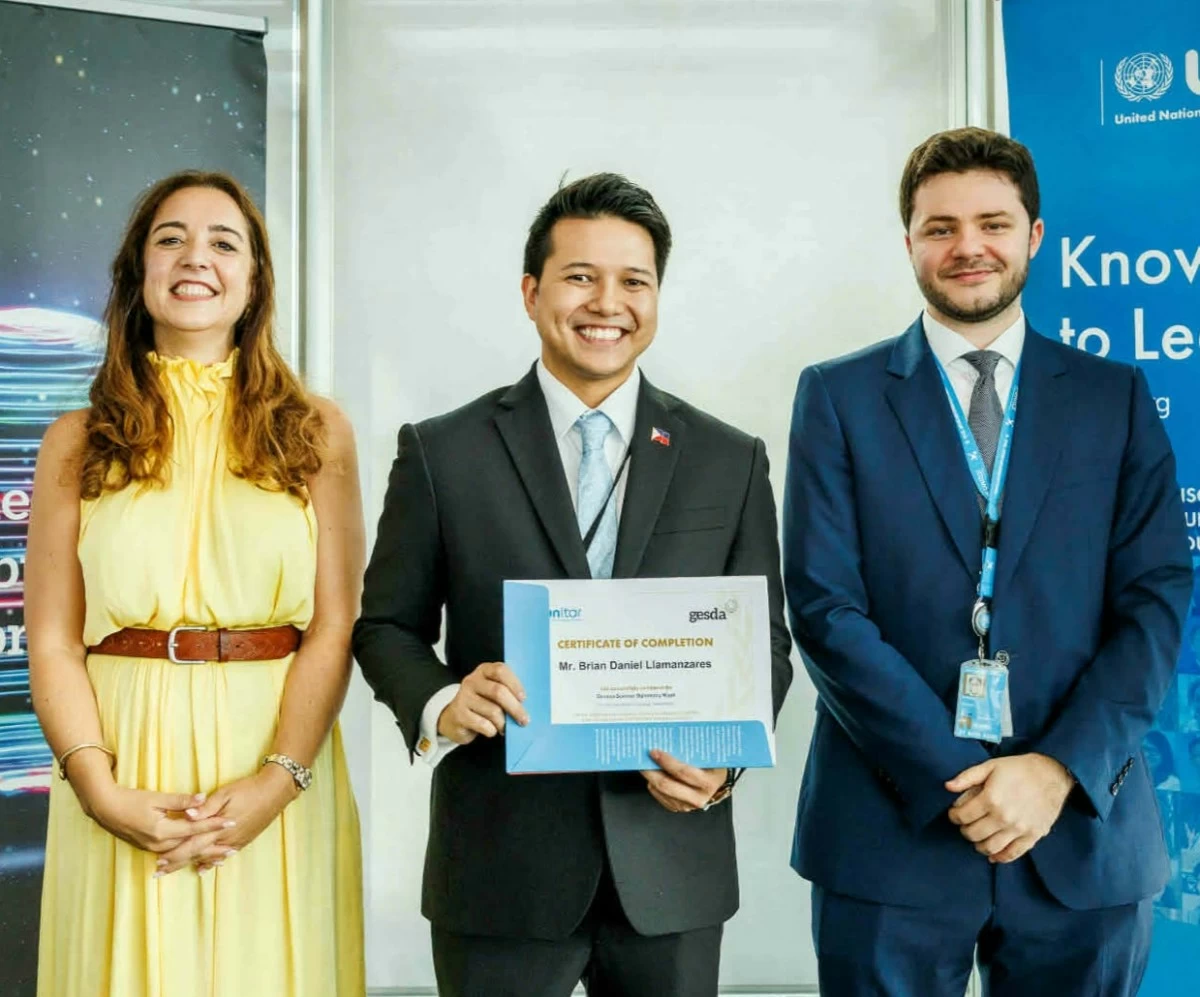
FPJ Panday Bayanihan Party-list Rep. Brian Poe (center) receives his Geneva Science Diplomacy Program certificate (Contributed photo)
The Philippines should play a more active role in shaping global discussions on emerging technologies rather than simply adopting policies developed elsewhere.
Thus, said FPJ Panday Bayanihan Party-list Rep. Brian Poe, who recently attended and completed the Geneva Science Diplomacy Program in Switzerland.
Poe, a neophyte solon in the 20th Congress said the program reinforced the need for governments to anticipate technological change rather than simply respond to it.
"One of the greatest challenges facing governments today is not responding to change, but anticipating it. Scientific discovery is advancing at a pace that is transforming societies faster than our institutions can adapt," he said.
He noted that while innovations in artificial intelligence (AI), biotechnology, quantum computing, robotics, and autonomous systems continue to advance rapidly, policymaking often struggles to keep pace.
With this, Poe said the Philippines ought to adopt the mindset of a technological trailblazer.
"The Philippines should not view itself merely as a consumer of technology. We must become an active participant in shaping the global norms that will govern its development and use," said the solon, who hailed from Pangasinan.
Poe says this highlights the growing importance of science diplomacy, which brings together scientists, policymakers, diplomats, industry leaders, and civil society to develop policies that ensure emerging technologies benefit society while addressing shared global challenges.
During one of the program's simulations, Poe also emphasized the value of international cooperation. "No country is too small for multilateral negotiations. Every country counts," he said.
The program was a five-day international event that brought together 35 current and emerging leaders from 23 countries to explore how science, technology, and diplomacy can shape the future of public policy.
Held from June 22 to 26 in Geneva, Switzerland, the Geneva Science Diplomacy Week 2026 is organized by the Geneva Science and Diplomacy Anticipator (GESDA) in partnership with Swiss and global academic and diplomatic institutions.
Participants engaged with experts from the World Health Organization (WHO), the United Nations, the University of Geneva, the Geneva Centre for Security Policy (GCSP), and the European Organization for Nuclear Research -CERN, through discussions on AI, biotechnology, strategic foresight, emerging technologies, international security, and science diplomacy.