






Manila Bulletin
 Philippines
National
Reading is king: Vargas out to make Novaliches a template for e-library success
Philippines
National
Reading is king: Vargas out to make Novaliches a template for e-library success
Philippines
National
Reading is king: Vargas out to make Novaliches a template for e-library success
Reading is king: Vargas out to make Novaliches a template for e-library success
Published May 29, 2026 02:30 am


At A Glance
- Rep. PM Vargas pushes for House Bills 3752 to 3765, which establish cost‑effective e‑libraries in barangays, starting with a pilot program in Novaliches to improve Filipino students' reading skills.
- He cites alarming data from EDCOM II and PISA, showing nearly half of Grade 3 students and 76 percent of 15‑year‑olds fail to meet basic reading standards.
- The bills update the Philippine Library Law, tasking DILG and barangays to set up and maintain digital hubs.
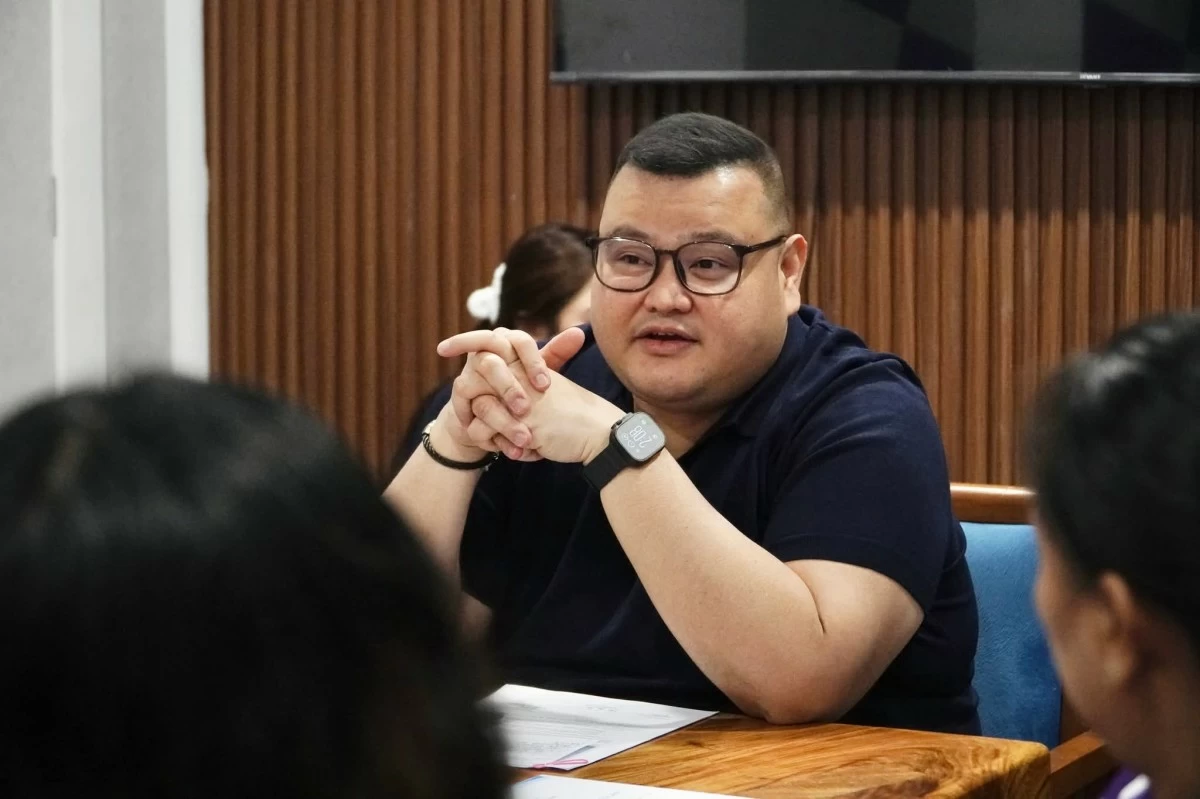
Quezon City 5th district Rep. PM Vargas (Facebook)
For Quezon City 5th district Rep. PM Vargas, reading is everything as far as helping Filipino students learn better is concerned.
That's why the House deputy majority leader is aggressively pushing for the establishment of modern electronic libraries or e-libraries in local neighborhoods, starting with a pilot program in Novaliches.
Vargas believes that such e-libraries can help Filipino students read better and pass their exams.
In House Bill (HB) Nos. 3752 to 3765, Vargas envisions computerized learning hubs that are cheap to set up across his district's 14 barangays. If the project succeeds in Novaliches, the government can copy the formula to build e-libraries in every barangay across the Philippines, he said.
“Sisimulan namin sa distrito para mapakita na (We will launch it in the district and show that) it is a viable solution. Hopefully, the rest of Quezon City will also adopt it and later on the rest of the country,” Vargas said.
The second-term congressman is pursuing the project at a critical time when many young Filipinos are struggling to read.
Recent data from the Second Congressional Commission on Education (EDCOM II) shows an alarming trend: nearly half (48.76 percent) of Filipino students cannot read properly at their grade level by the end of Grade 3.
Even worse, international tests like the Programme for International Student Assessment (PISA) show that 76 percent of 15-year-old Filipino students fail to meet basic reading standards.
“Kailangan nating gumawa ng mga hakbang upang suportahan ang mga nakukuhang aral ng mga estudyante mula sa ating public schools (We need to take steps to support the lessons that students are gaining from our public schools)," Vargas said.
"These e-libraries are cost-effective means to extend that support,” said the ranking House member.
Vargas explained that traditional libraries made of concrete and filled with paper books cost a lot of money to build and maintain. Because of high construction and delivery costs, many local governments struggle to build libraries for their communities.
By shifting to a digital system, the e-library project skips these expensive steps. Under the bill, the Department of the Interior and Local Government (DILG) will help buy the computers and set up the Internet networks, while the local barangay will help maintain the equipment and the facility.
Vargas said that unlike regular paper books that can get torn, lost, or outdated, digital books last forever and can be updated instantly.
“Sa ganitong paraan, mas maraming estudyante ang makikinabang. Mas mapapamahal ang mga bata kung sila ay kailangan pang bumili ng tig-isang physical textbook,” he explained.
(In this way, more students will benefit. It becomes more costly for children if they are required to buy individual physical textbooks.)
Under the proposed bills, the digital libraries will be loaded with files, interactive programs, and reference papers that match the lessons being taught inside public school classrooms. Students can easily walk from their school to the barangay e-library to do their homework, research for reports, and improve their vocabulary.
The project updates older laws like Republic Act (RA) No. 7743, or the Philippine Library Law, which requires LGUs to establish public reading centers.
“Tiwala kami na ang mga pilot e-library sa distrito ay magiging epektibo (We are confident that the pilot e-libraries in the district will be effective). Once we prove that, we hope to see this replicated across every district in the country to ensure no Filipino child is left behind in reading,” Vargas concluded.