

ADVERTISEMENT

Philippines faces increasing risk of extreme rainfall — study

Published May 24, 2026 01:38 pm

At A Glance

  • The study noted that what used to be a one-in-100-year extreme rainfall event in Metro Manila, home to around 14 million people, is now estimated to occur about once in every 77 years.
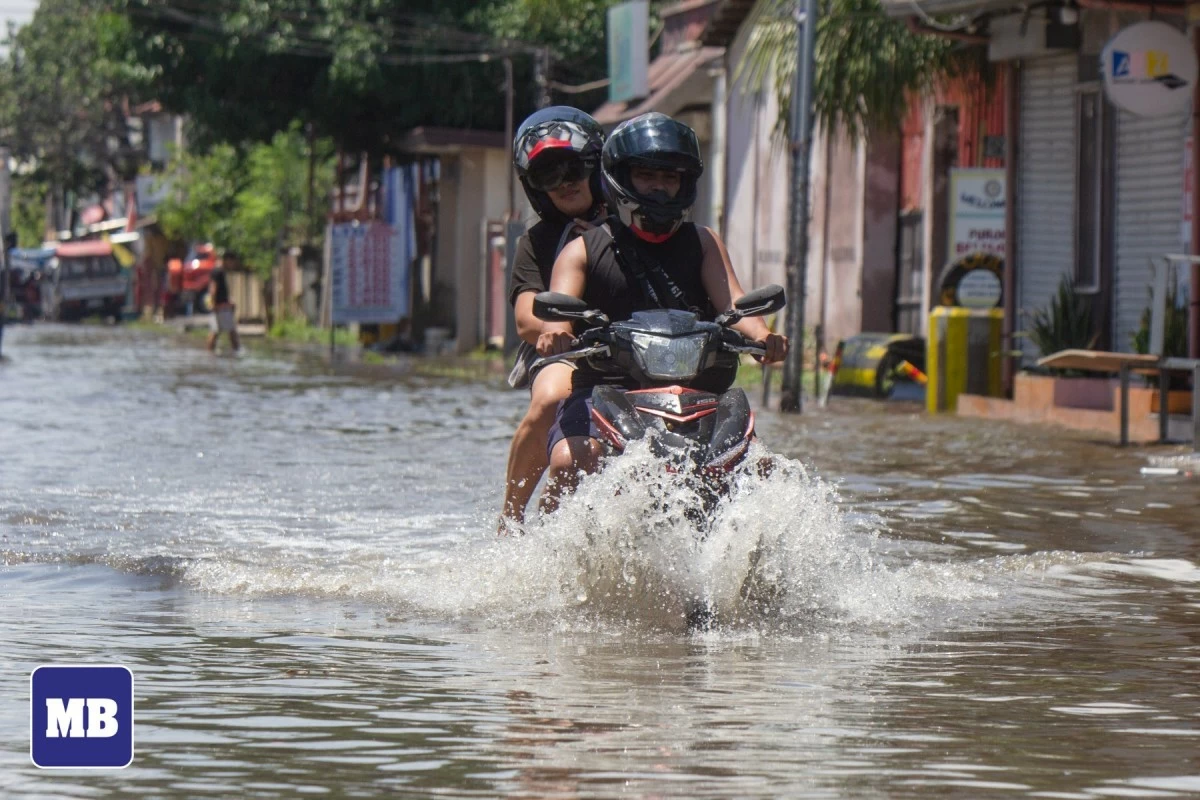
Residents and motorists wade through floodwaters along streets in Agdao District, Davao City on May 19, following overnight heavy rains that caused flooding in several parts of the city. (Keith Bacongco/Manila Bulletin)
The Philippines is among Southeast Asian countries facing increasing risk of extreme rainfall, according to a new study that analyzed changes in heavy precipitation from 1981 to 2024 using large climate model ensembles.
The study, titled “Unseen but Increasing: Recent Changes in Risk of Extreme Precipitation over Southern Africa and Southeast Asia,” used the UNSEEN (UNprecedented Simulated Extreme ENsemble) approach to evaluate rainfall extremes over the past four decades and identify areas with heightened likelihood of breaking historical rainfall records.
The approach was used to address low to medium confidence in earlier assessments of increasing extreme rainfall over Southern Africa and Southeast Asia due to limited observational data.
“We find that extreme rainfall risk has already increased since 1981 during the rainy season in both regions, including a doubling of risk in some months for many major population centers such as Phnom Penh, Vientiane, Bangkok, Hanoi, Maseru, Johannesburg, Lilongwe, and Lusaka,” the study said.
It added that in Southeast Asia, “for most months in almost all locations, there is an increasing risk of extreme daily rainfall,” with the strongest increases observed in June to November in southern Philippines and November to May in northern Philippines.
“In the central part of the Philippines, the model fails to show fidelity to observations in the dry months of January to May, but it shows increasing risk of extreme weather in the wetter months, especially in August to October. July to October is the peak of the cyclone season, with the strongest increases in risk in the southern part of the domain during that season,” it said.
The study also noted that what used to be a one-in-100-year extreme rainfall event in Metro Manila, home to around 14 million people, is now estimated to occur about once in every 77 years.
It projected that the pattern of increasing extreme rainfall risk will continue to rise in the next 20 years under the CMIP6 ensemble, an average of climate projections from multiple global models.
However, the researchers said UNSEEN-based estimates of changes over the past 20 years are already exceeding some future projections in the Philippines, northern Mozambique, and northern Madagascar.
“Finally, we compare the UNSEEN ensemble to historical records to identify places that have ‘soft records’ and are likely to see record-setting events. These places with increasing risks but no recent extremes are labeled as ‘sitting ducks’ in today's climate. We find that much of Mozambique, the Philippines, and Laos would be considered ‘sitting ducks’ for extreme precipitation in at least one month of the year,” the study said.
The authors said disaster risk managers should incorporate large climate ensembles in assessing present-day risks to better prepare for record-breaking rainfall events.
“This approach can also be used for improving engineering design estimates of rainfall return periods and for stress-testing health system and disaster preparedness,” they added.
The study was authored by Erin Coughlan de Perez of the Feinstein International Center, Friedman School of Nutrition Science and Policy, Tufts University in the US and Red Cross Red Crescent Climate Centre in The Hague, the Netherlands; Luis Artur of Eduardo Mondlane University in Mozambique; Dorothy Heinrich of the Red Cross Red Crescent Climate Centre and the University of Reading in the UK; Mahar Lagmay of the University of the Philippines Resilience Institute; Gibbon Innocent T. Masukwedza of the National Centre for Atmospheric Science of the University of Reading and the Department of Geography of the University of Sussex; Bernardino Nhantumbo of the National Institute of Meteorology in Mozambique; and Elisabeth Stephens of the Red Cross Red Crescent Climate Centre and the University of Reading.

Related Tags

STUDY EXTREME RAINFALL PHILIPPINES METRO MANILA
ADVERTISEMENT
.most-popular .layout-ratio{ padding-bottom: 79.13%; } @media (min-width: 768px) and (max-width: 1024px) { .widget-title { font-size: 15px !important; } }

{{ articles_filter_1561_widget.title }}

.most-popular .layout-ratio{ padding-bottom: 79.13%; } @media (min-width: 768px) and (max-width: 1024px) { .widget-title { font-size: 15px !important; } }

{{ articles_filter_1562_widget.title }}

.most-popular .layout-ratio{ padding-bottom: 79.13%; } @media (min-width: 768px) and (max-width: 1024px) { .widget-title { font-size: 15px !important; } }

{{ articles_filter_1563_widget.title }}

{{ articles_filter_1564_widget.title }}

.mb-article-details { position: relative; } .mb-article-details .article-body-preview, .mb-article-details .article-body-summary{ font-size: 17px; line-height: 30px; font-family: "Libre Caslon Text", serif; color: #000; } .mb-article-details .article-body-preview iframe , .mb-article-details .article-body-summary iframe{ width: 100%; margin: auto; } .read-more-background { background: linear-gradient(180deg, color(display-p3 1.000 1.000 1.000 / 0) 13.75%, color(display-p3 1.000 1.000 1.000 / 0.8) 30.79%, color(display-p3 1.000 1.000 1.000) 72.5%); position: absolute; height: 200px; width: 100%; bottom: 0; display: flex; justify-content: center; align-items: center; padding: 0; } .read-more-background a{ color: #000; } .read-more-btn { padding: 17px 45px; font-family: Inter; font-weight: 700; font-size: 18px; line-height: 16px; text-align: center; vertical-align: middle; border: 1px solid black; background-color: white; } .hidden { display: none; }
function initializeAllSwipers() { // Get all hidden inputs with cms_article_id document.querySelectorAll('[id^="cms_article_id_"]').forEach(function (input) { const cmsArticleId = input.value; const articleSelector = '#article-' + cmsArticleId + ' .body_images'; const swiperElement = document.querySelector(articleSelector); if (swiperElement && !swiperElement.classList.contains('swiper-initialized')) { new Swiper(articleSelector, { loop: true, pagination: false, navigation: { nextEl: '#article-' + cmsArticleId + ' .swiper-button-next', prevEl: '#article-' + cmsArticleId + ' .swiper-button-prev', }, }); } }); } setTimeout(initializeAllSwipers, 3000); const intersectionObserver = new IntersectionObserver( (entries) => { entries.forEach((entry) => { if (entry.isIntersecting) { const newUrl = entry.target.getAttribute("data-url"); if (newUrl) { history.pushState(null, null, newUrl); let article = entry.target; // Extract metadata const author = article.querySelector('.author-section').textContent.replace('By', '').trim(); const section = article.querySelector('.section-info ').textContent.replace(' ', ' '); const title = article.querySelector('.article-title h1').textContent; // Parse URL for Chartbeat path format const parsedUrl = new URL(newUrl, window.location.origin); const cleanUrl = parsedUrl.host + parsedUrl.pathname; // Update Chartbeat configuration if (typeof window._sf_async_config !== 'undefined') { window._sf_async_config.path = cleanUrl; window._sf_async_config.sections = section; window._sf_async_config.authors = author; } // Track virtual page view with Chartbeat if (typeof pSUPERFLY !== 'undefined' && typeof pSUPERFLY.virtualPage === 'function') { try { pSUPERFLY.virtualPage({ path: cleanUrl, title: title, sections: section, authors: author }); } catch (error) { console.error('ping error', error); } } // Optional: Update document title if (title && title !== document.title) { document.title = title; } } } }); }, { threshold: 0.1 } ); function showArticleBody(button) { const article = button.closest("article"); const summary = article.querySelector(".article-body-summary"); const body = article.querySelector(".article-body-preview"); const readMoreSection = article.querySelector(".read-more-background"); // Hide summary and read-more section summary.style.display = "none"; readMoreSection.style.display = "none"; // Show the full article body body.classList.remove("hidden"); } document.addEventListener("DOMContentLoaded", () => { let loadCount = 0; // Track how many times articles are loaded const offset = [1, 2, 3, 4, 5, 6, 7, 8, 9, 10]; // Offset values const currentUrl = window.location.pathname.substring(1); let isLoading = false; // Prevent multiple calls if (!currentUrl) { console.log("Current URL is invalid."); return; } const sentinel = document.getElementById("load-more-sentinel"); if (!sentinel) { console.log("Sentinel element not found."); return; } function isSentinelVisible() { const rect = sentinel.getBoundingClientRect(); return ( rect.top < window.innerHeight && rect.bottom >= 0 ); } function onScroll() { if (isLoading) return; if (isSentinelVisible()) { if (loadCount >= offset.length) { console.log("Maximum load attempts reached."); window.removeEventListener("scroll", onScroll); return; } isLoading = true; const currentOffset = offset[loadCount]; window.loadMoreItems().then(() => { let article = document.querySelector('#widget_1690 > div:nth-last-of-type(2) article'); intersectionObserver.observe(article) loadCount++; }).catch(error => { console.error("Error loading more items:", error); }).finally(() => { isLoading = false; }); } } window.addEventListener("scroll", onScroll); });

Sign up by email to receive news.