






Manila Bulletin
 Business
The Stock Market
Globe taps Starlink, AI to counter 7.2% inflation headwinds
Business
The Stock Market
Globe taps Starlink, AI to counter 7.2% inflation headwinds
Business
The Stock Market
Globe taps Starlink, AI to counter 7.2% inflation headwinds
Globe taps Starlink, AI to counter 7.2% inflation headwinds
Published May 13, 2026 07:50 pm


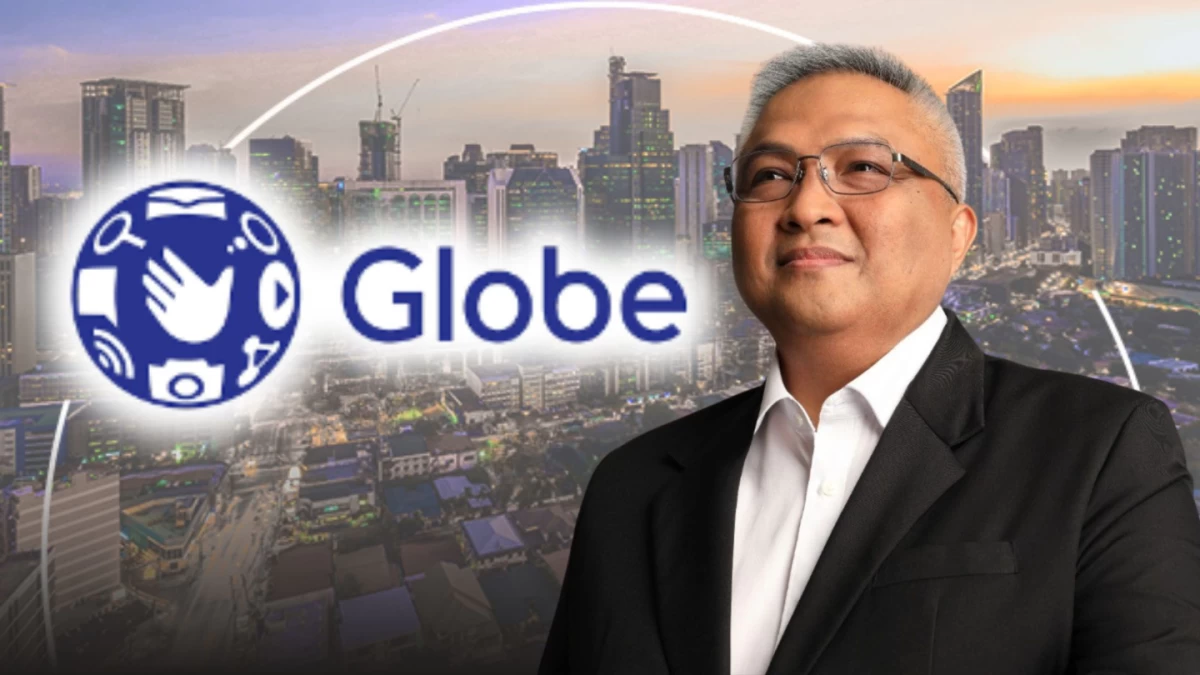
Globe Telecom Inc. is planning to leverage services outside its traditional offerings, including the direct-to-cell service developed by Starlink, to propel its growth in a year of anticipated slower consumer demand due to accelerating inflation.
Carl Cruz, president and chief executive officer (CEO) of Globe, said the company is taking a disciplined approach in its operations to cushion, as much as possible, the impact of inflation, which has quickened to a three-year high of 7.2 percent amid external pressures.
“Now, if these pressures persist, [revenue] performance may trend towards the lower end of our guidance range,” he said during a virtual press briefing on Wednesday, May 13.
The telecommunications giant earlier set a full-year guidance of a low- to mid-single-digit increase in revenue growth for the year.
Based on its financial report, revenues in the first quarter increased by four percent to ₱45.71 billion, helping offset a two-percent uptick in expenses to ₱23.53 billion.
To keep the growth trajectory going, Cruz said the company is aiming to remain in line with its plan to spend below $1 billion on capital expenditures as it focuses its network expansions on high-impact areas.
“We will optimize network efficiency and we will leverage technologies, such as AI (artificial intelligence), alongside our green network sustainable initiatives, to manage costs more effectively,” he said.
Cruz said the company’s disciplined approach also covers the services it plans to roll out this year, noting that there would be more emphasis on innovative solutions to ensure strong engagement with its customers.
These upcoming solutions would include Starlink Mobile, a satellite-to-mobile service that aims to bring connectivity to far-flung areas where building network towers would be challenging.
Following its successful pilot test in multiple remote areas across the country in March, Globe chief commercial officer Darius Delgado said the service is now on track to launch by June, pending regulatory clearance.
Starlink Mobile will first be available on Android phones, with a pricing range of ₱99 for 30 days and ₱299 for 90 days.
“We made sure it's accessible and affordable, especially for the underserved, which is the bullseye target of this service,” said Delgado.
In addition, Cruz said the company will offer more services related to AI, including an upcoming solution involving cloud storage.
To this end, Globe is also expected to rely on contributions from Mynt, the parent company of the country’s leading digital wallet GCash, to achieve its revenue growth target this year.
Globe’s equity earnings from Mynt expanded by eight percent to ₱1.9 billion in the first three months, compared to ₱1.8 billion in the same period last year.
“Our latest results are a clear signal that GCash is no longer just a digital wallet, but a primary engine of the Philippines' digital economy,” said Mynt president and CEO Martha Sazon in a statement.
Sazon said the digital wallet is now taking an active role in bridging the wealth gap in the country, with 90 percent of its user base coming from lower socio-economic segments and nearly 80 percent residing outside Metro Manila.
Fuse Financing Inc. has been steadily expanding access to lending, with life-to-date loan disbursements growing by more than half to ₱406 billion.
“Amidst global uncertainties, GCash strengthened its role as a lifeline and companion for millions of its users—waiving transaction fees for both inbound and outbound remittances for overseas Filipinos in the Middle East,” the company said.
Mynt will be focused on international expansion and scaling its business-to-business offerings this year to remain on pace with its growth trajectory, Sazon said.
Globe said there are still no concrete plans involving Mynt’s listing on the local bourse, noting that its commitment for the year is to grow its business.