







US to fund feasibility study for Sangley airport
Published May 12, 2026 05:15 pm


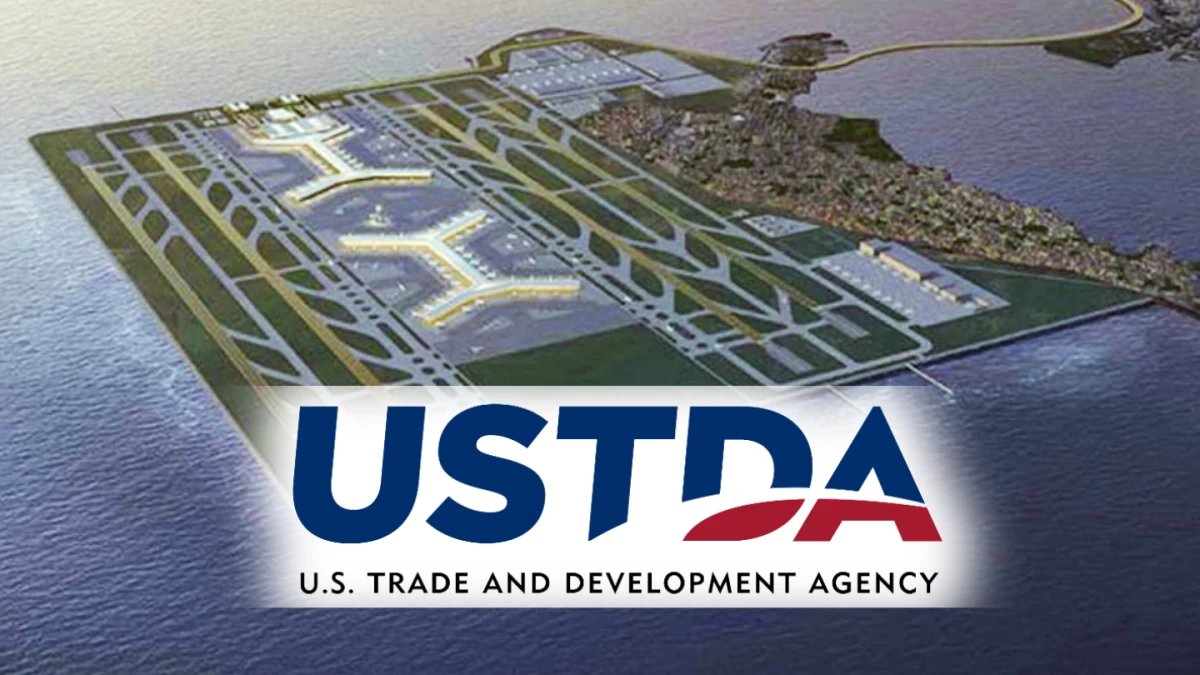
The United States (US) is taking the lead in the development of the long-delayed Sangley Point International Airport (SPIA) through the funding of a new feasibility study, as part of its commitment to boost economic activity within the Luzon Economic Corridor (LEC).
The US Trade and Development Agency (USTDA) announced in a statement that it is funding a study for the SPIA through a grant to project developer Cavitex Holdings Inc., which has since selected San Francisco-based consulting firm The S-A-P Group (SAP) to conduct the study.
The feasibility study will cover the development of the SPIA, including air traffic forecasts, financial analyses, and recommendations for advanced security screening.
It will also promote the adoption of screening technologies, airport construction components, safety and security equipment, telecommunications networks, and consulting services developed by US companies.
Based on its annual report for 2025, the USTDA has committed funding of $1.03 million, or approximately ₱63.61 million, for the project. It remains to be seen whether this is the same amount the USTDA has provided to Cavitex, since it did not disclose those details.
The USTDA expects SAP’s study to ensure that the development of the SPIA would comply with the standards of US aviation authorities, especially since the airport would likely handle direct flights to major US cities once operational.
“The high volume of direct international travel between the United States and the Philippines reflects the steadfast friendship of our two countries, and we share a desire to see passenger traffic flourish safely and efficiently,” said USTDA deputy director Thomas Hardy.
SPIA, which would be located over 10 kilometers west of the highly congested Ninoy Aquino International Airport (NAIA), would help ease travel and cargo demand away from the country’s primary gateway.
The USTDA said expanding the region’s airport capacity through the SPIA would further strengthen connectivity and economic cooperation between the LEC and potential investors from the US and other countries.
“This project is one of many shared priorities with the Philippines government to achieve our collective goal of a free and open Indo-Pacific,” said Hardy.
The LEC is a development initiative involving 10 countries, including the US, that aims to expand economic growth in Subic Bay, Clark, Manila, and Batangas through coordinated investments.
Under the LEC, one of the main sectors expected to attract foreign capital is transport infrastructure as part of efforts to ease bottlenecks and promote connectivity within Luzon and beyond.
“The SPIA initiative will deliver transformative benefits for the country—creating tens of thousands of jobs, enhancing mobility, and unlocking billions in long-term economic activity,” said Cavitex president and chief executive officer Leonides J.M. Virata.
According to the Public-Private Partnership (PPP) Center, the SPIA project is still undergoing coordination between the SPIA Development Consortium, which includes Cavitex, and the national and local governments.
The construction of the airport is expected to cost approximately ₱215.69 billion, based on estimates by the PPP Center.