






Manila Bulletin
 Philippines
National
ASEAN, European Union should become reliable partners amid energy crisis—business council
Philippines
National
ASEAN, European Union should become reliable partners amid energy crisis—business council
Philippines
National
ASEAN, European Union should become reliable partners amid energy crisis—business council
ASEAN, European Union should become reliable partners amid energy crisis—business council
Published May 3, 2026 02:44 pm


At A Glance
- More than 200 Southeast Asian government leaders and European business executives are expected to meet in Cebu next week to discuss economic resilience, sustainable growth, and the region's worsening energy crisis.
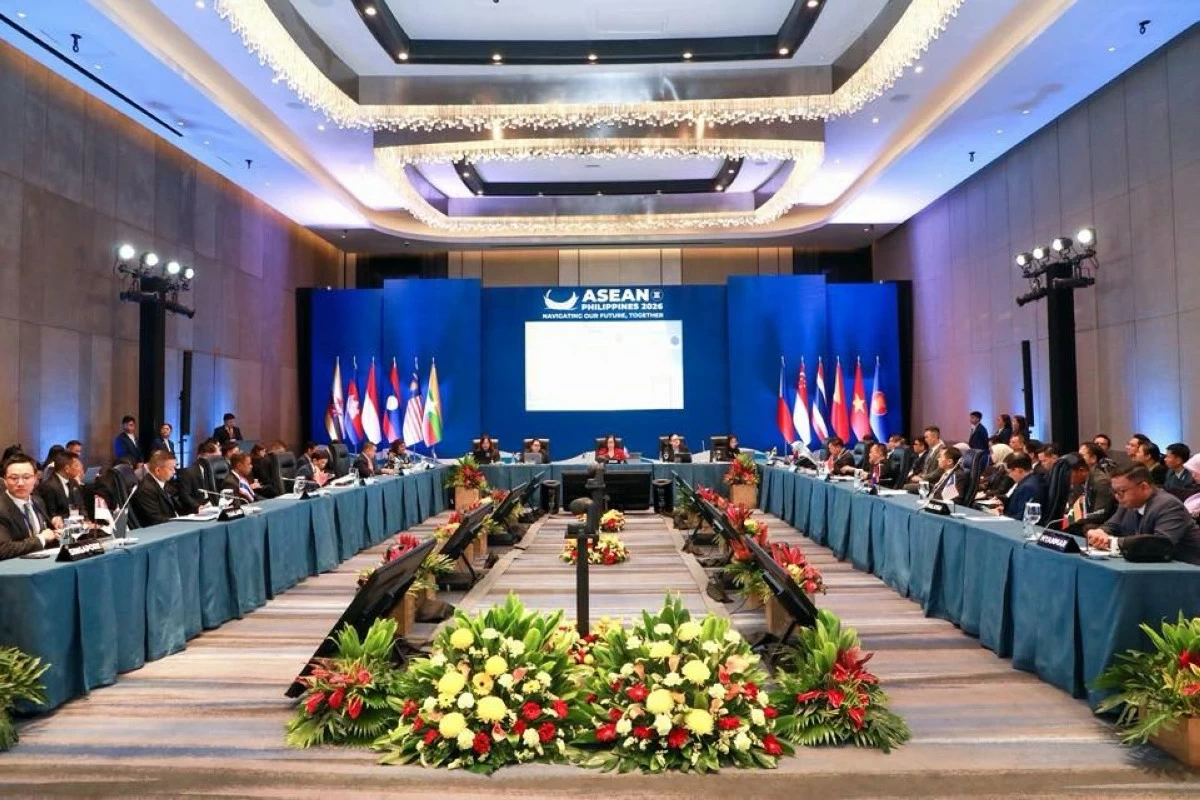
(Photo courtesy of ASEAN 2026 PH)
The European Union (EU) and the Association of Southeast Asian Nations (ASEAN) must become a reliable and long-term partners, especially at a time when Southeast Asia faces mounting economic strain caused by disruptions in energy supply chains, rising production costs, and broader geopolitical uncertainties.
This will be among the matters expected to discuss during the inaugural ASEAN-EU Sustainability Summit on May 7, a day before the 48th ASEAN Leaders’ Summit.
Chris Humphrey, Executive Director of the EU-ASEAN Business Council (EU-ABC), said the summit comes at a critical time for both regions.
"We’re facing multiple crises at once — energy, economic, and supply chain challenges that no party can address alone. ASEAN and the EU should look to each other for a reliable, long-term partnership built on shared ambitions for sustainable economic growth,” he said.
More than 200 Southeast Asian government leaders and European business executives are expected to meet in Cebu next week to discuss economic resilience, sustainable growth, and the region’s worsening energy crisis.
The leaders are expected to examine how stronger ASEAN-EU cooperation and public-private partnerships can help the region navigate current challenges while sustaining long-term growth.
According to the organizers, discussions will align with the Philippines’ 2026 ASEAN Chairmanship priorities, particularly in the areas of energy transition, green finance, circular economy development, sustainable trade, resilient supply chains, and climate-smart agriculture.
It is organized by the EU-ASEAN Business Council (EU-ABC) and European Chamber of Commerce of the Philippines (ECCP).
Paulo Duarte, President of ECCP, said the ASEAN-EU relationship must now move toward practical collaboration.
“The ASEAN-EU partnership has grown significantly, but the priority now is to turn that momentum into practical cooperation,” Duarte said.
He noted that European sustainability initiatives such as the Global Gateway could support ASEAN’s next phase of green and inclusive development.
Food system woes
Beyond energy concerns, organizers said the summit will also address growing pressure on food systems due to fertilizer shortages and higher production costs.
European and multinational companies, including Boehringer Ingelheim, Coca-Cola, and Philip Morris International, are expected to take part in sectoral discussions.
Cynderella Galimpin of Boehringer Ingelheim said preventive investments in agriculture and animal health are critical.
“When we invest in prevention, we protect animal health, farmer livelihoods, and trade confidence at the same time,” she said.
Among the featured speakers are Finance Secretary Frederick Go and Indonesia Deputy Minister of National Development Planning Leonardo A.A. Teguh Sambodo, who will join a ministerial panel on regional resilience and growth strategies.
EU Ambassador to the Philippines Massimo Santoro is also set to participate in a dialogue on ASEAN-EU cooperation alongside Climate Change Commission Vice Chairperson and Executive Director Robert E.A. Borje.
ASEAN Secretary-General Dr. Kao Kim Hourn, EU Ambassador to ASEAN Sujiro Seam, and representatives from the European Commission are expected to join virtually.
The summit is endorsed by the Philippine Department of Trade and Industry under the country’s 2026 ASEAN Chairmanship and is fully funded by private sector partners.