








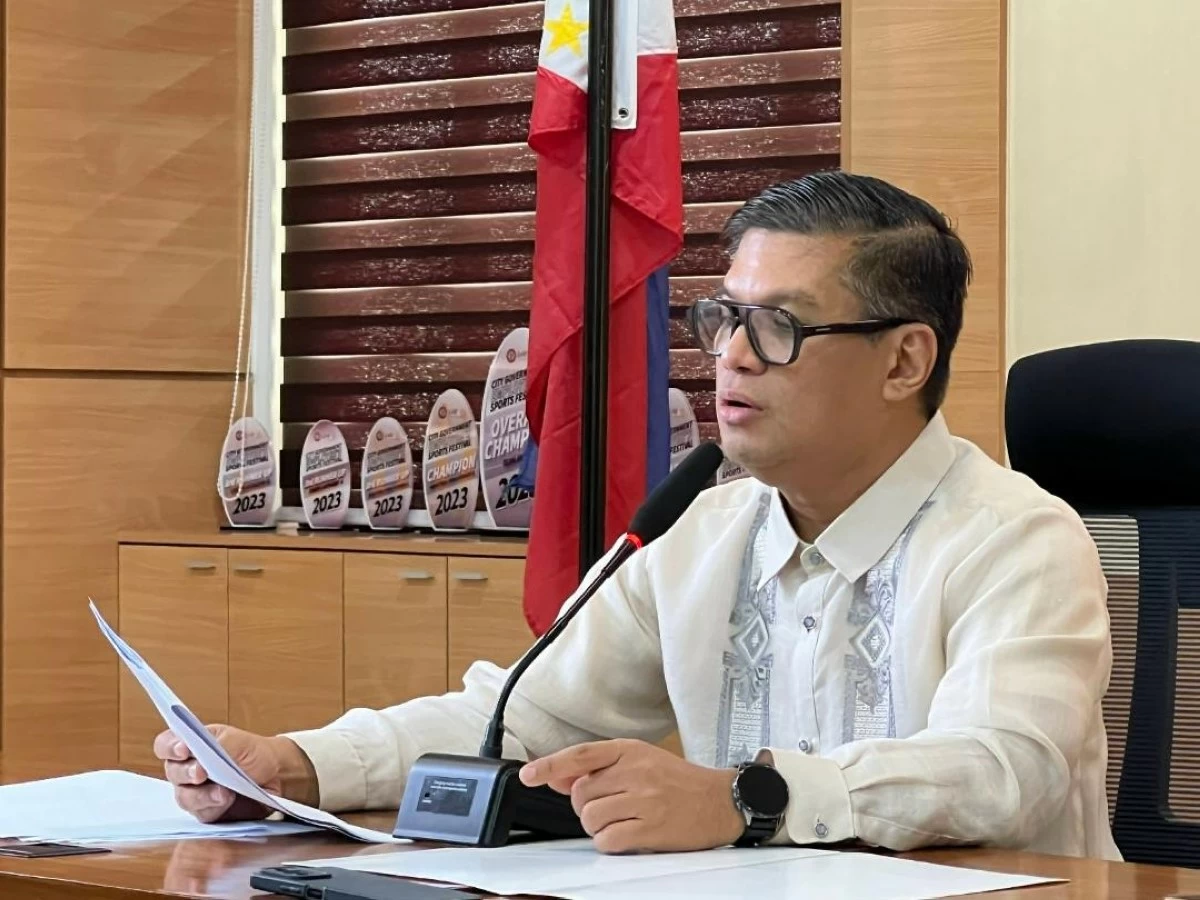
ALEJANDRE (Photo via Ivy Tejano)
DAVAO CITY – A Davao City councilor is pushing a proposal to expand financial support for cooperatives here by creating barangay-level cooperative committees and increasing loanable amounts under existing city programs.
Councilor Al Ryan Alejandre, chairman of the Committee on Cooperative Development, confirmed this on Tuesday afternoon, April 28, during the Pulong-Pulong sa Dabawenyos at the Sangguniang Panlungsod.
Alejandre said that the initiative is designed to address inflation and the rising cost of production inputs that have significantly eroded the real value of existing loan ceilings.
He said the proposal seeks to revise loan ranges under the city's cooperative support mechanisms, particularly for farmers, fisherfolk associations, and other people's organizations.
The Cooperative Financial Assistance Program, implemented by the City Cooperative Development Office, provides zero interest loans ranging from P100,000 to P300,000 for micro and small cooperatives.
The CFAP provides P301,000 to P1 million to medium- and large-sized cooperatives, with repayment terms of two to three years, depending on classification.
Under the proposed amendment, Alejandre said, micro and small cooperatives may access higher loan ceilings of P300,000 to P500,000, while medium and large cooperatives could be eligible for up to P2 million.
The councilor stressed that the adjustment is intended to make financing more responsive to current economic conditions. "A P1-million loan today is worth less than before. The increase is to meet the borrowers' needs."
Alejandre said that the proposal is undergoing coordination with the Executive branch and the City Cooperative Development Office before it can be finalized and introduced as an ordinance.
Despite the proposed adjustments, he underscored that the city's loan programs remain largely beneficial due to their zero-interest feature, which he described as a major advantage for borrowers.
He said the main concern is not the interest rate but whether borrowers can comply with requirements and repay their loans, noting that cooperatives usually have good repayment records.
"Monitoring of associations and individual borrowers still needs improvement, particularly in tracking loan utilization, repayment schedules, and compliance with program requirements," Alejandre said.
The proposal also seeks to formalize the "Mag-Negosyo Ta Day" Cooperative Program in coordination with the Cooperative Development, Agriculture, and Social Welfare and Development offices.
Under this scheme, Alejandre said, new applicants may access loans ranging from P500,000 to P1 million, while qualified renewals may reach up to P2 million.
He emphasized that the program offers zero-interest financing to institutional borrowers, with repayment terms structured on a quarterly or annual basis and secured by postdated checks.
A separate component of the proposal provides a financing window for individual women beneficiaries, who may borrow up to P50,000 through accredited cooperatives.
These loans carry a one percent monthly interest rate payable to the cooperative, with repayment terms ranging from six to twelve months, depending on the cooperative's classification.
Alejandre said the proposal is being finalized with the CCDO, with a meeting set before the end of the month. He added that it supports the city's earlier plan to strengthen livelihood programs amid rising costs.
"One of the directions we are pushing is the creation of the barangay-level committees on cooperatives," he said, adding that the city is still waiting for the barangays that have committees and those that do not.
Alejandre emphasized the need to establish barangay-level cooperative committees, noting that many local communities currently lack a designated focal person for cooperative matters.
"This structure will help strengthen support for cooperatives at the grassroots level," he said, adding that the Cooperative Development Authority is open to the proposal.