






Manila Bulletin
 Philippines
National
'Acutely unhealthy' air hits parts of Metro Manila after Navotas landfill fire—DENR
Philippines
National
'Acutely unhealthy' air hits parts of Metro Manila after Navotas landfill fire—DENR
Philippines
National
'Acutely unhealthy' air hits parts of Metro Manila after Navotas landfill fire—DENR
'Acutely unhealthy' air hits parts of Metro Manila after Navotas landfill fire—DENR
By Jel Santos
Published Apr 18, 2026 01:30 pm


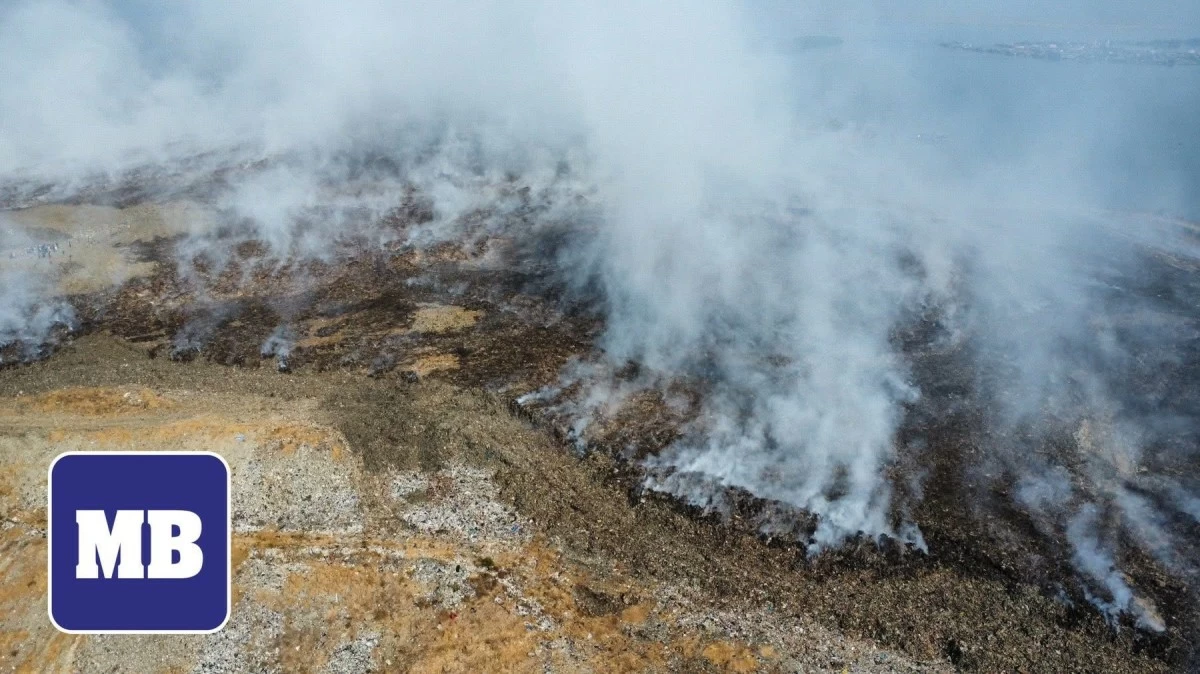
(SANTI SAN JUAN/MB FILE PHOTO)
Parts of Metro Manila recorded “very unhealthy” to “acutely unhealthy” air quality levels following the fire at the Navotas Sanitary Landfill, which continues to emit smoke, the Department of Environment and Natural Resources (DENR) said.
On Saturday, April 18, state-run television network PTV reported that although the fire at the landfill had been declared under control, thick smoke continued to be emitted from the site.
Earlier, the Office of Civil Defense (OCD) urged Metro Manila residents to wear face masks outdoors as air quality across the metropolis deteriorated to hazardous levels.
Based on DENR monitoring of fine particulate matter (PM2.5) as of 11 a.m. on April 18, Valenzuela City and Marikina City both logged “acutely unhealthy” Air Quality Index (AQI) levels of 222.
“Very unhealthy” levels were recorded in Malabon City (199), Quezon City–SMPH Commonwealth (199), Caloocan City–University of the East (197), Quezon City–Ateneo (180), and Navotas City (153).
San Juan City posted an AQI of 119, classified as “unhealthy for sensitive groups,” while Mandaluyong City recorded a “fair” level at 85.
Meanwhile, “good” air quality was recorded in southern Metro Manila, including Muntinlupa City–Filinvest City (71), Taguig City–Technological University of the Philippines (46), and Makati City–University of Makati (30).
Fire adds to NCR air pollution
Lawyer Janice R. Pammit, the officer-in-charge of the Environmental Management Bureau–National Capital Region (EMB-NCR), said the recent fire at the Navotas Sanitary Landfill was among the contributing factors to the deterioration of air quality in parts of Metro Manila.
“Ang air quality index natin mine-measure ‘yung air quality ng NCR. So, may mga contributing factors yan—industries, mobile sources, ‘yung ating mga sasakyan, transportation… syempre pag may mga usok ng sasakyan… at ‘yun nga contributing factor din. Iyon naging contributing factor ‘yung sunog doon sa Navotas Sanitary Landfill (The air quality index measures the air quality of NCR. There are contributing factors such as industries, mobile sources like vehicles and transportation. The fire at the Navotas Sanitary Landfill was one of the contributing factors),” she said.
Also, Pammit explained the difference between PM10 and PM2.5, noting that the latter poses greater health risks due to its smaller size.
“Ang PM10, medyo malalaki pa. ‘Yung PM2.5 ‘yun ‘yung fine materials. So ‘yun ‘yung mas, pagkamedyo mataas, kailangan pong mag-ingat po tayo (PM10 consists of larger particles, while PM2.5 are fine materials. When PM2.5 levels are high, we need to be more cautious),” she said.
Pammit added that both types of particulate matter can be inhaled, stressing the importance of wearing an N95 mask.
Meanwhile, she said initial findings suggest that the landfill fire may have been triggered by gas buildup due to extreme heat.
“Based on the initial assessment, dahil mainit yung panahon kaya nagkaroon ng gas build-up doon, yun yung nag-friction kaya nagkaroon ng sunog doon sa Navotas sanitary landfill (Based on the initial assessment, the hot weather caused gas buildup, which led to friction and eventually triggered the fire at the Navotas sanitary landfill),” she said.
The EMB-NCR said it is continuing its investigation and implementing measures to prevent a similar incident from happening again.