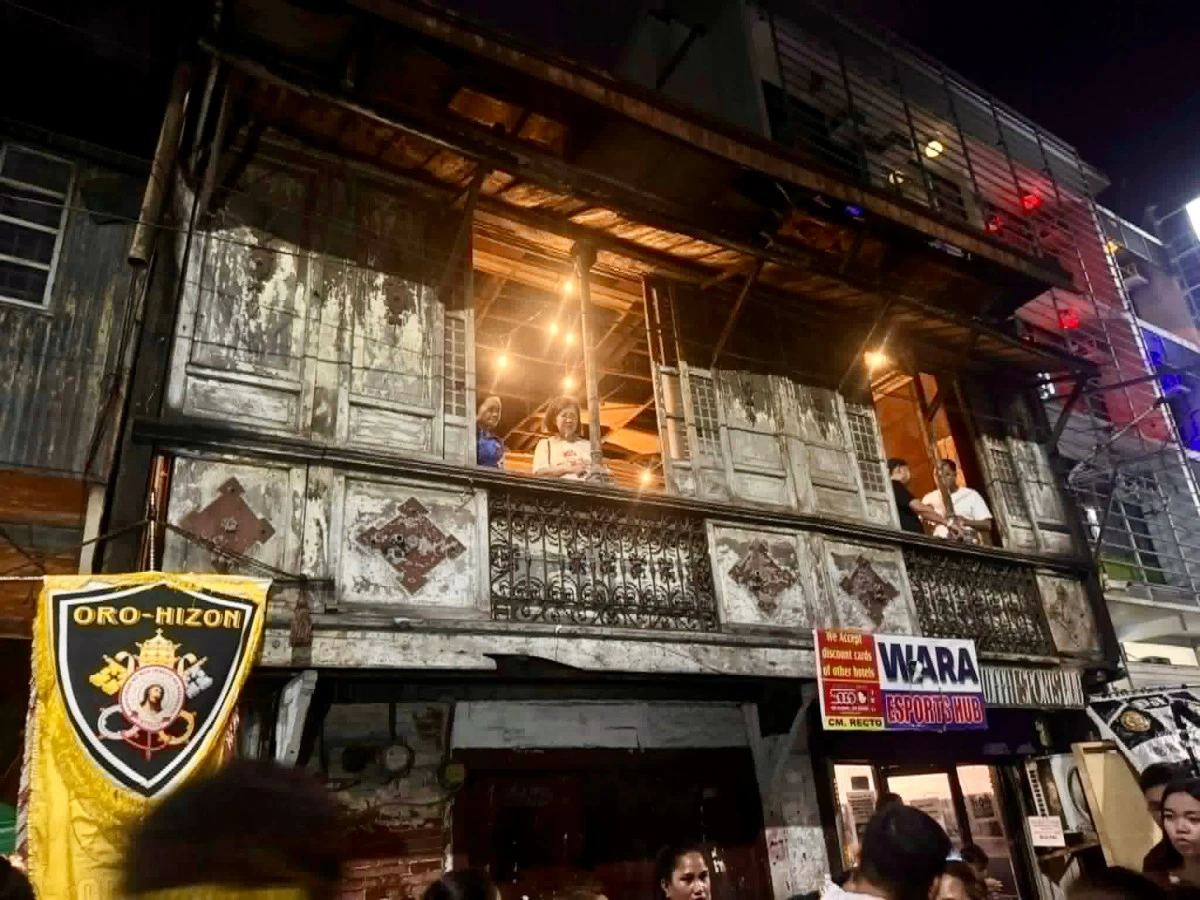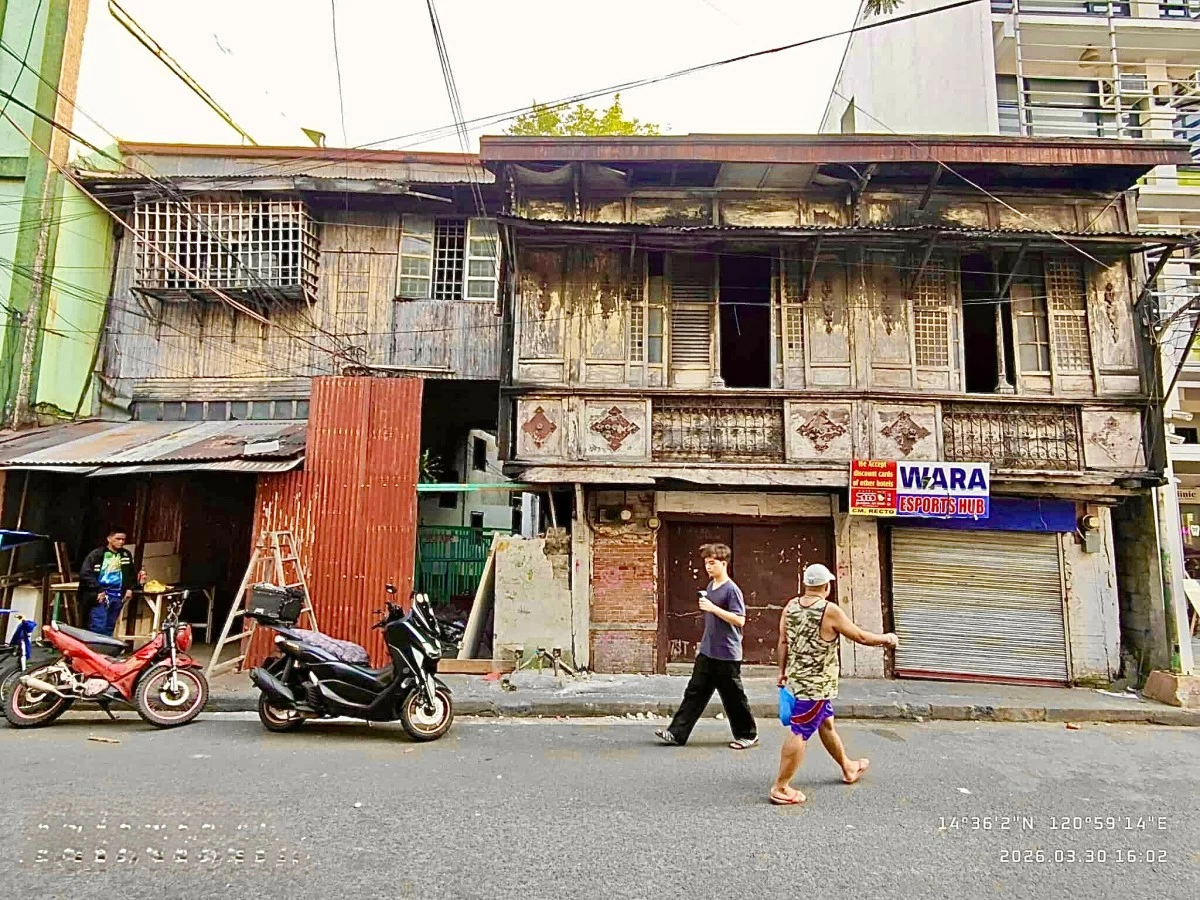
The 150-year-old De Jesus‑Del Rosario‑Lucena Ancestral House in Bilibid Viejo, Quiapo, stands as one of Manila’s last surviving bahay na bato, its stone walls and capiz windows quietly witnessing centuries of history. (Photos courtesy of Manileños for Heritage - M4H)
This Araw ng Kagitingan, as Filipinos honor the courage of soldiers who fought for freedom, a group of heritage advocates wages a quiet battle of their own- defending houses that have carried the soul of Manila for 150 years.
In the heart of Quiapo, the De Jesus‑Del Rosario‑Lucena House faces an uncertain future, its stone walls and capiz windows guarding stories more than a century old.
Family stories tie the house to Gregoria de Jesus, the Lakambini of the Katipunan, giving it a living connection to the nation’s struggle for freedom.
Built between the 1870s and 1890s, the house is officially recognized as an Important Cultural Property under Section 5 of R.A. 10066 and listed in the City of Manila’s Local Inventory of Cultural Property.
Children once played under its ventanillas, while families celebrated birthdays and fiestas in its rooms.
Even filmmakers have turned their spaces into a stage for Filipino stories, from Ang Probinsyano to Gatekeeper (2024).
For Manileños for Heritage (M4H), it is not just a house; it is living proof of history preserved for future generations.
Recently, M4H and Kapitbahayan sa Kalye Bautista (KKB) reported seeing workers boarding up parts of the house, removing windows, roof panels, and walls, allegedly without visible permits.
"M4H has documented alarming developments on-site, including the rapid dismantling of its iconic capiz shell windows and the removal of its roof within the same day. The structure has been barricaded. Notably, no visible demolition or building permit has been posted. This raises serious concerns about the legality of the activity," M4H said.
The groups have petitioned the National Historical Commission of the Philippines (NHCP), the National Commission for Culture and the Arts (NCCA), and local Manila officials to halt demolition, issue cease-and-desist orders, and enforce compulsory repair for the structure.
Nearby, the Hilario Sunico Ancestral House in San Nicolas, home to the famed bell caster Hilario Sunico Chanuangco, also faces an uncertain future.
Preserving architectural features from the 1800s, it has appeared in films such as Mano Po 1: My Family.
Architecturally, the Hilario Sunico Ancestral Residence is a rare example of a highly ornate bahay-na-bato from the latter years of the Spanish colonial period, featuring cut-iron grills, floral motifs, acanthus-shaped brackets, and all-wood upper and lower construction resting on a continuous stone pedestal.
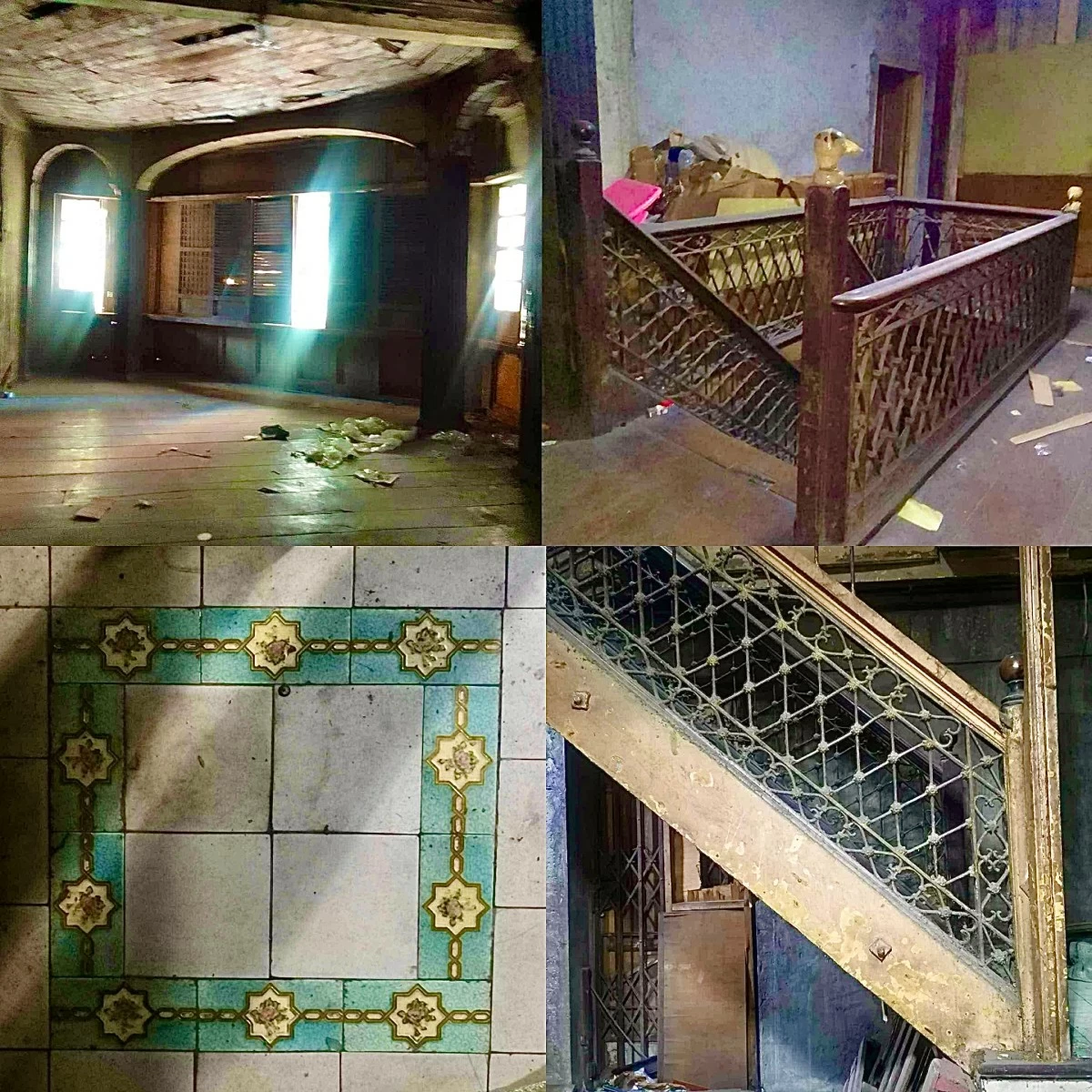
Inside the Hilario Sunico Ancestral House, the ornate wooden floors, cut-iron grills, and richly detailed ventanillas reflect the craftsmanship of Manila’s late Spanish colonial period. (Photos courtesy of Manileños for Heritage - M4H)
Both houses are among the last remnants of Manila’s rich old century urban landscape, homes that tell the story of the city’s people, families, and artistry. Their threat is more than architectural; it is a struggle for memory, identity, and heritage.
In a city racing toward modernization, every lost wall, window, or balustrade erases a piece of Manila’s soul.
This Araw ng Kagitingan, the house reminds us that heroism comes in many forms.
Courage is not only on the battlefield; it can be found in those who fight to protect history, memory, and identity, in defending a home that has quietly carried the soul of Manila through time.
Preserving a house, safeguarding its stories, and standing for history may not earn medals, but it is courage nonetheless.
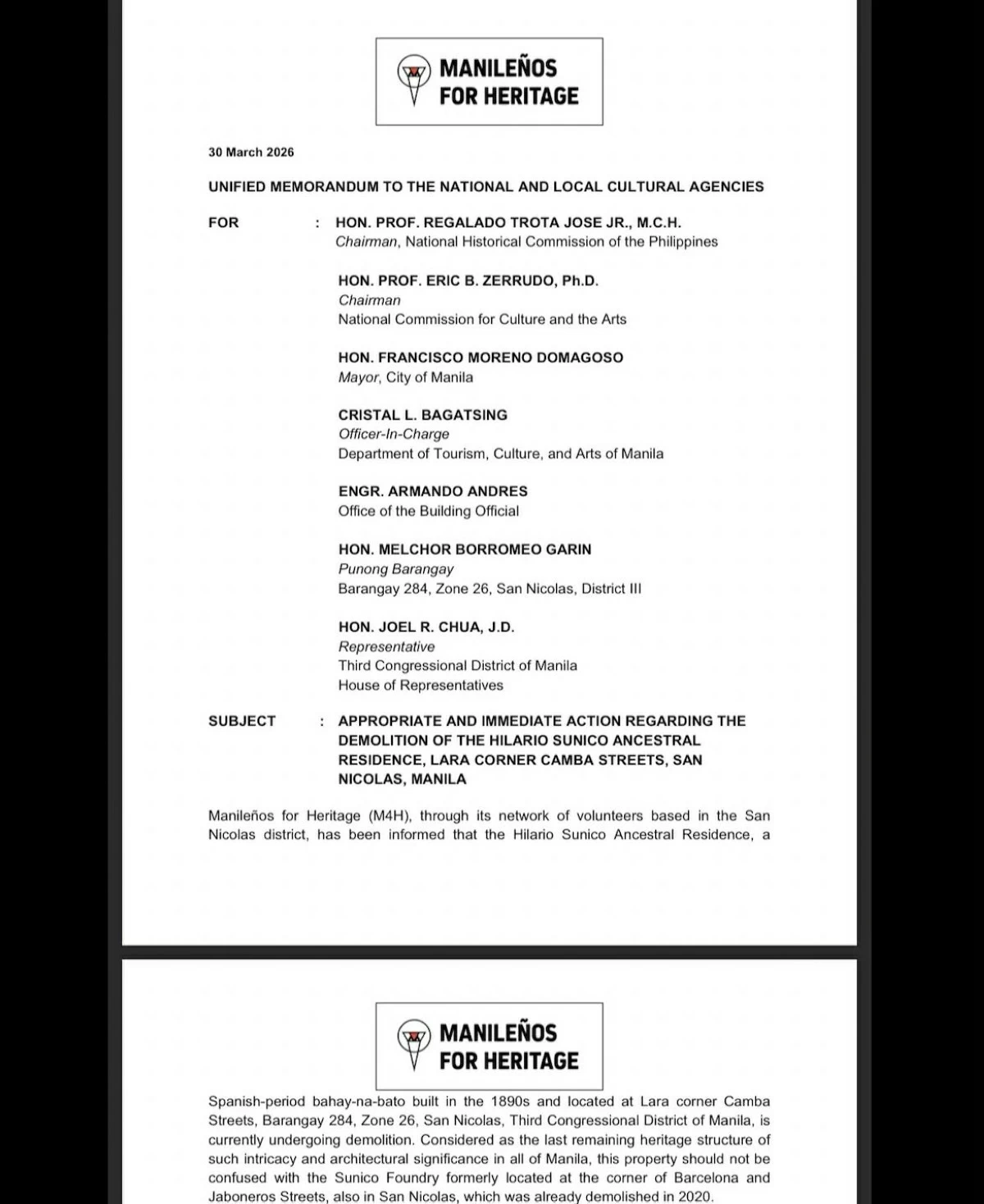
Manileños for Heritage (M4H) submits a formal petition to national and local heritage agencies to urgently protect the Hilario Sunico Ancestral Residence in San Nicolas, Manila, amid ongoing demolition threats. The group continues to coordinate with authorities to safeguard the city’s 19th-century heritage.






 Philippines