ADVERTISEMENT

Razon's ICTSI begins work on what will be Philippines' second-largest port

Published Mar 16, 2026 12:00 am  |  Updated Mar 14, 2026 02:38 pm
Enrique K. Razon

Enrique K. Razon
National and local leaders gather at the launch of $800-million South Luzon Container Terminal to expand container-handling capacity in Southern Luzon (from left): Bauan Vice Mayor Jennelle Claresta Guenn Abante, Public Works and Highways Secretary Vivencio S. Dizon, Batangas 2nd District Rep. Gerville R. Luistro, Transportation Acting Secretary Giovanni Z. Lopez, ICTSI executive vice president Christian R. Gonzalez, Bauan Mayor Wendah Katrina R. Dolor, Batangas Vice Governor Hermilando I. Mandanas, Bureau of Customs Commissioner Ariel F. Nepomuceno, and Philippine Ports Authority general manager Jay Daniel R. Santiago.
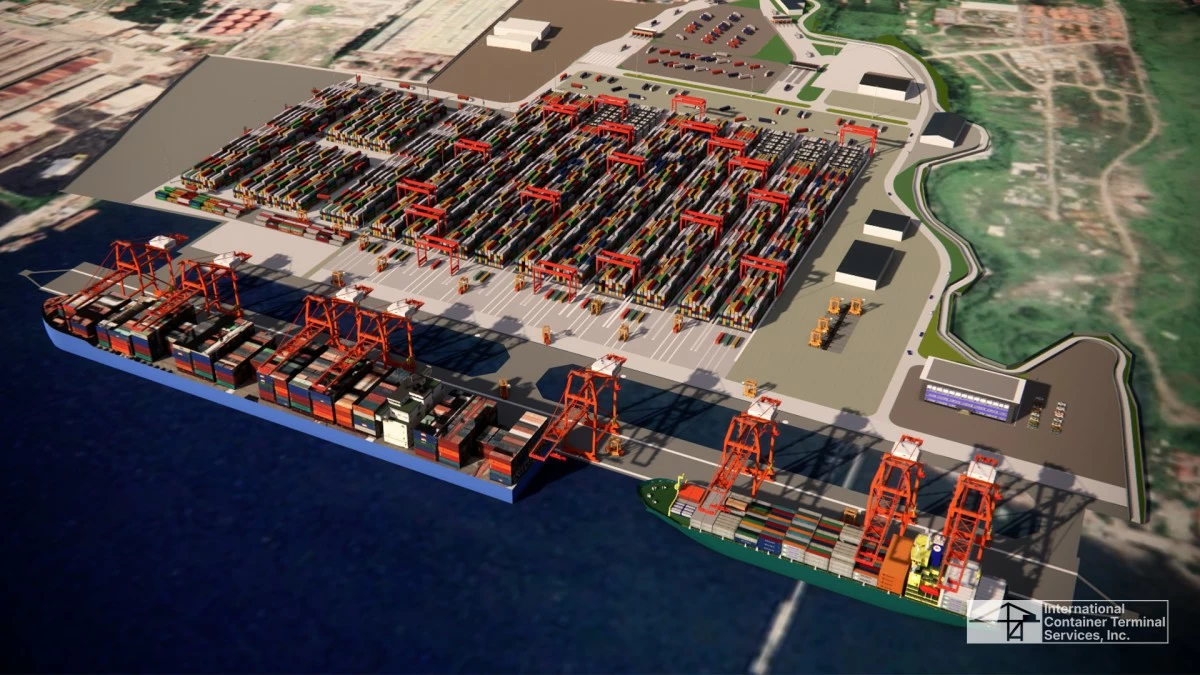
South Luzon Container Terminal (Artist's perspective)
Razon-led International Container Terminal Services Inc. (ICTSI) has broken ground on an ₱800 million expansion in Batanga, marking the start of construction for what will become the Philippines’ second-largest container gateway.
The facility, branded as the South Luzon Container Terminal, is situated within the Bauan International Port approximately 110 kilometers south of Manila. Once completed, the terminal is expected to significantly bolster trade facilitation for the industrial heartland of Southern Luzon and the broader national economy.
The project is designed to capture rising cargo demand from energy-related and manufacturing sectors in the region while providing a critical alternative to the perennially congested ports in the capital.
Christian Gonzalez, ICTSI executive vice president, emphasized during the launch ceremony that the project’s progression relied heavily on coordination with government agencies.
He noted that moving from a conceptual vision to ground-level execution required deep-seated partnerships with local leaders committed to infrastructure development. Gonzalez characterized the project as a testament to what long-term collaboration can achieve in the Philippine logistics landscape.
The terminal occupies a naturally protected cove on Batangas Bay, a geographical advantage that ICTSI says will ensure operational stability and year-round reliability. The development is being built to accommodate the industry's largest vessels, with a roadmap toward ultra-large container ship capability by the time it reaches full operations in 2028.
At its final stage of development, the South Luzon Container Terminal will feature an 800-meter quay and a 38-hectare yard. With a berth depth of 18 meters, the facility will possess an annual handling capacity exceeding two million twenty-foot equivalent units, or TEUs. This scale positions it as a cornerstone of ICTSI’s domestic portfolio.
The first phase of construction involves extensive marine works and the assembly of a 425-meter quay specifically designed for super post-Panamax operations. Management expects major construction milestones to occur between May and September 2027, with the delivery and installation of heavy equipment slated for August of that same year.
To align with modern shipping standards, ICTSI is pitching the site as a smart technology hub. The equipment manifest includes eight remote-controlled ship-to-shore cranes and 20 rail-mounted gantries, alongside a fleet of 32 diesel-hybrid carriers and handlers intended to reduce the facility's carbon footprint.
Connectivity to the site is currently anchored by the Bauan–San Pascual–Batangas–STAR route. Government planners are also evaluating additional transport links, including the proposed Cavite-to-Bauan corridor, to further integrate the terminal into the country's primary logistics arteries. (James A. Loyola)

Related Tags

International Container Terminal Services Inc. Christian R. Gonzalez South Luzon Container Terminal
ADVERTISEMENT
.most-popular .layout-ratio{ padding-bottom: 79.13%; } @media (min-width: 768px) and (max-width: 1024px) { .widget-title { font-size: 15px !important; } }

{{ articles_filter_1561_widget.title }}

.most-popular .layout-ratio{ padding-bottom: 79.13%; } @media (min-width: 768px) and (max-width: 1024px) { .widget-title { font-size: 15px !important; } }

{{ articles_filter_1562_widget.title }}

.most-popular .layout-ratio{ padding-bottom: 79.13%; } @media (min-width: 768px) and (max-width: 1024px) { .widget-title { font-size: 15px !important; } }

{{ articles_filter_1563_widget.title }}

{{ articles_filter_1564_widget.title }}

.mb-article-details { position: relative; } .mb-article-details .article-body-preview, .mb-article-details .article-body-summary{ font-size: 17px; line-height: 30px; font-family: "Libre Caslon Text", serif; color: #000; } .mb-article-details .article-body-preview iframe , .mb-article-details .article-body-summary iframe{ width: 100%; margin: auto; } .read-more-background { background: linear-gradient(180deg, color(display-p3 1.000 1.000 1.000 / 0) 13.75%, color(display-p3 1.000 1.000 1.000 / 0.8) 30.79%, color(display-p3 1.000 1.000 1.000) 72.5%); position: absolute; height: 200px; width: 100%; bottom: 0; display: flex; justify-content: center; align-items: center; padding: 0; } .read-more-background a{ color: #000; } .read-more-btn { padding: 17px 45px; font-family: Inter; font-weight: 700; font-size: 18px; line-height: 16px; text-align: center; vertical-align: middle; border: 1px solid black; background-color: white; } .hidden { display: none; }
function initializeAllSwipers() { // Get all hidden inputs with cms_article_id document.querySelectorAll('[id^="cms_article_id_"]').forEach(function (input) { const cmsArticleId = input.value; const articleSelector = '#article-' + cmsArticleId + ' .body_images'; const swiperElement = document.querySelector(articleSelector); if (swiperElement && !swiperElement.classList.contains('swiper-initialized')) { new Swiper(articleSelector, { loop: true, pagination: false, navigation: { nextEl: '#article-' + cmsArticleId + ' .swiper-button-next', prevEl: '#article-' + cmsArticleId + ' .swiper-button-prev', }, }); } }); } setTimeout(initializeAllSwipers, 3000); const intersectionObserver = new IntersectionObserver( (entries) => { entries.forEach((entry) => { if (entry.isIntersecting) { const newUrl = entry.target.getAttribute("data-url"); if (newUrl) { history.pushState(null, null, newUrl); let article = entry.target; // Extract metadata const author = article.querySelector('.author-section').textContent.replace('By', '').trim(); const section = article.querySelector('.section-info ').textContent.replace(' ', ' '); const title = article.querySelector('.article-title h1').textContent; // Parse URL for Chartbeat path format const parsedUrl = new URL(newUrl, window.location.origin); const cleanUrl = parsedUrl.host + parsedUrl.pathname; // Update Chartbeat configuration if (typeof window._sf_async_config !== 'undefined') { window._sf_async_config.path = cleanUrl; window._sf_async_config.sections = section; window._sf_async_config.authors = author; } // Track virtual page view with Chartbeat if (typeof pSUPERFLY !== 'undefined' && typeof pSUPERFLY.virtualPage === 'function') { try { pSUPERFLY.virtualPage({ path: cleanUrl, title: title, sections: section, authors: author }); } catch (error) { console.error('ping error', error); } } // Optional: Update document title if (title && title !== document.title) { document.title = title; } } } }); }, { threshold: 0.1 } ); function showArticleBody(button) { const article = button.closest("article"); const summary = article.querySelector(".article-body-summary"); const body = article.querySelector(".article-body-preview"); const readMoreSection = article.querySelector(".read-more-background"); // Hide summary and read-more section summary.style.display = "none"; readMoreSection.style.display = "none"; // Show the full article body body.classList.remove("hidden"); } document.addEventListener("DOMContentLoaded", () => { let loadCount = 0; // Track how many times articles are loaded const offset = [1, 2, 3, 4, 5, 6, 7, 8, 9, 10]; // Offset values const currentUrl = window.location.pathname.substring(1); let isLoading = false; // Prevent multiple calls if (!currentUrl) { console.log("Current URL is invalid."); return; } const sentinel = document.getElementById("load-more-sentinel"); if (!sentinel) { console.log("Sentinel element not found."); return; } function isSentinelVisible() { const rect = sentinel.getBoundingClientRect(); return ( rect.top < window.innerHeight && rect.bottom >= 0 ); } function onScroll() { if (isLoading) return; if (isSentinelVisible()) { if (loadCount >= offset.length) { console.log("Maximum load attempts reached."); window.removeEventListener("scroll", onScroll); return; } isLoading = true; const currentOffset = offset[loadCount]; window.loadMoreItems().then(() => { let article = document.querySelector('#widget_1690 > div:nth-last-of-type(2) article'); intersectionObserver.observe(article) loadCount++; }).catch(error => { console.error("Error loading more items:", error); }).finally(() => { isLoading = false; }); } } window.addEventListener("scroll", onScroll); });

Sign up by email to receive news.