






Manila Bulletin
 Philippines
National
World's women judges assure commitment to protect, enhance access to justice
Philippines
National
World's women judges assure commitment to protect, enhance access to justice
Philippines
National
World's women judges assure commitment to protect, enhance access to justice
World's women judges assure commitment to protect, enhance access to justice
Published Mar 14, 2026 02:46 pm


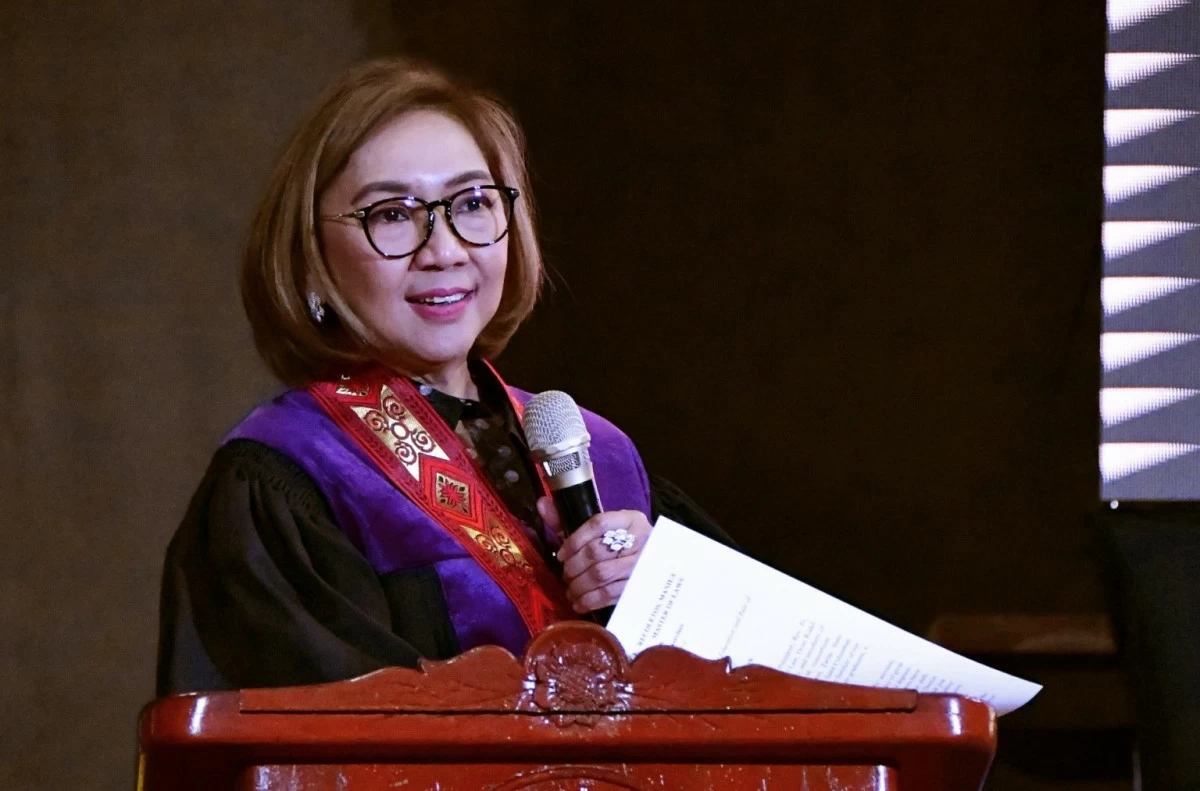
The world’s women jurists celebrated the “International Day of Women Judges” last March 10 and underscored their growing influence on the courts and their shared commitment to protect and enhance access to justice.
Led by Philippine Supreme Court (SC) Associate Justice Maria Filomena D. Singh, the president-elect of the International Association of Women Judges (IAWJ), the lady magistrates held a reception at the Rockefeller Foundation in New York, United States.
The theme of the gathering was “Women Judges on the Bench and Beyond: Protecting Access to Justices.”
The IAWJ’s celebration was held two days after the world commemorated the “International Women’s Day” last March 8. The “International Women’s Month” is celebrated worldwide in March.
The IAWJ has about 7,000 members worldwide.
In the Philippines, there are more women judges than their male counterparts in the trial courts. There are fewer women magistrates in the appellate courts – Court of Appeals, Sandiganbayan, and the Court of Tax Appeals.
In the 15-member Philippine SC, there are only two lady magistrates. Aside from Justice Singh, the other lady magistrate is Associate Justice Amy C. Lazaro-Javier, who had also served a high post in the IAWJ.
The SC’s Office of the Spokesperson said that in her message to IWJA members, Justice Singh spoke of a future in which the appointment of women to the highest courts is no longer regarded as remarkable but simply part of the natural order of a just and mature legal system.
Justice Singh noted that while women increasingly enter the judiciary, many remain concentrated in lower or intermediate levels of the courts and are underrepresented in the highest judicial positions.
She also cited that surveys of women judges further revealed that many hesitate to seek elevation to higher courts because of the competing demands of professional advancement and personal responsibilities, particularly the expectations placed upon them as caregivers and mothers.
Citing her own experience, Justice Singh – single mother to four children – said she was able to continue her legal and academic pursuits while balancing family responsibilities.
She pointed out the work of the IAWJ in cultivating leadership, mentorship, and collaboration among women judges worldwide.
Among these initiatives, she said, is the Women in Leadership in Law (WILIL) program which is currently piloted in the Philippines, Mexico, Nigeria, South Africa, and Kenya.
She emphasized that initiatives like WILIL are designed to encourage women judges to share their journeys, stories that can illuminate possibilities for younger generations and demonstrate that leadership in the judiciary need not be incompatible with personal commitments.
Justice Singh also acknowledged the professional solitude that can accompany judicial service, echoing the observation of former Wisconsin Supreme Court Justice Ann Walsh Bradley that judging can be “a very lonely profession.”
Within this solitude, she said the IAWJ provides a vital forum for dialogue, encouragement, and fellowship.
She also underscored the importance of women standing side by side in a profession where many historically entered with inherent disadvantages.
In its mission to promote women’s leadership in the judiciary worldwide, the IAWJ offers a platform where mentorship, collective advocacy, and shared purpose converge.
In conclusion, she stressed: “Meaningful progress in the justice system is sustained when women lift one another on the bench, beyond the bench, and for the generations of women who will one day follow in their footsteps.”