






Manila Bulletin
 Philippines
National
House approves fuel excise tax suspension bill on 2nd reading; waits for Palace certification
Philippines
National
House approves fuel excise tax suspension bill on 2nd reading; waits for Palace certification
Philippines
National
House approves fuel excise tax suspension bill on 2nd reading; waits for Palace certification
House approves fuel excise tax suspension bill on 2nd reading; waits for Palace certification
Published Mar 11, 2026 10:00 pm


At A Glance
- The bill granting President Marcos the authority to temporarily suspend or reduce excise tax on fuel products--easily the most sought-after measure in Congress in light of the raging conflict in the Middle East--was approved on second reading on Wednesday night, March 11.
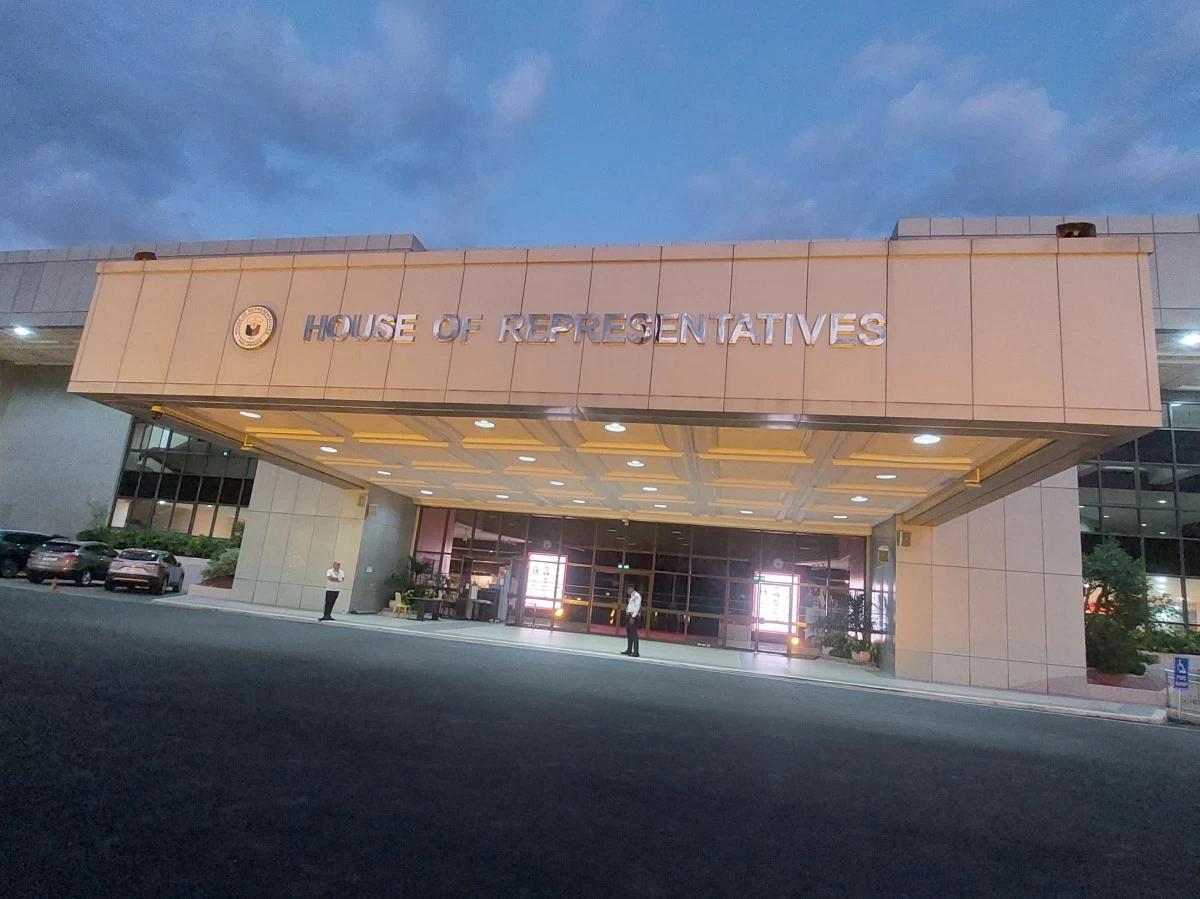
The House of Representatives (Ellson Quismorio/ MANILA BULLETIN)
The bill granting President Marcos the authority to temporarily suspend or reduce excise tax on fuel products--easily the most sought-after measure in Congress in light of the raging conflict in the Middle East--was approved on second reading on Wednesday night, March 11.
Gaining penultimate passage in the 300-plus strong House of Representatives via simple voice vote (ayes vs. nayes) was House Bill (HB) No. 8418. The measure is titled, "Act authorizing the President to suspend or reduce excise taxes on petroleum products during national or global economic emergencies, amending for the purpose the National Internal Revenue Code of 1997, as amended."
The presiding officer at that time, Deputy Speaker Ilocos Sur, 2nd district Rep Kristine Singson-Meehan, declared the second-reading passage of the measure official after the "ayes" drowned out the "nayes" in plenary.
House members subsequently waited during the session for Malacañang to issue a certification of urgency, so that they may vote to approve HB No. 8418 on third and final reading right then and there.
No such certification was received by the legislative chamber as of this posting.
The House can still grant final passage to the measure when it resumes sessions next week.
House Majority Leader Ilocos Norte Rep. Sandro Marcos, one of the principal authors of the measure along with Speaker Faustino “Bojie” Dy III, says the bill is built for moments when global disruptions cause fuel prices to skyrocket, and Filipino families need government to respond with speed and precision.
“This bill gives the President a measured tool to cushion that shock, with clear triggers, clear limits and clear reporting when the prices of fuel and basic commodities get too high. Proteksyon ito sa mga mamamayan sa biglaang pagsirit ng presyo ng mga pangunahing bilihin (This is a protection for citizens against sudden spikes in the prices of basic goods),” Marcos said.
The measure amends Section 148 of the National Internal Revenue Code to allow the President to suspend or reduce fuel excise taxes, subject to strict conditions and time limits, so relief can be achieved without waiting months for a new law in the middle of a crisis.
Marcos and Dy pushed the measure as part of the House’s effort to keep the government prepared for price spikes tied to international events, particularly the hostilities in the oil-producing Middle East.
During plenary deliberations, Marikina City 2nd district Rep. Miro Quimbo, chairman of the Committee on Ways and Means, defended the measure and stressed that the authority granted to the President wasn't open-ended. Instead it is surrounded by safeguards meant to protect both consumers and fiscal stability.
Under the bill, the President may exercise the authority only upon recommendation of the Development Budget Coordination Committee (DBCC) and in coordination with the Department of Energy (DOE) secretary, and only if one of two conditions is present.
The first trigger is when the Dubai crude oil price, based on the Mean of Platts Singapore, reaches or exceeds $80 per barrel for one month immediately before the order to suspend or reduce is issued.
The second trigger is when there is a declared state of national emergency or calamity and it results in extraordinary increases in domestic pump prices, as certified by the energy secretary, establishing a formal basis for action beyond ordinary market movements.
The President’s suspension or reduction may be applied to specific petroleum products and may be calibrated as a full suspension or partial reduction, depending on the conditions that caused the price surge and the scope of relief needed.
To prevent abuse and to protect government revenues, the measure sets a firm duration limit of up to six months per suspension or reduction, unless Congress extends or terminates earlier through a joint resolution, and it caps the aggregate period at not more than one calendar year.
The bill also requires that the suspension or reduction be lifted once the extraordinary conditions no longer exist, and it provides for the automatic reinstatement of the excise tax rates after the period ends without need of further government action.
To ensure transparency, the bill requires the President, through the Department of Finance (DOF) secretary, to report to both chambers within 15 days from issuance of the order and every month thereafter, stating the factual basis for the action, the estimated foregone revenues and the expected effects on inflation, fuel prices and other economic activity.
The measure also mandates the issuance of implementing rules within 15 days from effectivity by the DOF, the Department of Budget and Management (DBM), the Department of Economy, Planning, and Development (DEPD), the DOE and the Bangko Sentral ng Pilipinas (BSP), in coordination with the Bureau of Internal Revenue (BIR) and the Bureau of Customs (BOC), to ensure consistent enforcement and clear administrative procedures.