






Manila Bulletin
 Philippines
National
Barangay Skilled Workers Registry Act gets penultimate House nod
Philippines
National
Barangay Skilled Workers Registry Act gets penultimate House nod
Philippines
National
Barangay Skilled Workers Registry Act gets penultimate House nod
Barangay Skilled Workers Registry Act gets penultimate House nod
Published Mar 4, 2026 11:55 pm


At A Glance
- The proposed Barangay Skilled Workers Registry Act, a key labor and local governance measure in the current 20th Congress, was recently passed on second reading in the House of Representatives.
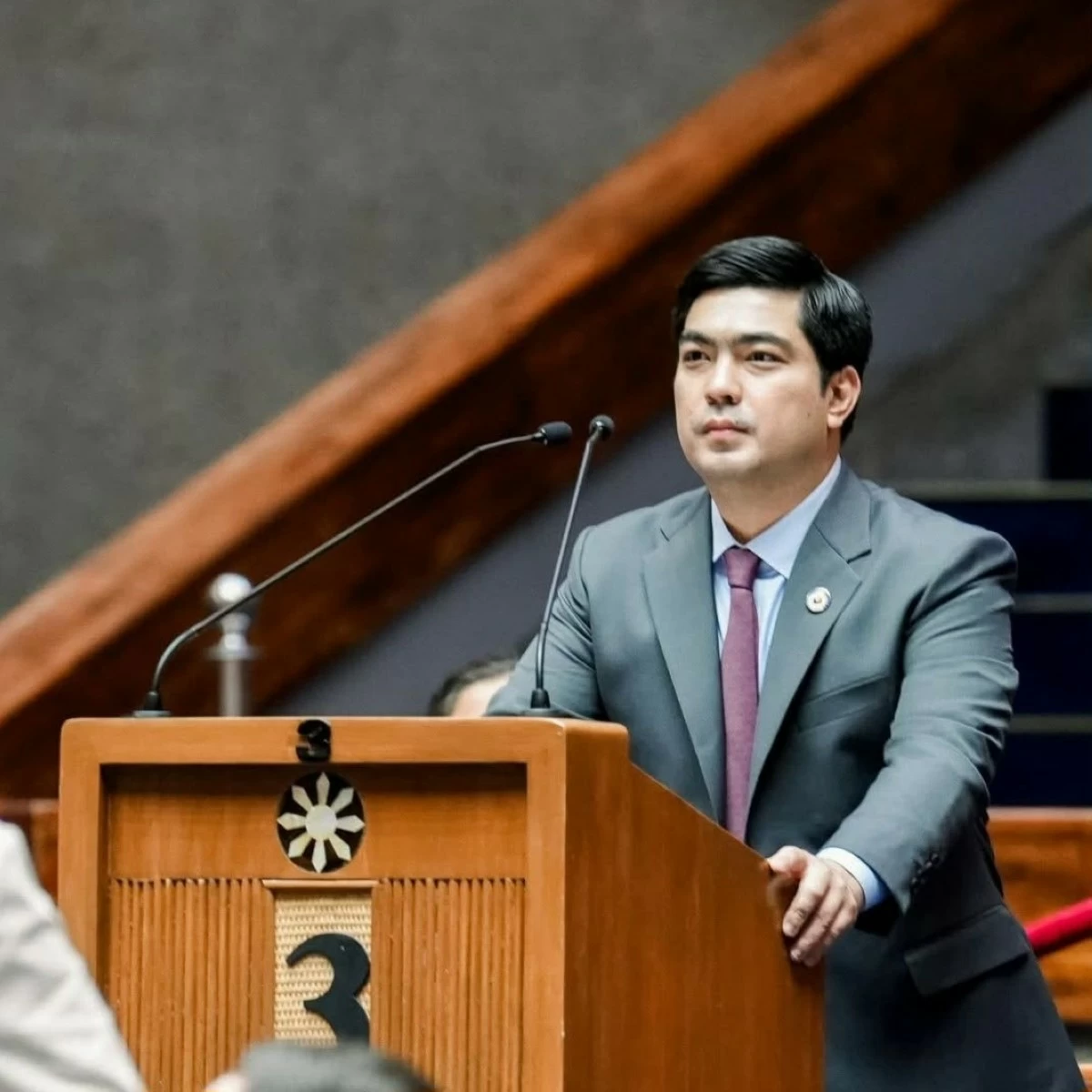
Cavite 1st district Rep. Jolo Revilla (Rep. Revilla's office)
The proposed Barangay Skilled Workers Registry Act, a key labor and local governance measure in the current 20th Congress, was recently passed on second reading in the House of Representatives.
The measure is embodied in Cavite 1st district Rep. Jolo Revilla's House Bill (HB) No. 7719. Revilla chairs the bill's mother committee--the Committee on Labor and Employment.
HB No. 7719 mandates all barangays nationwide to establish and maintain a voluntary registry of skilled workers residing in their respective communities. Its second reading approval was carried out Monday, March 2 via simple voice vote (ayes vs. nayes).
The bill consolidates and substitutes earlier proposals and institutionalizes a community-based mechanism aimed at improving employment matching, strengthening local labor data, and empowering workers at the grassroots level.
In his sponsorship speech in plenary, Revilla underscored that millions of Filipinos earn a living through skilled trades—carpenters, electricians, welders, mechanics, tailors, technicians, caregivers, and other service providers—many of whom acquire their expertise through hands-on experience, apprenticeships, community learning, or informal training.
He said that despite their competence, many remain outside formal employment systems and are often disconnected from local planning and job facilitation mechanisms.
“This bill recognizes a simple but powerful truth—skills already exist in our communities. What has been lacking is visibility and structured linkage to opportunity,” Revilla underscored.
“Kapag nakikita at naitatala ang kakayahan ng ating mga manggagawa sa antas ng barangay, mas nagiging mabilis at mas episyente ang pagtutugma ng trabaho at serbisyo (When the skills of our workers are recognized and recorded at the barangay level, job and service matching becomes faster and more efficient)," he reckoned.
Under the proposed statute, every barangay will be required to create and maintain a registry of skilled workers who voluntarily provide their information.
The registry shall be publicly accessible, posted at the barangay hall and, where available, on official digital platforms to ensure transparency and accessibility to residents and local employers. Copies may also be made available upon request, subject only to reasonable reproduction costs.
The bill makes clear that registration is entirely free and voluntary. It expressly prohibits the collection of any registration fee from skilled workers, ensuring that no additional financial burden is imposed on individuals seeking inclusion in the registry.
Moreover, inclusion in the registry shall not be construed as certification of skills, thereby avoiding unnecessary bureaucracy or regulatory hurdles.
Workers who opt to be listed may submit their name, address, contact details, skills and services offered, and relevant training or certifications, including TESDA credentials if available, subject to written consent. The measure explicitly recognizes skills acquired through formal, non-formal, or informal means, ensuring that workers are not excluded simply because they lack formal national certificates.
“Hindi na kailangang maghanap pa sa malalayong lugar ang mga nangangailangan ng serbisyo. At para sa mga manggagawa, mas madali nang makahanap ng oportunidad sa kanilang mismong komunidad. Ang layunin natin ay gawing mas malapit, mas mabilis, at mas inklusibo ang access sa kabuhayan,” Revilla added.
To strengthen coordination and avoid duplication of existing systems, the bill directs barangays, with assistance from the Department of the Interior and Local Government (DILG), to digitally record the registry and integrate it, as far as practicable, with national databases of the Department of Labor and Employment (DOLE), the Philippine Statistics Authority (PSA), and the Technical Education and Skills Development Authority (TESDA), including the National Skills Registry Program and PhilJobNet.
This integration aims to enhance labor market information, improve data-driven planning, and support more responsive training and employment programs at both local and national levels.
The registry is likewise envisioned to serve as a planning tool for barangays, Public Employment Service Offices (PESOs), and TESDA in identifying local skills gaps and recommending appropriate training interventions. By having reliable, updated community-level data, local governments can better align training programs with actual demand and emerging opportunities.
HB No. 7719 is expected to approved on third and final reading next week.