






Manila Bulletin
 Philippines
National
Israel envoy says 'too hypothetical' PH would get dragged into Middle East conflict
Philippines
National
Israel envoy says 'too hypothetical' PH would get dragged into Middle East conflict
Philippines
National
Israel envoy says 'too hypothetical' PH would get dragged into Middle East conflict
Israel envoy says 'too hypothetical' PH would get dragged into Middle East conflict
Published Mar 3, 2026 02:04 pm


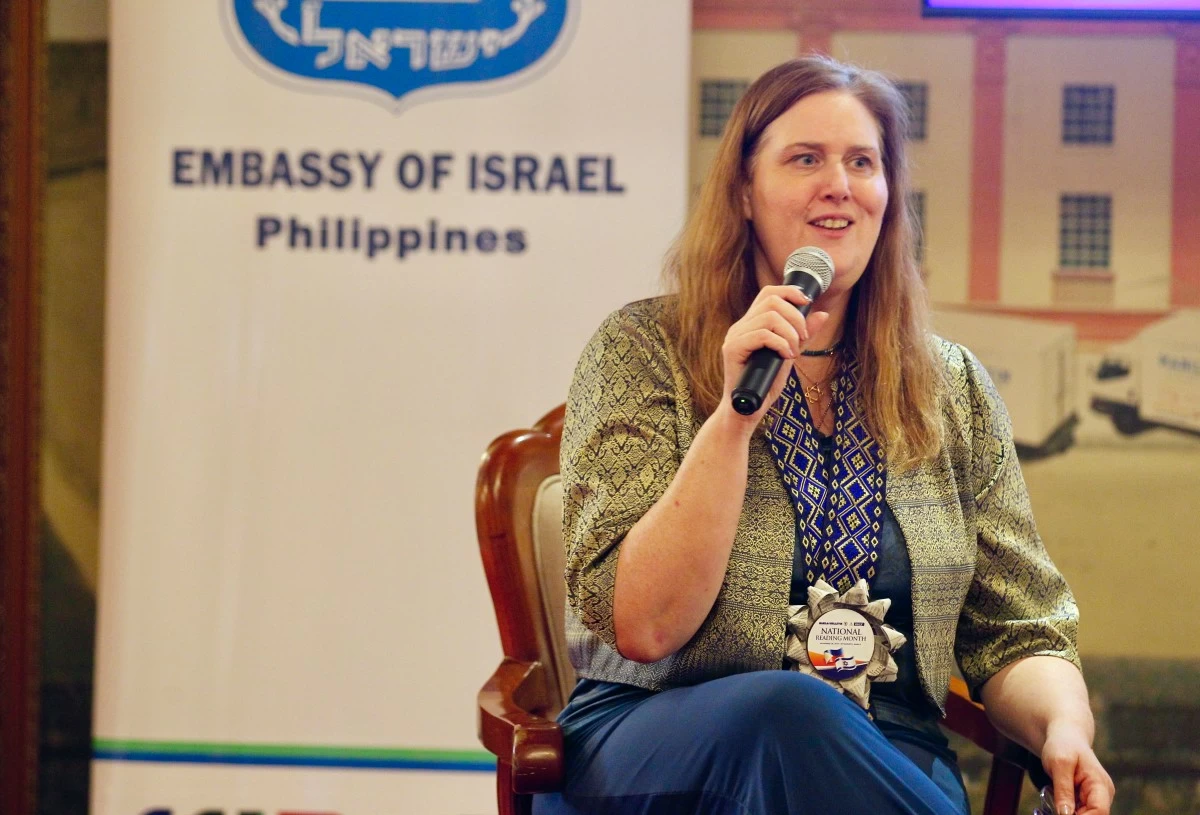
Israel’s Ambassador Dana Kursh
Israel's envoy in Manila does not see the Philippines being dragged into the Middle East conflict, which has now spiraled into a regional conflict among Arab states.
Israeli Ambassador Dana Kursh said "it's too hypothetical" to assume that the Philippines, where US militaries also have presence like those countries attacked by Iran in retaliation to joint Israel-US attack, would be involved in the exchange of attacks.
Her assessment was based on pronouncements already made by the Department of National Defense (DND) and National Security Adviser (NSA) Eduardo Año, who assured the concerned Filipino public of no imminent threat to the country.
"I will rely on your experts [on my thoughts], and the DND and NSA are the experts, and they're very clear in their statements," Kursh said in a Tuesday briefing with reporters.
'Israel wants peace'
During her press conference, Kursh explained Israel's joint attack with the US on Iran, which she said had been planned since November 2025.
She said the Feb. 28 attack that killed Iranian Supreme Leader Ali Khamenei was aimed at "stopping the fanatical Iranian regime," which aimed to annihilate Israel through: advancing its nuclear weapon developments, accelerating long-range ballistic missile production and financing and aiming its terror proxies.
And until all these threats are not resolved, Israel and the US will not stop in its attack on Iran, she said.
Just like a peace agreement it had reached with UAE, Bahrain, Sudan and Morocco, Kursh expressed the belief "we can have peace."
But she also said, "we just have to take out of pictures leaders trying to destroy us."
"We don't want war. We want peace," she said.
"I hope this war will end as soon as possible," she added.
Israel hopes understanding from PH
Amid the spiraling conflict in the Middle East which restarted when US and Israel attacked Iran supposedly to contain its nuclear ambition, several countries—those as known allies both of the US and of Iran—have issued their respective statements of condemnation or support.
But the Philippine Department of Foreign Affairs (DFA) has not issued through its official channels the country's position over the development, except the message of DFA Secretary Ma. Theresa Lazaro to President Marcos that was relayed to the media.
"The Philippines is concerned about the escalation of the situation in the Middle East region and calls on all parties to resort immediately to dialogue and negotiations to bring peace and stability to the region.
The President is deeply concerned for the safety of Filipinos in Iran, Israel, and all the countries in the region," part of the statement that came from the Presidential Communications Office (PCO) read.
Kursh is hoping that the silence from the DFA means that the Philippines "understands the complexity of the situation" as well as Israel's right to self-defense.