






Manila Bulletin
 Philippines
National
Fair skies to provide clear view of total lunar eclipse tonight — PAGASA
Philippines
National
Fair skies to provide clear view of total lunar eclipse tonight — PAGASA
Philippines
National
Fair skies to provide clear view of total lunar eclipse tonight — PAGASA
Fair skies to provide clear view of total lunar eclipse tonight — PAGASA
Published Mar 3, 2026 11:56 am
|
Updated Mar 3, 2026 01:12 pm


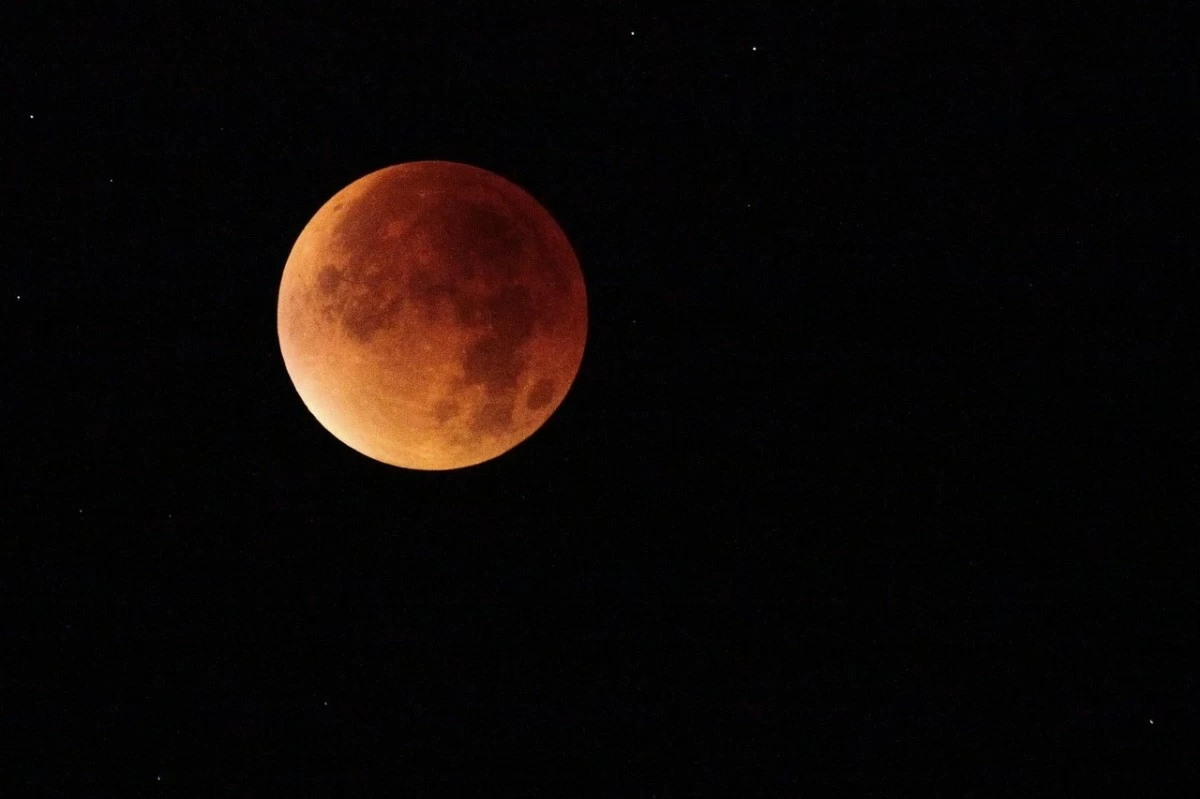
Photo from Pixabay
Sky watchers across the Philippines are in for a celestial spectacle tonight as a total lunar eclipse, often called a “Blood Moon,” becomes visible under generally fair weather conditions, the Philippine Atmospheric, Geophysical and Astronomical Services Administration (PAGASA) said on Tuesday, March 3.
PAGASA weather specialist Chenel Dominguez said clear skies expected over much of the country will allow Filipinos to witness the rare astronomical event as the Moon slowly moves into Earth’s shadow.
“Generally fair weather is expected across the country, so the total lunar eclipse can be viewed clearly and properly,” Dominguez said.
According to PAGASA, the Moon will rise at 5:58 p.m. already partially eclipsed, meaning observers can begin watching shortly after moonrise without waiting for the event to start.
The eclipse will reach totality at 7:04 p.m., when the Moon becomes fully immersed in Earth’s dark central shadow, known as the umbra.
The peak of the eclipse will occur at 7:34 p.m., when the Moon’s disk is completely covered.
Totality will last about 59 minutes and 24 seconds before ending at 8:03 p.m.
The Moon will fully exit the umbral shadow at 9:17 p.m., while the eclipse will officially conclude at 10:25 p.m. after leaving the faint outer penumbral shadow.
During maximum eclipse, the Moon is expected to glow coppery red, which is the signature appearance of a Blood Moon.
PAGASA explained that the reddish color happens when Earth’s atmosphere bends and filters sunlight, scattering shorter blue wavelengths while allowing red light to reach the lunar surface.
Unlike solar eclipses, the event is completely safe to watch without protective eyewear.
The weather bureau said the eclipse can easily be seen with the naked eye, though binoculars or telescopes may enhance the experience.
To help the public enjoy the event, Dominguez said PAGASA will hold free telescope viewing sessions at several sites nationwide, including the PAGASA Astronomical Observatory in Quezon City; PAGASA Northern Luzon Regional Office in Tuguegarao City; Cebu PAGASA Complex Station in Mactan; and Mindanao PAGASA Planetarium in El Salvador.
The total lunar eclipse will also be visible across Eastern Asia, Australia, the Central Pacific, and most parts of the Americas.
The last total lunar eclipse seen in the Philippines was on Sept. 7–8, 2025, and the next will not occur until Dec. 31, 2028 to Jan. 1, 2029, coinciding with New Year’s Eve.