ADVERTISEMENT

DOE pushes staggered oil price hikes as Middle East tensions threaten fuel costs

Published Mar 2, 2026 04:34 pm
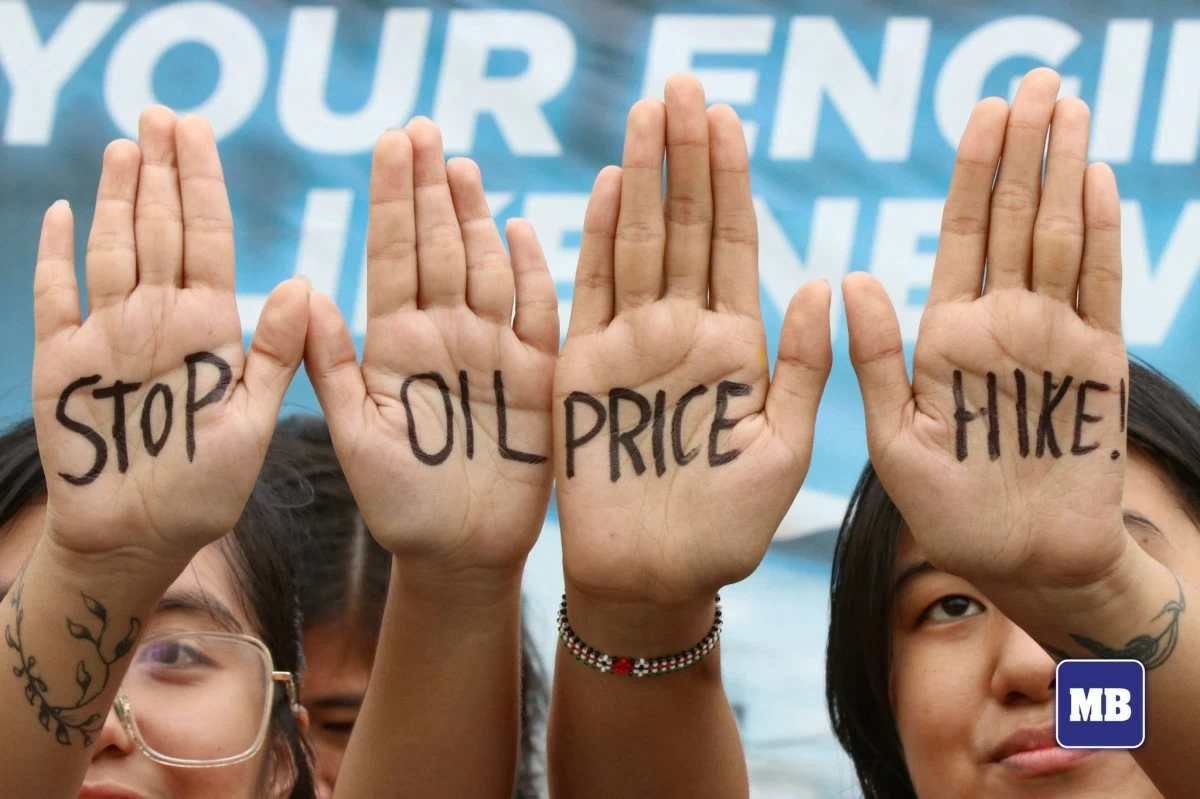
Protesters gathered at a Quezon City gas station along Commonwealth Avenue on Monday, June 23, to condemn the estimated ₱5/liter oil price increase.

Amid an intensifying war among Middle Eastern nations and the United States (US), the Department of Energy (DOE) has rallied oil companies to discuss strategies to lessen the burden of fuel price hikes, as prices are expected to post their 10th consecutive increase soon.

In an interview on Monday, March 2, DOE-Oil Industry Management Bureau (OIMB) Director Rino Abad disclosed that the agency is looking to negotiate with fuel companies to implement price adjustments next week in tranches to ease mounting pressure on motorists.

Following the recent meeting, a staggered price implementation is likely to take effect next week in anticipation of a “big-time” price hike triggered by geopolitical tensions in the Middle East, affecting key regions such as Iraq, Kuwait, Bahrain, and Dubai in United Arab Emirates (UAE).

The DOE and local oil companies are scheduled to convene again on Friday, March 6, to finalize the adjustments based on the latest movements in Mean of Platts Singapore (MOPS) trading.

Abad said a staggered rollout could be triggered or initiated by companies if fuel prices rise by at least ₱3 per liter next week. However, he emphasized that the government has no control over oil firms or movements in the global oil market.

Despite this, the DOE assured that these firms maintain roughly 30 to 60 days’ worth of fuel supply in their inventories, in compliance with Executive Order (EO) 134, which ensures national energy security amid global crises such as intensified geopolitical risks.

Under the guidelines, refiners must maintain a 30-day supply of crude oil products, while other oil firms must keep at least 15 days’ worth of petroleum in their inventory, acting as a buffer for emergency situations.

John Paolo Rivera, senior research fellow at state-run policy think tank Philippine Institute for Development Studies (PIDS), explained that rising fuel costs, if not addressed properly, could deal a heavier blow to the transport and logistics sector.

“Fuel has broad pass-through effects, so we can expect pressure not only on transport fares but also on food distribution, manufacturing, and power generation. This could slow the recent disinflation trend and slightly dampen household purchasing power,” he said. “Sustained oil price increases act like a tax on an oil-importing economy [like the Philippines].”

While a temporary surge may be manageable, Rivera added that a prolonged rise above comfortable levels could significantly strain growth, particularly in sectors reliant on consumer spending and transportation, such as tourism, logistics, and agriculture.

Meanwhile, Senator Win Gatchalian said he is planning to amend the trigger formula for fuel subsidies for the public transport sector, which is currently activated only when oil prices reach an $80-per-barrel threshold.

Gatchalian said he intends to propose a different percentage increase sometime this week to help provide relief to public utility vehicle (PUV) motorists, while also studying delays in the release of Pantawid Pasada funds.
ADVERTISEMENT
.most-popular .layout-ratio{ padding-bottom: 79.13%; } @media (min-width: 768px) and (max-width: 1024px) { .widget-title { font-size: 15px !important; } }

{{ articles_filter_1561_widget.title }}

.most-popular .layout-ratio{ padding-bottom: 79.13%; } @media (min-width: 768px) and (max-width: 1024px) { .widget-title { font-size: 15px !important; } }

{{ articles_filter_1562_widget.title }}

.most-popular .layout-ratio{ padding-bottom: 79.13%; } @media (min-width: 768px) and (max-width: 1024px) { .widget-title { font-size: 15px !important; } }

{{ articles_filter_1563_widget.title }}

{{ articles_filter_1564_widget.title }}

.mb-article-details { position: relative; } .mb-article-details .article-body-preview, .mb-article-details .article-body-summary{ font-size: 17px; line-height: 30px; font-family: "Libre Caslon Text", serif; color: #000; } .mb-article-details .article-body-preview iframe , .mb-article-details .article-body-summary iframe{ width: 100%; margin: auto; } .read-more-background { background: linear-gradient(180deg, color(display-p3 1.000 1.000 1.000 / 0) 13.75%, color(display-p3 1.000 1.000 1.000 / 0.8) 30.79%, color(display-p3 1.000 1.000 1.000) 72.5%); position: absolute; height: 200px; width: 100%; bottom: 0; display: flex; justify-content: center; align-items: center; padding: 0; } .read-more-background a{ color: #000; } .read-more-btn { padding: 17px 45px; font-family: Inter; font-weight: 700; font-size: 18px; line-height: 16px; text-align: center; vertical-align: middle; border: 1px solid black; background-color: white; } .hidden { display: none; }
function initializeAllSwipers() { // Get all hidden inputs with cms_article_id document.querySelectorAll('[id^="cms_article_id_"]').forEach(function (input) { const cmsArticleId = input.value; const articleSelector = '#article-' + cmsArticleId + ' .body_images'; const swiperElement = document.querySelector(articleSelector); if (swiperElement && !swiperElement.classList.contains('swiper-initialized')) { new Swiper(articleSelector, { loop: true, pagination: false, navigation: { nextEl: '#article-' + cmsArticleId + ' .swiper-button-next', prevEl: '#article-' + cmsArticleId + ' .swiper-button-prev', }, }); } }); } setTimeout(initializeAllSwipers, 3000); const intersectionObserver = new IntersectionObserver( (entries) => { entries.forEach((entry) => { if (entry.isIntersecting) { const newUrl = entry.target.getAttribute("data-url"); if (newUrl) { history.pushState(null, null, newUrl); let article = entry.target; // Extract metadata const author = article.querySelector('.author-section').textContent.replace('By', '').trim(); const section = article.querySelector('.section-info ').textContent.replace(' ', ' '); const title = article.querySelector('.article-title h1').textContent; // Parse URL for Chartbeat path format const parsedUrl = new URL(newUrl, window.location.origin); const cleanUrl = parsedUrl.host + parsedUrl.pathname; // Update Chartbeat configuration if (typeof window._sf_async_config !== 'undefined') { window._sf_async_config.path = cleanUrl; window._sf_async_config.sections = section; window._sf_async_config.authors = author; } // Track virtual page view with Chartbeat if (typeof pSUPERFLY !== 'undefined' && typeof pSUPERFLY.virtualPage === 'function') { try { pSUPERFLY.virtualPage({ path: cleanUrl, title: title, sections: section, authors: author }); } catch (error) { console.error('ping error', error); } } // Optional: Update document title if (title && title !== document.title) { document.title = title; } } } }); }, { threshold: 0.1 } ); function showArticleBody(button) { const article = button.closest("article"); const summary = article.querySelector(".article-body-summary"); const body = article.querySelector(".article-body-preview"); const readMoreSection = article.querySelector(".read-more-background"); // Hide summary and read-more section summary.style.display = "none"; readMoreSection.style.display = "none"; // Show the full article body body.classList.remove("hidden"); } document.addEventListener("DOMContentLoaded", () => { let loadCount = 0; // Track how many times articles are loaded const offset = [1, 2, 3, 4, 5, 6, 7, 8, 9, 10]; // Offset values const currentUrl = window.location.pathname.substring(1); let isLoading = false; // Prevent multiple calls if (!currentUrl) { console.log("Current URL is invalid."); return; } const sentinel = document.getElementById("load-more-sentinel"); if (!sentinel) { console.log("Sentinel element not found."); return; } function isSentinelVisible() { const rect = sentinel.getBoundingClientRect(); return ( rect.top < window.innerHeight && rect.bottom >= 0 ); } function onScroll() { if (isLoading) return; if (isSentinelVisible()) { if (loadCount >= offset.length) { console.log("Maximum load attempts reached."); window.removeEventListener("scroll", onScroll); return; } isLoading = true; const currentOffset = offset[loadCount]; window.loadMoreItems().then(() => { let article = document.querySelector('#widget_1690 > div:nth-last-of-type(2) article'); intersectionObserver.observe(article) loadCount++; }).catch(error => { console.error("Error loading more items:", error); }).finally(() => { isLoading = false; }); } } window.addEventListener("scroll", onScroll); });

Sign up by email to receive news.