






 Business
Trade & Industry
Interest rate cuts, restored investor confidence key to property recovery—Colliers
Business
Trade & Industry
Interest rate cuts, restored investor confidence key to property recovery—Colliers
Interest rate cuts, restored investor confidence key to property recovery—Colliers


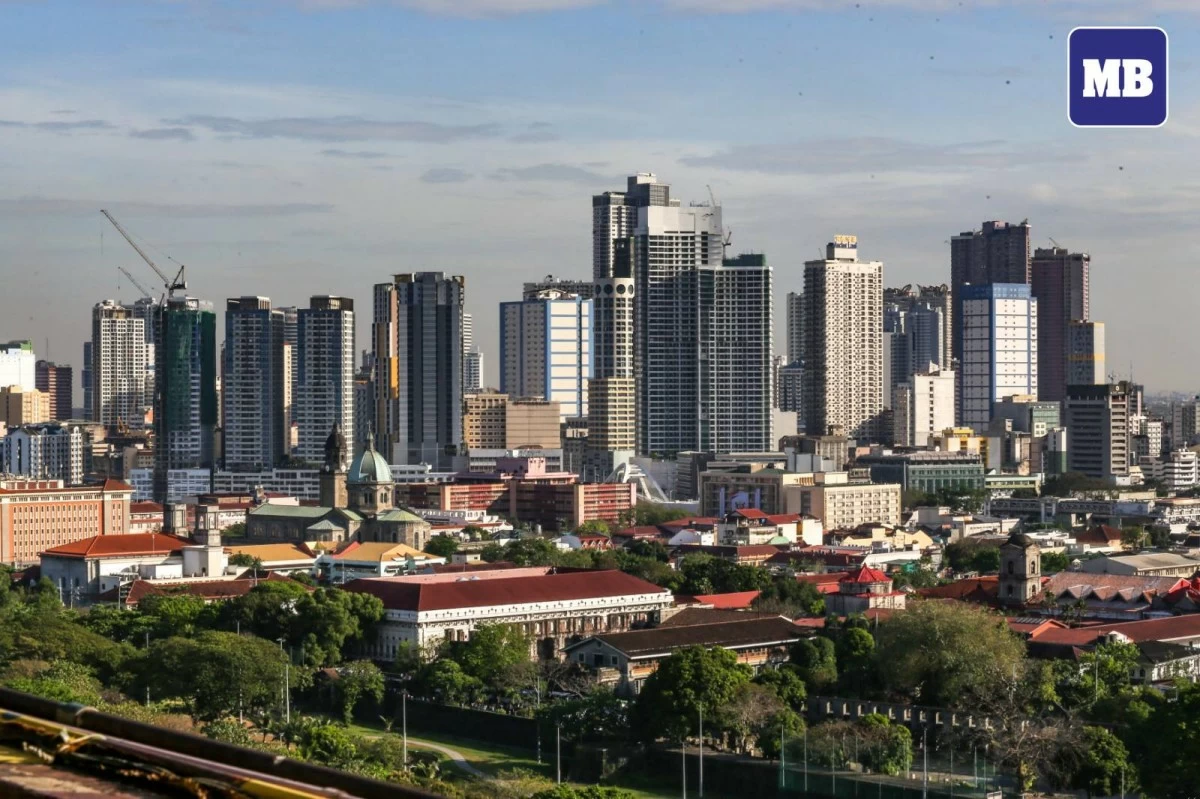
Property consultancy Colliers Philippines said further interest rate cuts and improved investor confidence will be crucial in supporting real estate demand despite the Philippines posting its slowest economic growth in more than a decade.
In its Colliers Manila Q4 2025 GDP Flash Report dated March 2, it highlighted that easing monetary policy and stronger infrastructure execution could help sustain expansion across the property sector even as economic growth slowed last year.
Colliers noted that the Philippine economy grew by 4.4 percent in 2025, slower than the 5.7 percent recorded a year earlier and below the government’s 5.5- to 6.5-percent target range. Excluding the pandemic contraction in 2020, this marked the country’s weakest annual growth since 2011.
“The Philippines’ gross domestic product (GDP) growth in 2025 was the slowest since 2011 (excluding 2020). Despite this, Colliers is still optimistic about the country’s growth prospects especially with further reduction in basic policy rates likely to drum up infrastructure spending. Moreover, business process outsourcing (BPO) and remittances from Filipinos working abroad continue to be among the Philippines’ growth engines and these major planks of our economy also have positive, multiplier effects on real estate demand,” Colliers Philippines research director Joey Roi Bondoc said.
Colliers cited that the Bangko Sentral ng Pilipinas (BSP) has aggressively eased monetary policy, cutting benchmark interest rates by a total of 225 basis points (bps) since August 2024, including a 25-bp reduction in February that brought the policy rate to 4.25 percent—the lowest level in more than three years.
However, the firm said lower policy rates have yet to fully translate into reduced mortgage costs, prompting developers to offer flexible payment schemes and promotional terms to stimulate condominium demand.
Colliers said continued rate reductions could lift consumer spending and benefit retail and leisure assets, strengthening developers’ recurring income streams.
“In our view, further rate cuts should prop up retail and leisure spending in the country, and this should support the recurring income-generating assets of Philippine developers,” Colliers said.
Inflation averaged 1.7 percent in 2025, the lowest in nearly a decade, giving policymakers room to maintain an accommodative stance, according to the report.
Beyond monetary policy, Colliers emphasized that restoring investor confidence will be essential to attracting more foreign investments, particularly into outsourcing and industrial sectors that drive office and logistics demand.
“Colliers Philippines believes that raising investor confidence in the country will play a pivotal role in enabling the Philippines to attract more foreign direct investments (FDIs) funneled into outsourcing and industrial sectors,” the report said, adding that FDIs are seen boosting the country’s industrial and office sectors, especially across key corridors such as Metro Manila, Metro Cebu, Central Luzon, and Southern Luzon.
The consultancy added that concerns over the misallocation and underutilization of public funds for infrastructure projects have slowed the rollout of major transport developments, underscoring the need for improved governance and project execution.
“There’s no doubt that misallocation and underutilization of funds intended for public projects has hampered the implementation of big-ticket transportation projects. Resolving this will be instrumental in hastening the construction of game-changing infrastructure which should guide developers’ diversification efforts,” Colliers said.
Despite economic headwinds, Metro Manila’s office market ended 2025 on a stronger footing, with net take-up exceeding revised projections and vacancy easing to 19.4 percent as demand from traditional firms, government agencies, and outsourcing companies improved.
Colliers also reported improving condominium absorption, with unsold inventory life declining significantly in the fourth quarter of 2025 after developers rolled out aggressive promotional programs.
The firm expects developers to continue diversifying geographically and exploring emerging business locations outside Metro Manila while targeting end-user demand within the capital.
Colliers recommended expanding the country’s tourism demand base by attracting travelers from Europe and Middle East and encouraging partnerships with foreign hospitality brands to improve competitiveness.
Meanwhile, the industrial sector remains a bright spot, supported by expansion among industrial park developers in Central and Southern Luzon catering to high-value manufacturers.
For Colliers, policy support, improved infrastructure delivery, and sustained investment inflows will be key in sustaining property market momentum despite slower economic growth.