







MUFG: Philippine trade costs to fall after US court ruling
By Derco Rosal
Published Mar 2, 2026 12:00 am
|
Updated Feb 28, 2026 01:17 pm


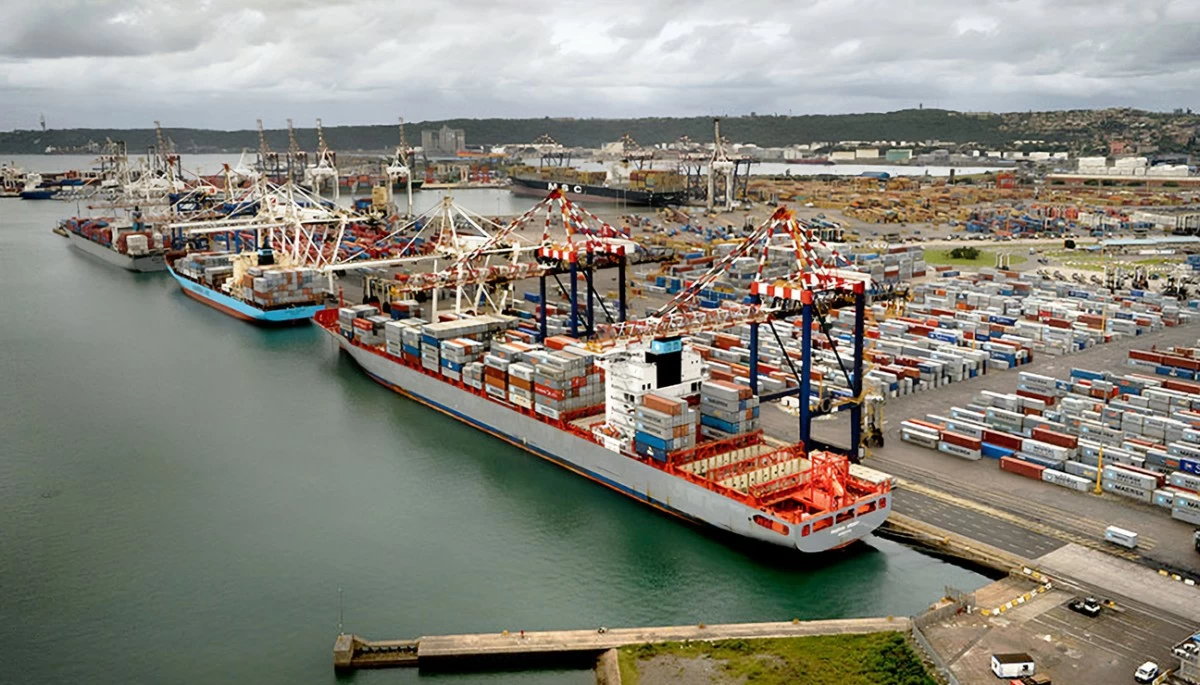
Durban Container Terminal Pier 2
MUFG Bank Ltd. expects tariffs on Philippine imports to the United States (US) to decline relative to previous levels, citing shift in trade policy following the high-profile legal setback for the Trump administration.
Analysts at the Japanese financial giant said in a commentary Friday, Feb. 27, that the Philippines is positioned to see lower effective trade costs than those seen prior to a US Supreme Court ruling that curbed the White House’s tariff authorities.
.“For the Philippines specifically, tariffs are likely to come down relative to pre-US Supreme Court (SCOTUS), given relatively lower exemptions and sectoral tariffs,” MUFG analysts wrote.
President Trump initially announced a 10 percent blanket tariff before threatening to raise it to 15 percent. The US Supreme Court later ruled that the emergency powers law Trump relied on did not authorize his tariff policy.
Following the ruling against the use of the International Emergency Economic Powers Act (IEEPA) for tariffs, the Philippines is expected to see a shift in trade costs.
President Marcos’ chief economic manager said Manila is working on the assumption that key exports, including semiconductors and agricultural products, will remain exempt from new US trade levies, even as confusion mounts over the final rate to be imposed by Trump.
He added that the administration’s baseline assumption is that semiconductors and major agricultural exports—the backbone of Philippine trade with the US—will be excluded from the 15 percent regime.
Go told reporters last week that the Philippines currently finds itself in a precarious but potentially “good spot.” A move to at least a 15 percent global baseline could represent a relative improvement in trade costs, provided the exemptions for high-value electronics and fruit exports hold.
Maybank estimates suggest the effective reciprocal tariff rate for Philippine goods has already eased to 17.1 percent from 18.5 percent following recent US policy adjustments.
Such a modest lift is seen by the Malaysia-based lender as helping the anemic 4.4-percent economic growth in 2025 recover to 4.9 percent in 2026 and continue recovering to 5.2 percent in 2027.
MUFG, meanwhile, has penciled in brisker output growth at 5.1 percent this year, falling within the lowered target of a minimum five percent.
Citing the persistent risk of dampened confidence continuously bruising the economy, MUFG believes that Bangko Sentral ng Pilipinas (BSP) will still resort to easing lending costs to four percent by year-end, even as it previously signaled the nearing end of the easing cycle.
“We still expect one final 25 basis points (bps) cut this year, as policymakers appear concerned about weak domestic confidence dampening economic growth,” the Japanese lender said, noting too that the BSP “may be near the end” of its inflation-targeting monetary policy easing cycle.
On prices, MUFG said inflationary pressures remain manageable, a condition that offers “relative stability for the peso compared with its regional peers.”
It expects inflation to have accelerated by 2.4 percent in February, faster than January’s two percent. Singapore-based UOB has also priced in a similar rate of price increases last month.
Despite a slight boost from tame inflation, MUFG still forecasts the peso to weaken to 59 per US dollar by the end of the first quarter, 59.30 in the second, 59.70 in the third, and reach 60 by the fourth quarter of 2026.