






 Business
Trade & Industry
Philippines eyes $800-million ADB backstop for North-South Commuter Railway operator
Business
Trade & Industry
Philippines eyes $800-million ADB backstop for North-South Commuter Railway operator
Philippines eyes $800-million ADB backstop for North-South Commuter Railway operator


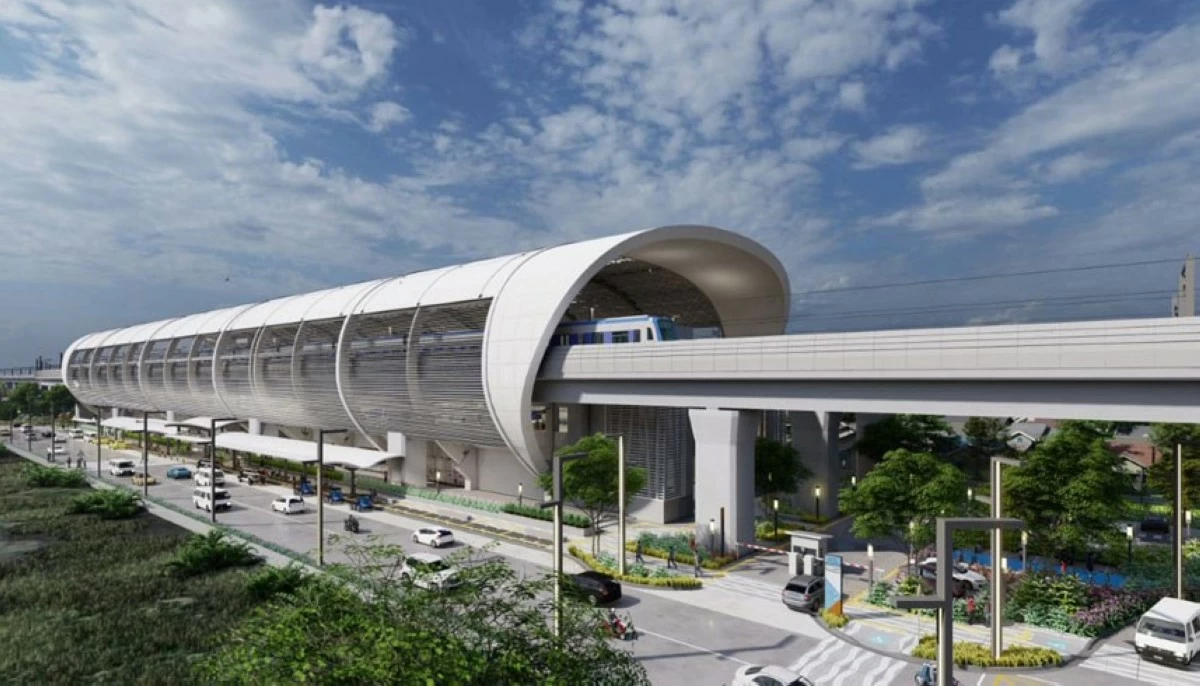
The Philippines is planning to borrow up to $800 million from the Asian Development Bank (ADB) as a partial credit guarantee (PCG) to ensure timely payments to the winning operator of North-South Commuter Railway (NSCR).
In a project data sheet published last month, the Manila-based multilateral lender said its host country is requesting the PCG to address market concerns about delayed or nonpayment of availability payments once the railway begins operations.
The ₱229-billion concession to operate and maintain NSCR is adopting an availability-based payment structure as part of its public-private partnership (PPP) scheme.
Under the PPP, the Department of Transportation (DOTr) has committed to making regular availability payments to the NSCR operator in exchange for delivering its end of the bargain under the operations and maintenance (O&M) contract.
This payment scheme guarantees predictable revenue for the concessionaire while maintaining affordability for users, according to the ADB.
Given the unpredictable nature of government payments, however, the PCG will serve as a liquidity backstop, ensuring concessionaires can draw on a standby letter of credit from a commercial bank to cover delayed payments.
The proposed $800-million PCG is equivalent to 24 months of availability payment obligations.
Through this guarantee, the DOTr expects NSCR’s O&M contract to encourage greater participation among the world’s largest railway operators while promoting competition and reducing barriers to entry for interested parties.
Following a pre-bid conference in December last year, the DOTr said multiple rail operators have already expressed interest in managing what would be the country’s biggest railway infrastructure project.
Among those that have expressed interest are Japanese and French transit operators, as well as local infrastructure giants San Miguel Corp. (SMC) and First Balfour Inc.
Based on the latest bidding schedule for the concession, the DOTr plans to initiate the bidding process in July, with awarding of the contract scheduled for October.
Once awarded, the operator will oversee the 147-kilometer NSCR, including trains, depots, stations, guideways, and interoperations with the under-construction Metro Manila Subway Project (MMSP).
There is urgency within the government to find the most suitable operator for NSCR as it nears completion of right-of-way (ROW) acquisitions in the northern segment of the railway by midyear.
It is also working to expedite ROW acquisitions on the southern line, having recently turned over four of the 19 stations to the government, particularly in EDSA, Cabuyao, Santa Rosa, and Banlic.
Spanning 35 stations across three regions, NSCR is expected to accommodate up to one million commuters daily once fully operational.
It is also seen as significantly reducing travel time for passengers heading to Clark International Airport from its southernmost point in Calamba City, Laguna—from the current four hours to less than two and a half hours.
At present, partial operations of the railway’s Valenzuela-to-Malolos segment are targeted to begin in December 2027, while the Malolos-to-Clark segment is expected to operate by October 2028.