ADVERTISEMENT

DepEd reaffirms data-driven education reforms at 2026 School Research Congress

Published Mar 1, 2026 11:57 am  |  Updated Mar 1, 2026 01:49 pm
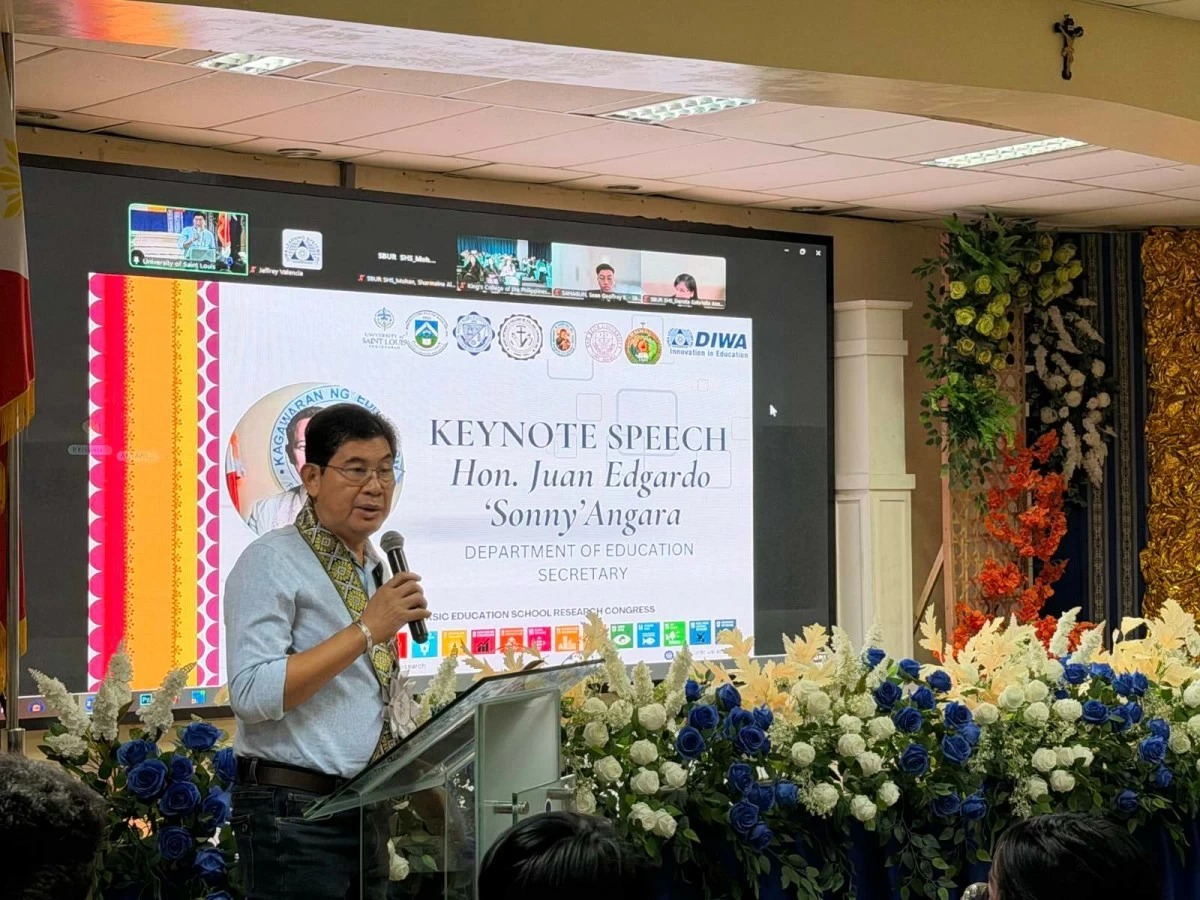
DepEd highlights the importance of research and data-driven reforms during the National Basic Education School Research Congress 2026 at the University of Saint Louis Tuguegarao. (DepEd photo)
The Department of Education (DepEd) reaffirmed its commitment to data-driven and evidence-based reforms during the National Basic Education School Research Congress 2026.
The two-day congress, held on February 27–28 at the University of Saint Louis Tuguegarao (USLT), brought together educators, researchers, and students from across the country to showcase research initiatives supporting quality basic education and aligned with the United Nations’ Sustainable Development Goals (SDGs).
Research at the core of education reform
In his message, DepEd Secretary Sonny Angara emphasized the central role of research in shaping responsive and sustainable education policies.
“Ang isang DepEd na nakikinig sa datos ay may kakayahang tukuyin nang malinaw ang mga hamon, unawain ang mga ugat nito, at kumilos tungo sa pangmatagalan at epektibong mga solusyon (A DepEd that listens to data has the ability to clearly identify challenges, understand their root causes, and act toward long-term and effective solutions),” Angara said in his message delivered by DepEd Region II Director Benjamin Paragas.
Angara underscored that reforms in basic education are guided by evidence and anchored on the Department’s 5-Point Reform Agenda, aligned with the mandate of Ferdinand R. Marcos Jr..
DepEd’s 5-point reform agenda
Angara said DepEd continues to implement key reforms focused on improving access, quality, and support systems in schools nationwide.
These include accelerating classroom construction programs in partnership with local government units (LGUs) and private stakeholders; expanding school-based feeding and early childhood care and development programs; revitalizing the curriculum to prepare students for the future of work; ensuring sufficient learning resources for schools; and providing stronger support systems for teachers.
“We are accelerating our classroom construction program, with the help of our LGUs and private partners,” Angara said. “We are prioritizing and investing in our school-based feeding and early childhood care and development programs,” he added.
Angara added that DepEd is revitalizing its curriculum to meet the demands of tomorrow and prepare Filipino students for the future of work.
“We are making sure that our schools have enough learning resources and that our teachers are provided with the best support they can have,” he said.
Angara further emphasized that meaningful reforms depend on applying research findings to actual policy and program implementation. “Because, as we understand in research, we can have good results—but only if we act on what evidence consistently tells us,” he added.
Strengthening research and collaboration in basic education
The Congress, organized by the Center for Basic Education Research of USLT, served as a platform for knowledge sharing and innovation in the Philippine education sector.
DepEd recognized the importance of institutionalizing research platforms to enhance program implementation, bridge learning gaps, and promote best practices in schools. The Department also highlighted how collaboration among academic institutions, educators, and policymakers strengthens reform initiatives and benefits both learners and teachers.
Building a research-oriented culture in schools
In his closing message, Angara encouraged educators and students to cultivate a strong research mindset to drive continuous improvement in classrooms nationwide.
“Patuloy ninyong hamunin ang nakasanayan, magsilbing ilaw sa inyong mga mag-aaral, at sama-sama nating itaas ang antas ng kalidad at kahusayan sa bawat silid-aralan sa buong kapuluan (Continue to challenge what is customary, serve as a light to your students, and together let us raise the level of quality and excellence in every classroom across the archipelago),” Angara said.
The National Basic Education School Research Congress 2026 underscores DepEd’s sustained push for evidence-based policymaking, innovation in education, and long-term reforms aimed at improving learning outcomes for Filipino students. 

Related Tags

DepEd 2026 School Research Congress data-driven education reforms evidence-based policymaking Philippines DepEd 5-Point Reform Agenda basic education research Philippines
ADVERTISEMENT
.most-popular .layout-ratio{ padding-bottom: 79.13%; } @media (min-width: 768px) and (max-width: 1024px) { .widget-title { font-size: 15px !important; } }

{{ articles_filter_1561_widget.title }}

.most-popular .layout-ratio{ padding-bottom: 79.13%; } @media (min-width: 768px) and (max-width: 1024px) { .widget-title { font-size: 15px !important; } }

{{ articles_filter_1562_widget.title }}

.most-popular .layout-ratio{ padding-bottom: 79.13%; } @media (min-width: 768px) and (max-width: 1024px) { .widget-title { font-size: 15px !important; } }

{{ articles_filter_1563_widget.title }}

{{ articles_filter_1564_widget.title }}

.mb-article-details { position: relative; } .mb-article-details .article-body-preview, .mb-article-details .article-body-summary{ font-size: 17px; line-height: 30px; font-family: "Libre Caslon Text", serif; color: #000; } .mb-article-details .article-body-preview iframe , .mb-article-details .article-body-summary iframe{ width: 100%; margin: auto; } .read-more-background { background: linear-gradient(180deg, color(display-p3 1.000 1.000 1.000 / 0) 13.75%, color(display-p3 1.000 1.000 1.000 / 0.8) 30.79%, color(display-p3 1.000 1.000 1.000) 72.5%); position: absolute; height: 200px; width: 100%; bottom: 0; display: flex; justify-content: center; align-items: center; padding: 0; } .read-more-background a{ color: #000; } .read-more-btn { padding: 17px 45px; font-family: Inter; font-weight: 700; font-size: 18px; line-height: 16px; text-align: center; vertical-align: middle; border: 1px solid black; background-color: white; } .hidden { display: none; }
function initializeAllSwipers() { // Get all hidden inputs with cms_article_id document.querySelectorAll('[id^="cms_article_id_"]').forEach(function (input) { const cmsArticleId = input.value; const articleSelector = '#article-' + cmsArticleId + ' .body_images'; const swiperElement = document.querySelector(articleSelector); if (swiperElement && !swiperElement.classList.contains('swiper-initialized')) { new Swiper(articleSelector, { loop: true, pagination: false, navigation: { nextEl: '#article-' + cmsArticleId + ' .swiper-button-next', prevEl: '#article-' + cmsArticleId + ' .swiper-button-prev', }, }); } }); } setTimeout(initializeAllSwipers, 3000); const intersectionObserver = new IntersectionObserver( (entries) => { entries.forEach((entry) => { if (entry.isIntersecting) { const newUrl = entry.target.getAttribute("data-url"); if (newUrl) { history.pushState(null, null, newUrl); let article = entry.target; // Extract metadata const author = article.querySelector('.author-section').textContent.replace('By', '').trim(); const section = article.querySelector('.section-info ').textContent.replace(' ', ' '); const title = article.querySelector('.article-title h1').textContent; // Parse URL for Chartbeat path format const parsedUrl = new URL(newUrl, window.location.origin); const cleanUrl = parsedUrl.host + parsedUrl.pathname; // Update Chartbeat configuration if (typeof window._sf_async_config !== 'undefined') { window._sf_async_config.path = cleanUrl; window._sf_async_config.sections = section; window._sf_async_config.authors = author; } // Track virtual page view with Chartbeat if (typeof pSUPERFLY !== 'undefined' && typeof pSUPERFLY.virtualPage === 'function') { try { pSUPERFLY.virtualPage({ path: cleanUrl, title: title, sections: section, authors: author }); } catch (error) { console.error('ping error', error); } } // Optional: Update document title if (title && title !== document.title) { document.title = title; } } } }); }, { threshold: 0.1 } ); function showArticleBody(button) { const article = button.closest("article"); const summary = article.querySelector(".article-body-summary"); const body = article.querySelector(".article-body-preview"); const readMoreSection = article.querySelector(".read-more-background"); // Hide summary and read-more section summary.style.display = "none"; readMoreSection.style.display = "none"; // Show the full article body body.classList.remove("hidden"); } document.addEventListener("DOMContentLoaded", () => { let loadCount = 0; // Track how many times articles are loaded const offset = [1, 2, 3, 4, 5, 6, 7, 8, 9, 10]; // Offset values const currentUrl = window.location.pathname.substring(1); let isLoading = false; // Prevent multiple calls if (!currentUrl) { console.log("Current URL is invalid."); return; } const sentinel = document.getElementById("load-more-sentinel"); if (!sentinel) { console.log("Sentinel element not found."); return; } function isSentinelVisible() { const rect = sentinel.getBoundingClientRect(); return ( rect.top < window.innerHeight && rect.bottom >= 0 ); } function onScroll() { if (isLoading) return; if (isSentinelVisible()) { if (loadCount >= offset.length) { console.log("Maximum load attempts reached."); window.removeEventListener("scroll", onScroll); return; } isLoading = true; const currentOffset = offset[loadCount]; window.loadMoreItems().then(() => { let article = document.querySelector('#widget_1690 > div:nth-last-of-type(2) article'); intersectionObserver.observe(article) loadCount++; }).catch(error => { console.error("Error loading more items:", error); }).finally(() => { isLoading = false; }); } } window.addEventListener("scroll", onScroll); });

Sign up by email to receive news.