






 Business
Trade & Industry
Electronics exports poised to break $50 billion in 2026 on AI boom
Business
Trade & Industry
Electronics exports poised to break $50 billion in 2026 on AI boom
Electronics exports poised to break $50 billion in 2026 on AI boom


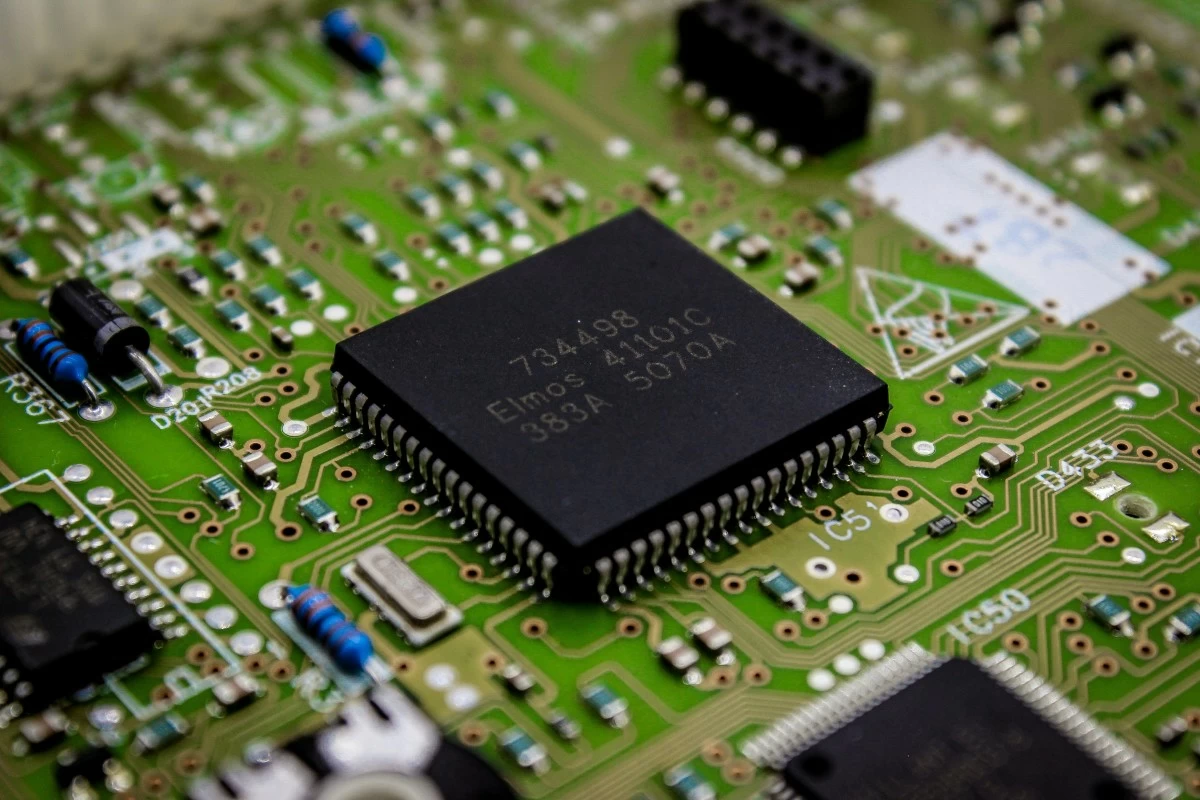
The country’s electronic exports are projected to surpass the $50-billion mark this year, setting a new record high on the back of growing adoption of artificial intelligence (AI) and United States (US) tariff exemptions.
Semiconductor and Electronics Industries in the Philippines Foundation Inc. (SEIPI) associate business lead Cristjan Dave Bael said the industry group’s policymaking body has agreed to set its growth target for the year at a “conservative” five percent.
If realized, electronic exports would reach $52.12 billion this year, up 16.11 percent from last year’s estimated value of $49.64 billion, as aggregated by SEIPI.
SEIPI’s data are lower than the latest preliminary figure from the Philippine Statistics Authority (PSA), which placed 2025 exports at $45.96 billion, as it excludes what the group refers to as “other electronics.”
Bael said the projected growth builds on last year’s momentum, which defied expectations of flat growth.
“We are now at $49.64 billion, which is a couple of figures away from our 2022 peak at around $49.66 billion. This is primarily driven by AI,” he said.
While the Philippines has no capacity yet to manufacture AI chips, Bael said it is already producing commodities that support the periphery of the AI ecosystem, including infrastructure and power systems.
Still, he said the industry remains in “wait-and-see mode” as it awaits developments in the tariff policy of the US, the Philippines’ largest export market.
Last week, the US Supreme Court ruled that President Donald Trump’s reciprocal tariffs, imposed under the International Emergency Economic Powers Act (IEEPA), were unconstitutional.
Following the ruling, Trump immediately implemented a 10-percent global tariff on nearly all imports pursuant to Section 122 of the US Trade Act of 1974. He later raised the tariff rate to 15 percent, although it has since been implemented at a lower 10 percent.
Bael said semiconductor products, which were exempted from tariffs last year, continue to be free from the additional surcharge, as relayed to SEIPI by the Department of Trade and Industry (DTI).
“The industry is still shielded from that because under the Section 122, those commodities under the Section 232 [of the US Trade Expansion Act of 1962] investigations, which the Philippine semiconductors are a part of, are exempted,” he said.
Bael added that they are still reviewing Trump’s latest tariff order to determine whether other electronic exports—some of which were also exempted last year—continue to receive the same treatment this year.
Given these uncertainties, SEIPI is limiting its growth projection for the year to just five percent, especially after Trump threatened to impose tariffs on semiconductors last year.
For now, the more than 380 companies that make up SEIPI are operating under a “business-as-usual” stance, even as uncertainty continues to hang over the global trade environment.
Bael said the group is working with the DTI to help diversify markets and find alternative sources for imported components to “shield ourselves from geopolitical tensions.”
On the part of the government, President Ferdinand “Bongbong” Marcos Jr. earlier tapped Executive Secretary Ralph Recto as the new chairperson of the Semiconductor and Electronics Industry Advisory Council (SEIAC).
SEIAC, the lead advisory body for the semiconductor and electronics industry, aims to accelerate the industry’s transition from traditional assembly, test, and packaging (ATP) to higher-value integrated circuit (IC) design.
“This will move the Philippines up the global semiconductor value chain, strengthen the nation’s technological capability, and expand opportunities for skilled Filipino talent,” the DTI said.