






Manila Bulletin
 Business
Banking & Finance
Philippine fiscal gains put 'A' rating in sight despite growth slump
Business
Banking & Finance
Philippine fiscal gains put 'A' rating in sight despite growth slump
Business
Banking & Finance
Philippine fiscal gains put 'A' rating in sight despite growth slump
Philippine fiscal gains put 'A' rating in sight despite growth slump
By Derco Rosal
Published Feb 27, 2026 02:33 pm


At A Glance
- Citing nearly three-decade high revenue effort and the narrowing fiscal and current account deficits, a local economic think tank believes the Philippines is nearing to clinch an A-level sovereign credit rating before the Marcos Jr. administration ends.
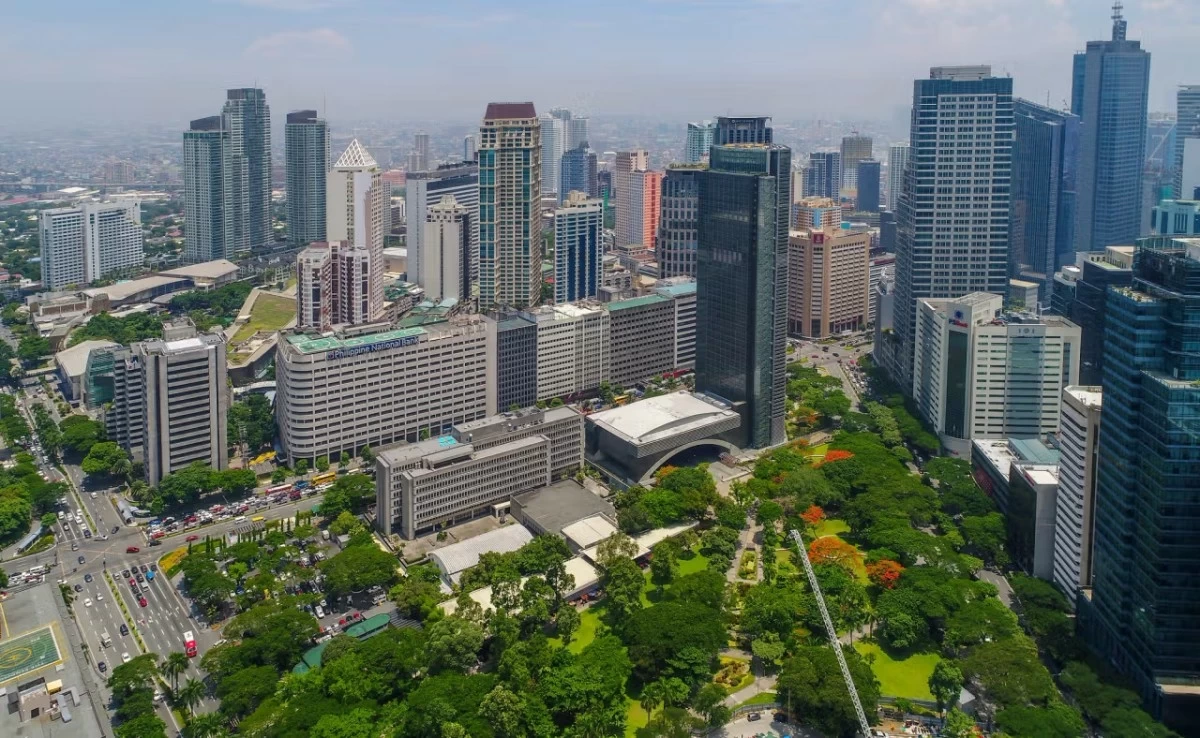
The Philippines is positioned to secure an A-level sovereign credit rating within the next two years, bolstered by record revenue efforts and narrowing fiscal gaps, according to a local economic think tank.
Manila-based Institute for Risk and Strategic Studies (Salceda Research) said the Philippines is close to securing a higher credit rating in two years, following the stalled upgrade due to the controversial flood-control mess.
“The Philippines is on the verge of securing an A-level sovereign credit rating within two years,” Salceda Research chair Joey S. Salceda wrote in a commentary published on Thursday, Feb, 27.
Salceda banks on the latest assessment from global debt watcher S&P Global Ratings, which assigned a positive sovereign rating outlook for the country in 2026, a scarce outlook only received by three economies—including the country—in the Asia-Pacific (APAC) region.
“We are one notch away,” Salceda said, noting that the BBB+ assigned to the Philippines by the S&P Ratings entails a possibility of hitting an A- over the next two years. He said this can be achieved if the country succeeds at sustaining the improvements in both the fiscal and external accounts.
For Salaceda, this nearing upgrade could be attributed to the Marcos administration’s “sound economic management.” The economy, meanwhile, grew to 4.4 percent in 2025 after the sharp plunge to three percent in the fourth quarter.
According to the Bangko Sentral ng Pilipinas (BSP), this worse-than-expected gross domestic product (GDP) outturn was severely bruised by the dampened confidence of consumers and businesses.
Salceda also noted the country’s high foreign exchange (forex) buffer last year, which surpassed those of several European countries, including Spain, Belgium, Denmark, and Sweden.
It can be recalled that the country’s gross international reserves (GIR)—the country’s stock of United States (US) dollars and other foreign currencies—peaked at $110.9 billion in 2025 on the continued rally of gold during the period.
Saceda Research also cited the S&P’s regional sovereign rating trends report which confirmed that the Philippines’ sovereign credit metrics are expected to strengthen over the next one to two years on the back of narrowing fiscal and current account deficits.
A rating upgrade, the economist said, is reinforced by the ongoing cleanup of the flood-control mess and the government’s governance reforms. “It demonstrates institutional self-correction capacity, which is exactly what governance-focused agencies like Fitch want to see,” Salceda said.
Additionally, what would make the upgrade to the A-level is the national government’s (NG) fiscal management.
To note, the NG’s revenues relative to output stood at 16.7 percent in 2024, with tax collections expanding by double digits. However, the government projects this easing to 15.9 percent in 2025, then gradually recovering to the 16-percent level.
Salceda also cited the goal of narrowing the fiscal gap to around four percent of GDP by 2028 and three percent by 2030. “If we stay on that path, the upgrade is ours to lose,” he said.