








ZOZOBRADO
DAVAO CITY – A Davao City councilor dismissed on Tuesday, Feb. 24, claims that this city is “pro-China,” describing the characterization as unfair and a misunderstanding of how Davao manages its international partnerships.
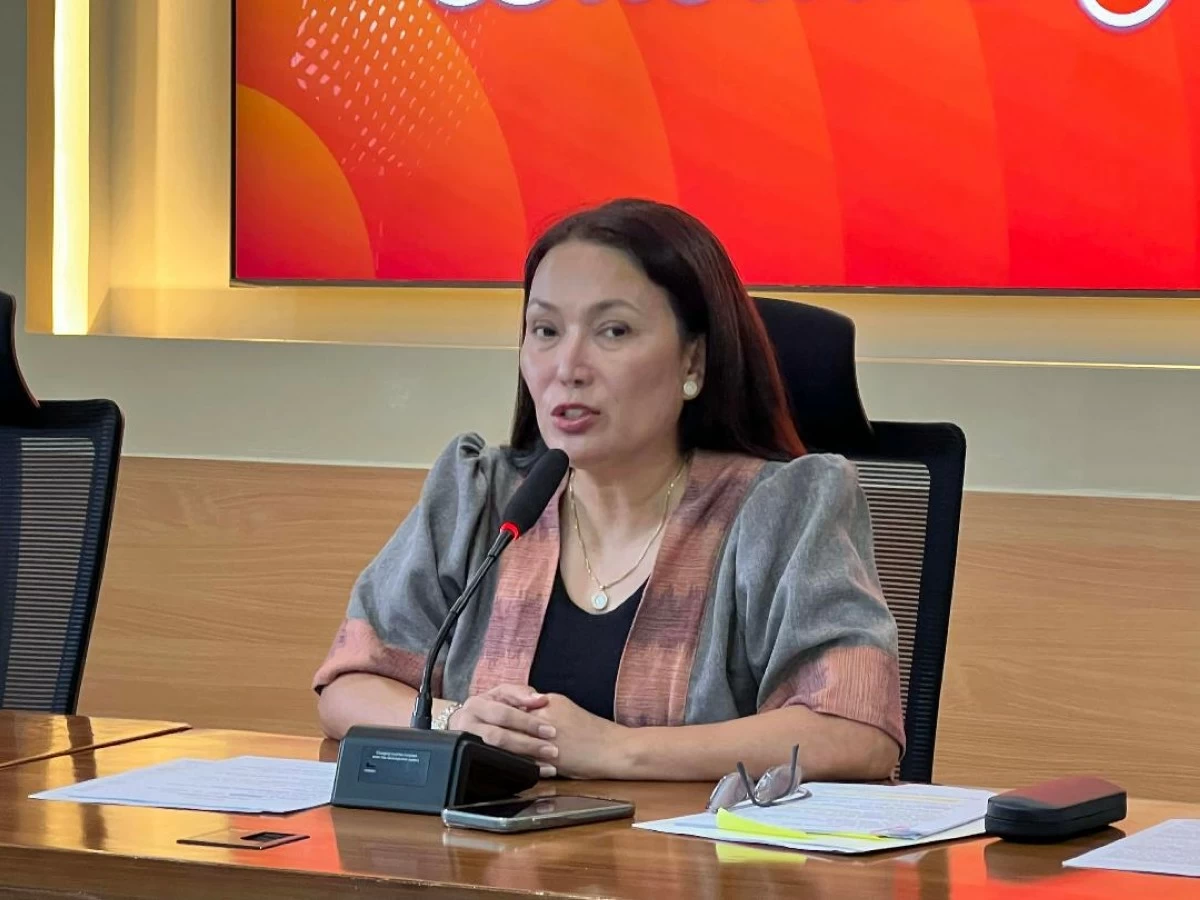
Speaking at Pulong-Pulong sa Dabawenyos at Sangguniang Panlungsod, Councilor Rachel Zozobrado, chairwoman of the Committee on Internal Relations, said the city’s position is neither “pro” nor “anti” in any country.
Zozobrado emphasized that Davao City is more focused on maintaining diplomatic ties that deliver tangible benefits to the city and its residents. “We do not pick fights with our neighbors,” she added.
She noted that international visitors and partnerships have contributed to the city’s development initiatives, including infrastructure projects such as the Bucana Bridge, which is part of the Davao City Coastal Road.
The councilor emphasized that geopolitical disputes are under the jurisdiction of national government agencies, adding that the city does not engage in matters beyond its mandate.
“If they call that pro-China, so be it,” Zozobrado said, stressing that Davao City would work with any country in the world, even the United States, so long as they offer goodwill and mutual benefit.
“They are free to hold their own views. What matters is that we live peacefully and happily, and that we are not in conflict with anyone. That is the role of international relations,” she added.
As head of the Internal Relations Committee, Zozobrado oversees the city’s bilateral and sister-city agreements with foreign local governments and with cities and municipalities in the Philippines.
She said the committee also assists in receiving visiting dignitaries and supports the mayor on policy concerns in coordination with the executive counterpart, the Davao City Investments and Promotion Center.
Active international sister-city agreements are Kaua’i County (USA), Sennan (Japan), Hamamatsu (Japan), Tai’an (China), Jinjiang (China), Dalian (China), and Fuzhou (China).
Pending agreements are Panjin (China), Pohang (South Korea), and Kazan (Russia). Agreements with two cities in Indonesia, Tacoma (USA), Nanning (China), Koror (Palau), and Kitakyushu (Japan) have expired.
Local partnerships are Bacoor City, Liloan (Cebu), Marikina City, Quezon City, Island Garden City of Samal, Pandi (Bulacan), Zamboanga City, Tagudin (Ilocos Sur), Marawi City, Mati City, Kalibo (Aklan), and Santa Cruz town in Davao del Sur.
Expired agreements are Basud (Camarines Norte), Angeles City (Pampanga), Dolores (Abra), Dapitan City (Zamboanga del Norte), San Juan City (NCR), and San Jose del Monte City (Bulacan).
Zozobrado added that the city intends to prioritize existing agreements to ensure they yield concrete results rather than pursue additional sister-city arrangements unless necessary.
Proposed new agreements will still undergo review by the international relations board to determine their relevance and necessity, the councilor said.
She cited education as one of the focus areas, including discussions with Hamamatsu, Japan, on possible training support and scholarship opportunities aligned with the Davao City government’s priorities.
Zozobrado addressed the city’s role in education partnerships involving Ateneo de Davao University, including its Confucius College, where students study Mandarin.
She announced that some professors from Huaqiao University in China are currently teaching at AdDU but require appropriate visas for extended stays.
The Department of Justice, she added, requires a memorandum of understanding not only between the partner university and AdDU but also involving the city government through Mayor Sebastian Duterte.
Zozobrado clarified that the city would not assume financial or legal liability under the arrangement. She added that this is part of the bilateral agreements with sister-cities.
The Internal Relations Committee noted seven existing and active international sister-city agreements and 12 existing and active local sister-city agreements.
Zozobrado said sister-city agreements are designed to define specific areas of cooperation, typically covering tourism and culture, trade, agriculture, and education.
The councilor underscored that these arrangements help position Davao City as a priority partner for exchanges, benchmarking activities, and assistance programs.
Zozobrado said agreements include expiration clauses and may be renewed by mutual consent, subject to the legal processes of the partner’s locality or country.