






 Business
The Economy
UN launches regional initiative to accelerate Southeast Asia's energy transition
Business
The Economy
UN launches regional initiative to accelerate Southeast Asia's energy transition
UN launches regional initiative to accelerate Southeast Asia's energy transition


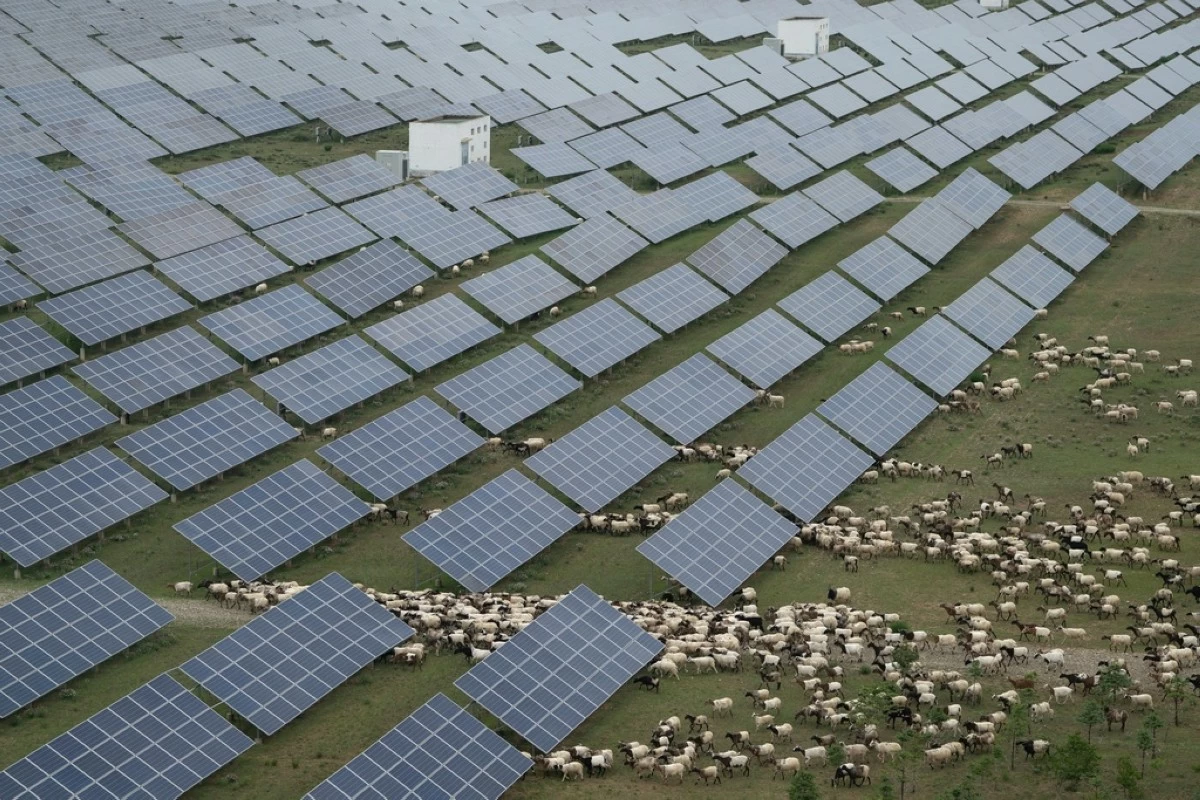
The United Nations Economic and Social Commission for Asia and the Pacific (UNESCAP) on Wednesday, Feb. 25, launched the Energy Transition for Green Growth and Prosperity (ETGGP), a new three-year initiative aimed at helping Southeast Asian countries accelerate clean energy transitions while promoting economic growth, job creation, and social inclusion.
In a statement, UNESCAP said ETGGP comes at a critical moment, as Asia-Pacific account for around 60 percent of global greenhouse gas (GHG) emissions and 80 percent of global coal supply, while regional energy demand is projected to rise significantly by mid-century.
“Countries around the region are considering how to reduce emissions while safeguarding growth, jobs, economic resilience and social inclusion. Governments must navigate this transition under multiple constraints—legacy infrastructure, limited fiscal space, evolving regulatory environments, varying institutional capacity, and persistent financing gaps,” said UN undersecretary-general and UNESCAP executive secretary Armida Salsiah Alisjahbana at ETGGP’s launch in Bangkok, Thailand.
She added that ETGGP “will address this for countries in Southeast Asia by connecting policy analysis, institutional strengthening, regional cooperation and green finance.”
The initiative is structured around three pillars: analytical work to strengthen the knowledge and evidence base for long-term planning at the intersection of energy, economy, and industry; support for regional power connectivity through green power corridors; and green finance mobilization to build investable project pipelines and facilitate larger-scale capital flows.
UNESCAP plans to work closely with ministries of energy, finance, transport, environment, and social development across the region to integrate energy transition with green industrialization and job creation. Development partners, financial institutions, knowledge organizations, and regional experts will be engaged to develop evidence and policy solutions, it said.
Expected outcomes include stronger policy coordination, better evidence for decision-making, improved investment readiness, and greater access to public and private finance for clean energy and enabling infrastructure, UNESCAP said, adding that lessons learned from participating countries will also shape regional energy policy dialogue.
The initiative comes as the Philippines pursues an ambitious renewable energy (RE) target, aiming for 35 percent of its energy mix to come from renewables by 2030 and 50 percent by 2040.