ADVERTISEMENT

ADB extends $3-million emergency grant to help typhoon-hit Philippine communities recover

Published Feb 25, 2026 10:32 am

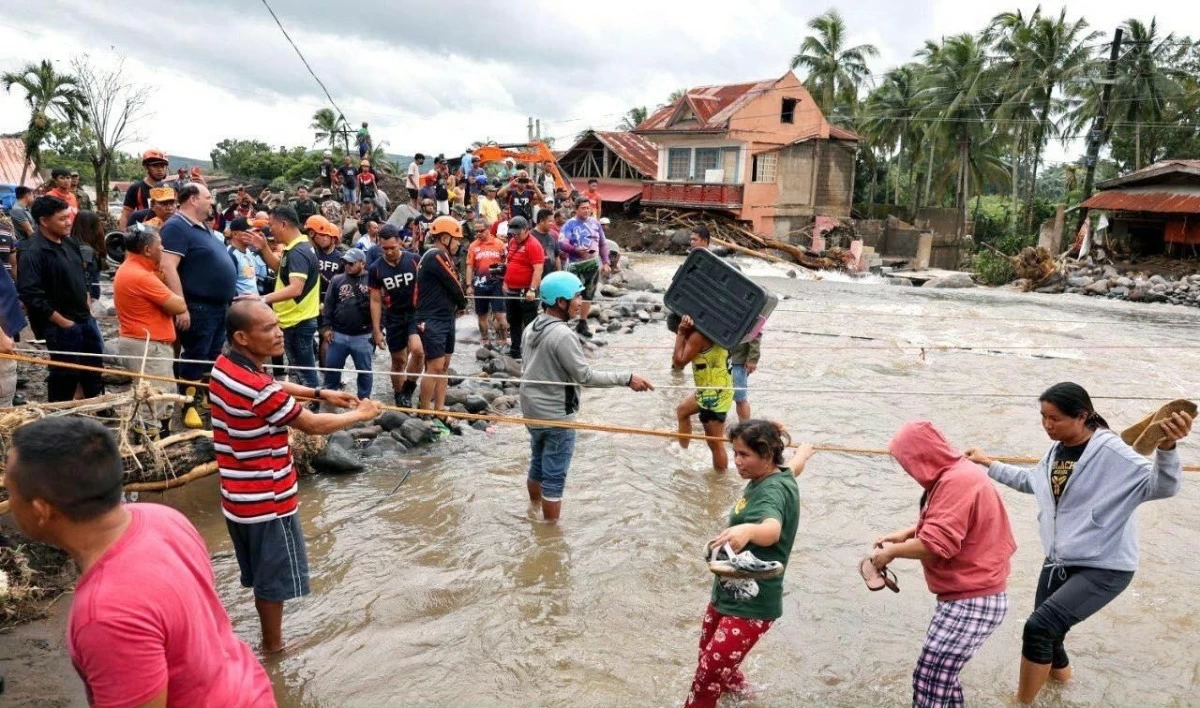
SEARCH and retrieval operations for missing individuals due to typhoon ‘Tino’ was suspended in Canlaon City, Negros Oriental on Sunday, Nov. 9, as super typhoon ‘Uwan’ nears. (Negros Oriental LGU/PIO)

The Asian Development Bank (ADB) has approved a $3-million (about ₱173-million) grant for the Philippines to help its host country respond to the needs of communities badly hit by typhoons “Tino” and “Uwan” late last year.

In particular, grant assistance for Typhoon Tino and Uwan Emergency Response Project will be extended to victims in Camarines Norte province, according to ADB documents seen by Manila Bulletin.

The grant was sourced from the Manila-based multilateral lender’s Asia-Pacific Disaster Response Fund, a special fund created in 2009 to deliver rapid grants to its developing member countries (DMCs), like the Philippines, for life-saving interventions immediately following major natural disasters.

The grant, which was approved by the ADB on Monday, Feb. 23, will provide emergency cash assistance to eligible typhoon-affected families, ensure the timely and transparent delivery of these cash transfers, as well as strengthen coordination between national and local stakeholders in cash-based disaster response, the lender said.

The ADB said the grant is expected to support better access to basic necessities for affected families during the immediate post-disaster period, strengthen families’ capacity to recover and rebuild after disasters, and reduce reliance on negative coping mechanisms among vulnerable households.

In November last year, ADB President Masato Kanda wrote to President Ferdinand R. Marcos Jr. to express condolences for the lives lost and communities affected by heavy rains and flooding caused by Typhoon Tino (international name: Kalmaegi), which struck central Philippines on Nov. 3. At the time, the country was also bracing for the impact of the incoming Super Typhoon Uwan (international name: Fung-wong).

Kanda noted that the Philippines declared a state of national calamity on Nov. 6 after Typhoon Tino caused widespread damage across Visayas and Mindanao. Cebu province was among the hardest hit, still recovering from a deadly magnitude 6.9 earthquake last September.

Aside from the grant, Kanda said that, in support of emergency and humanitarian efforts in the country, the ADB can quickly deploy additional resources to help rebuild infrastructure and support recovery efforts after disasters.

“We are deeply saddened by the loss of life and the suffering caused by the recent series of disasters in the Philippines, especially from Typhoon Tino,” Kanda told Marcos. “This immediate emergency support reflects the ADB’s enduring commitment to the Filipino people, addressing both urgent humanitarian needs and long-term development goals.”

Kanda also reaffirmed the ADB’s commitment to strengthening resilience in the Philippines, noting that the bank is providing funding for the construction of durable roads, bridges, and railways, along with support for the country’s climate action initiatives.

ADVERTISEMENT
.most-popular .layout-ratio{ padding-bottom: 79.13%; } @media (min-width: 768px) and (max-width: 1024px) { .widget-title { font-size: 15px !important; } }

{{ articles_filter_1561_widget.title }}

.most-popular .layout-ratio{ padding-bottom: 79.13%; } @media (min-width: 768px) and (max-width: 1024px) { .widget-title { font-size: 15px !important; } }

{{ articles_filter_1562_widget.title }}

.most-popular .layout-ratio{ padding-bottom: 79.13%; } @media (min-width: 768px) and (max-width: 1024px) { .widget-title { font-size: 15px !important; } }

{{ articles_filter_1563_widget.title }}

{{ articles_filter_1564_widget.title }}

.mb-article-details { position: relative; } .mb-article-details .article-body-preview, .mb-article-details .article-body-summary{ font-size: 17px; line-height: 30px; font-family: "Libre Caslon Text", serif; color: #000; } .mb-article-details .article-body-preview iframe , .mb-article-details .article-body-summary iframe{ width: 100%; margin: auto; } .read-more-background { background: linear-gradient(180deg, color(display-p3 1.000 1.000 1.000 / 0) 13.75%, color(display-p3 1.000 1.000 1.000 / 0.8) 30.79%, color(display-p3 1.000 1.000 1.000) 72.5%); position: absolute; height: 200px; width: 100%; bottom: 0; display: flex; justify-content: center; align-items: center; padding: 0; } .read-more-background a{ color: #000; } .read-more-btn { padding: 17px 45px; font-family: Inter; font-weight: 700; font-size: 18px; line-height: 16px; text-align: center; vertical-align: middle; border: 1px solid black; background-color: white; } .hidden { display: none; }
function initializeAllSwipers() { // Get all hidden inputs with cms_article_id document.querySelectorAll('[id^="cms_article_id_"]').forEach(function (input) { const cmsArticleId = input.value; const articleSelector = '#article-' + cmsArticleId + ' .body_images'; const swiperElement = document.querySelector(articleSelector); if (swiperElement && !swiperElement.classList.contains('swiper-initialized')) { new Swiper(articleSelector, { loop: true, pagination: false, navigation: { nextEl: '#article-' + cmsArticleId + ' .swiper-button-next', prevEl: '#article-' + cmsArticleId + ' .swiper-button-prev', }, }); } }); } setTimeout(initializeAllSwipers, 3000); const intersectionObserver = new IntersectionObserver( (entries) => { entries.forEach((entry) => { if (entry.isIntersecting) { const newUrl = entry.target.getAttribute("data-url"); if (newUrl) { history.pushState(null, null, newUrl); let article = entry.target; // Extract metadata const author = article.querySelector('.author-section').textContent.replace('By', '').trim(); const section = article.querySelector('.section-info ').textContent.replace(' ', ' '); const title = article.querySelector('.article-title h1').textContent; // Parse URL for Chartbeat path format const parsedUrl = new URL(newUrl, window.location.origin); const cleanUrl = parsedUrl.host + parsedUrl.pathname; // Update Chartbeat configuration if (typeof window._sf_async_config !== 'undefined') { window._sf_async_config.path = cleanUrl; window._sf_async_config.sections = section; window._sf_async_config.authors = author; } // Track virtual page view with Chartbeat if (typeof pSUPERFLY !== 'undefined' && typeof pSUPERFLY.virtualPage === 'function') { try { pSUPERFLY.virtualPage({ path: cleanUrl, title: title, sections: section, authors: author }); } catch (error) { console.error('ping error', error); } } // Optional: Update document title if (title && title !== document.title) { document.title = title; } } } }); }, { threshold: 0.1 } ); function showArticleBody(button) { const article = button.closest("article"); const summary = article.querySelector(".article-body-summary"); const body = article.querySelector(".article-body-preview"); const readMoreSection = article.querySelector(".read-more-background"); // Hide summary and read-more section summary.style.display = "none"; readMoreSection.style.display = "none"; // Show the full article body body.classList.remove("hidden"); } document.addEventListener("DOMContentLoaded", () => { let loadCount = 0; // Track how many times articles are loaded const offset = [1, 2, 3, 4, 5, 6, 7, 8, 9, 10]; // Offset values const currentUrl = window.location.pathname.substring(1); let isLoading = false; // Prevent multiple calls if (!currentUrl) { console.log("Current URL is invalid."); return; } const sentinel = document.getElementById("load-more-sentinel"); if (!sentinel) { console.log("Sentinel element not found."); return; } function isSentinelVisible() { const rect = sentinel.getBoundingClientRect(); return ( rect.top < window.innerHeight && rect.bottom >= 0 ); } function onScroll() { if (isLoading) return; if (isSentinelVisible()) { if (loadCount >= offset.length) { console.log("Maximum load attempts reached."); window.removeEventListener("scroll", onScroll); return; } isLoading = true; const currentOffset = offset[loadCount]; window.loadMoreItems().then(() => { let article = document.querySelector('#widget_1690 > div:nth-last-of-type(2) article'); intersectionObserver.observe(article) loadCount++; }).catch(error => { console.error("Error loading more items:", error); }).finally(() => { isLoading = false; }); } } window.addEventListener("scroll", onScroll); });

Sign up by email to receive news.