






 Philippines
National
Duterte's drug war systematic, structured, and directed at the poor - victims' lawyers
Philippines
National
Duterte's drug war systematic, structured, and directed at the poor - victims' lawyers
Duterte's drug war systematic, structured, and directed at the poor - victims' lawyers


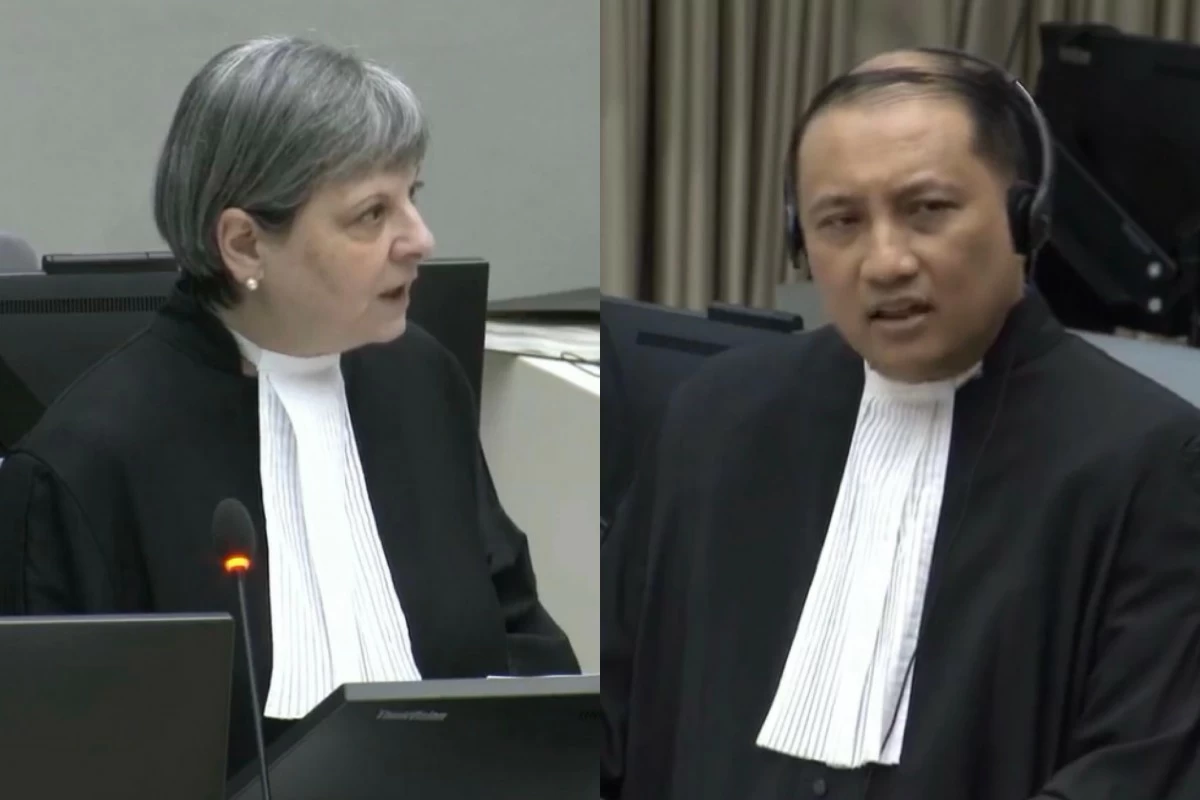
Lawyers representing the victims of former president Rodrigo Roa Duterte’s war on illegal drugs essayed a brutal campaign, marked by impunity and utter disregard for the law, and generally directed at the most poor, marginalized and vulnerable sector of society.
These were the assertions made by Paolina Massidda, principal counsel of the independent Office of Public Counsel for Victims (OPCV), and Filipino lawyer Gilbert Andres, deputy director of the Center for International Law Philippines, at the resumption of the confirmation of charges hearing at the International Criminal Court (ICC) at The Hague, Netherlands, on Tuesday, Feb. 24.
On the third session of the second day of the confirmation hearings, Massidda outlined for the ICC Pre-Trial Chamber I the impunity by which the former president spearheaded his administration’s war on drugs from the time when he was Davao City mayor until he became Chief Executive of the country.
“Late night raids, forced entry without warrants, victims shot at close range, similar post-incidence police reports, consistent narrative of armed resistance, ‘nanlaban’, planting of drugs and weapons, and the absence of genuine investigation demonstrate a systematic attack,” said Massidda as she opened her discourse on the strategy and tactics used in the Duterte war on drugs.
She noted that the “pattern is not a coincidence, it is structured.”
Massidda also underscored that it didn’t matter whether or not the perpetrators of the killings during the Duterte anti-drug war were police officers or not.
“The similar tactics used show planning and coordination involving law enforcement authorities, and, at times, local officials,” she said.
As such, Massidda said the “killings by rogue officials or vigilantes were not carried out separately from authorities.”
She also said Duterte stood at the forefront of such a brutal crackdown by making it public that the ones responsible “need not fear accountability”.
Massidda also told the court that “there is no evidence that (Duterte) took any steps to prevent or punish those responsible for the murders.”
Andres, on the other hand, painted a more personal picture of the effects of the war on drugs.
“Duterte’s drug war campaign targeted the very humanity of their victims and their communities,” he said.
Then he further told the court what the victims told him: “Inalisan kami ng dangal, we were stripped of dignity.”
“Inalisan kami ng dangal, we were stripped of dignity,” he quoted one of the victims telling him.
He noted that Duterte “publicly dehumanized
“Duterte publicly dehumanized the victims, justifying their eventual murders,” Andres said.
He said that the victims were mostly “low-income, from high-density communities, 69,000 persons per square kilometer, with a typical area (of residence) about six square meters.”
“It was a war against the poor” he added.
The confirmation of charges hearing goes on a break on Wednesday, Feb. 25, and will resume Thursday, Feb. 26.