







Stocks defy global slump on strong earnings, peso
Published Feb 24, 2026 05:37 pm


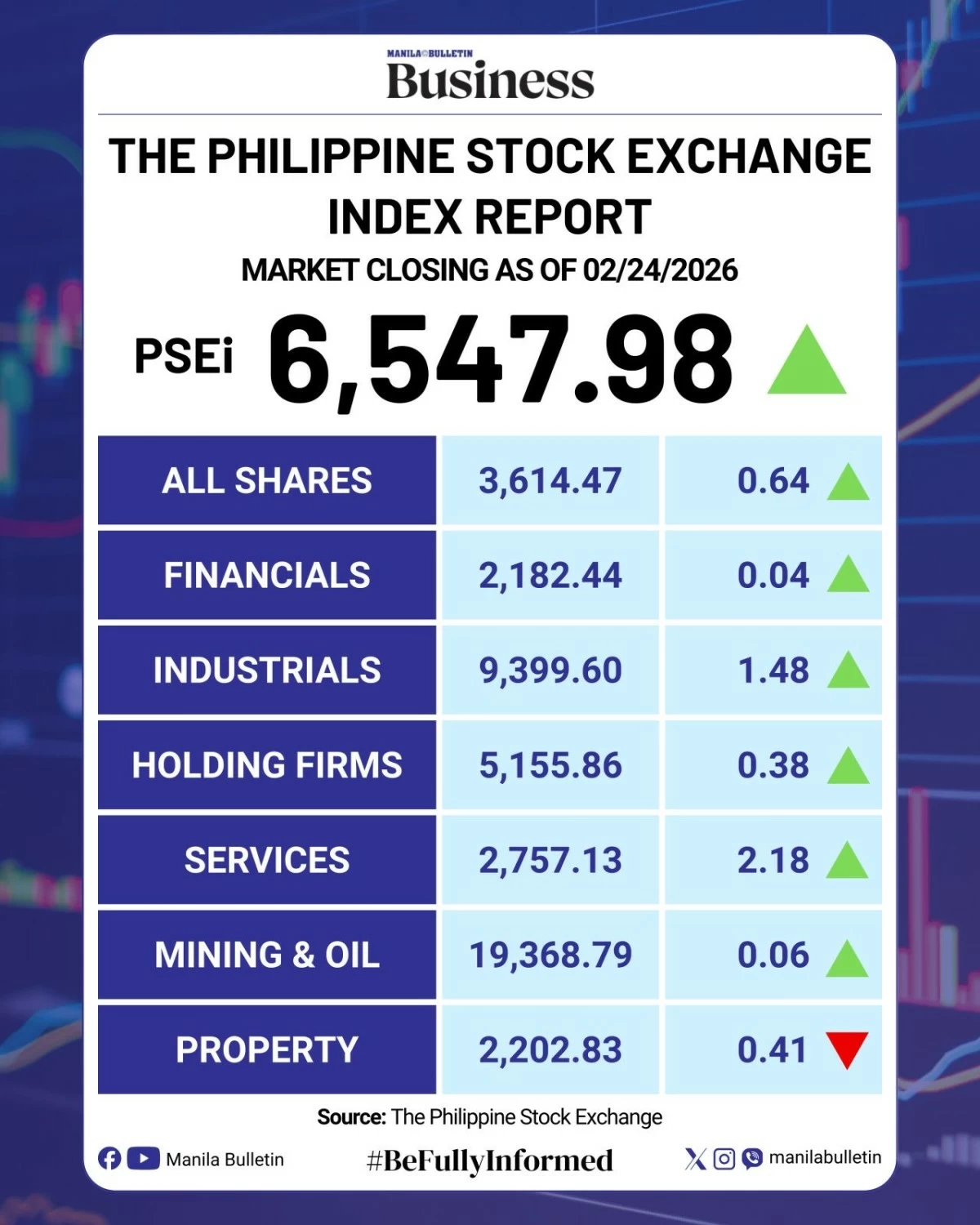
Local stocks climbed for a fifth consecutive session to reach a nine-month high as strengthening peso and robust corporate earnings results insulated the market from the broader global selloff.
The Philippine Stock Exchange index (PSEi) gained 59.47 points, or 0.9 percent, to finish at its intraday peak of 6,547.98 on Tuesday, Feb. 24. The services sector led the advance, offsetting a decline in property shares. Trading activity increased, with 2.07 billion shares valued at ₱8.05 billion changing hands. Advancers narrowly beat out decliners, 100 to 98, while 74 stocks remained unchanged.
The local benchmark’s performance stood in contrast to weakness in international markets. While Wall Street retreated Monday amid concerns over artificial intelligence’s impact on traditional industries and US President Donald Trump’s proposed global trade tariffs, PSEi remained resilient.
Luis Limlingan, managing director at Regina Capital Development Corp., attributed this divergence to the Philippines’ relatively lower exposure to direct tariff and trade tensions.
He noted that sustained peso provided necessary support and cushion for domestic equities.
The local currency’s improved position against the US dollar has become a primary catalyst for investor sentiment. Japhet Tantiangco, research manager at Philstocks Financial, said that the peso’s stability, combined with growing optimism regarding 2025 corporate financial results, bolstered the index’s upward trajectory.
The rally marks a technical recovery for the exchange. Michael Ricafort, chief economist at Rizal Commercial Banking Corp., noted the index hit its highest level since May 14, 2025, effectively erasing the losses incurred since the July 28 State of the Nation Address, a period marked by market volatility following President Ferdinand Marcos Jr.’s exposure of irregularities in national flood-control projects.
Further supporting the market is the potential inclusion of Philippine sovereign debt in the JPMorgan Emerging Market Bond Index.
Such move could trigger approximately $3 billion in foreign inflows into government bonds, Ricafort said.
He added that a recent decline in Treasury bill and bond auction yields is expected to further reduce borrowing costs for corporations, fundamentally supporting higher valuations.
Market participants are now looking toward the next batch of earnings reports to see if the momentum can be sustained against a backdrop of shifting U.S. trade policy and regional economic pressures.