






Manila Bulletin
 Philippines
National
Only 1 hepatologist for every 100,000 Filipinos; most based in NCR —experts
Philippines
National
Only 1 hepatologist for every 100,000 Filipinos; most based in NCR —experts
Philippines
National
Only 1 hepatologist for every 100,000 Filipinos; most based in NCR —experts
Only 1 hepatologist for every 100,000 Filipinos; most based in NCR —experts
By Jel Santos
Published Feb 24, 2026 02:46 pm


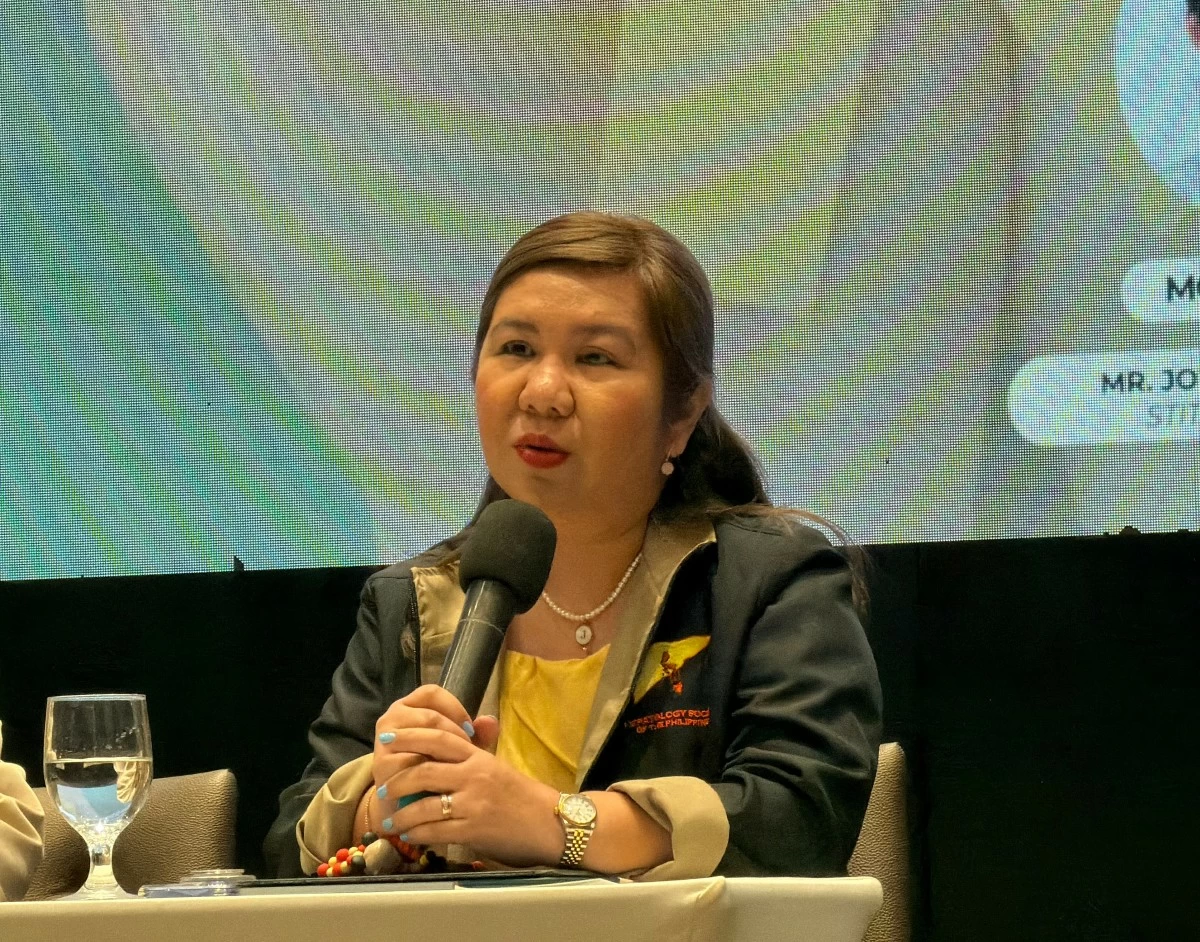
Dr. Jennielyn Agcaoili-Conde (JEL SANTOS/MB PHOTO)
There is only one hepatologist for every 100,000 Filipinos, with fewer than 100 liver specialists currently practicing nationwide, the Hepatology Society of the Philippines (HSP) said on Tuesday, Feb. 24.
Per HSP, around 32 Filipinos die from liver cancer every day, making it the fourth most common cancer in the country. In 2023, some 12,544 new cases were recorded, while 11,653 deaths were logged in 2022, ranking it as the third leading cause of cancer-related deaths.
“There is one hepatologist for every 100,000 Filipinos. Ang hirap talaga that’s why we’re trying to empower also other physicians to help us in the battle (There is one hepatologist for every 100,000 Filipinos. It is really difficult, that’s why we’re trying to empower other physicians to help us in this battle),” Dr. Jennielyn Agcaoili-Conde, the president of HSP, said during a media roundtable in Quezon City.
She said most hepatologists are based in the National Capital Region (NCR), with limited presence in other regions.
“[The bulk of hepatologists is in NCR] but we now have in Mindanao and Cebu. May isa sa Mindanao na hepatologist and then sa Cebu around 10, tapos dito sa NCR, 25 to 50 kami (The bulk of hepatologists is in NCR, but we now have some in Mindanao and Cebu. There is one hepatologist in Mindanao, around 10 in Cebu, and here in NCR, we are about 25 to 50),” she said.
Conde shared that even patients from the provinces travel to Metro Manila for specialized care.
“Actually, may patient ako admitted for liver cancer now from Iloilo (Actually, I have a patient admitted for liver cancer now who is from Iloilo),” she said.
The HSP president said they are encouraging more physicians, particularly gastroenterologists, to pursue specialization in hepatology to help address the shortage of liver specialists in the country.
“Admittedly kulang pa. Actually, we’re trying to invite more physicians or gastroenterologists to specialize in hepatology (Admittedly, we are still lacking. Actually, we are trying to invite more physicians or gastroenterologists to specialize in hepatology),” she said.
Despite limited manpower, Conde noted that efforts are ongoing to expand local training.
“We have already established a local fellowship training here in our country for hepatology para mas dumami pa ‘yung numbers namin (We have already established a local fellowship training program here in our country for hepatology so that our numbers can further increase),” she said.
“Just like me, I’m a professor in a medical school to train hepatologists here in our country (Just like me, I am a professor in a medical school to train hepatologists here in our country),” she added.
Liver Center of the Philippines
According to Conde, two House bills are now pending in Congress seeking the establishment of a Liver Center of the Philippines.
“There are two House bills sa Congress [for] the establishment of a Liver Center. Nagkaroon na ng technical consultation meeting. Actually, we’re waiting na lang na ma-plenary siya (There are two House bills in Congress for the establishment of a Liver Center. There has already been a technical consultation meeting. Actually, we are just waiting for it to be brought to the plenary),” she said.
She explained that the proposed Liver Center will serve as a national referral hospital and research hub for liver diseases.
“That Liver Center will be a good venue for research, registry, and would deal for cases of patients with liver diseases (The Liver Center will be a good venue for research, registry, and will handle cases of patients with liver diseases),” she said.
“It will function as a hospital. We envision it as just like the Philippine Heart Center or the National Kidney and Transplant Institute. Kumbaga, a national center that will deal with all liver diseases, and hope also that ‘yung liver transplant mag-move forward na rito sa country natin (It will function as a hospital. We envision it to be like the Philippine Heart Center or the National Kidney and Transplant Institute — in other words, a national center that will handle all liver diseases, and we also hope that liver transplant will finally move forward here in our country),” she added.
Conde said discussions have already been held with the Department of Health (DOH), particularly its Health Facility Development Bureau, on possible sites for the proposed center.
“With the DOH, we had already discussion with the Health Facility Bureau nila. Actually, we are looking into if there are any other properties of the government that we could establish the liver center (With the DOH, we already had discussions with their Health Facility Bureau. Actually, we are looking into whether there are other government properties where we can establish the Liver Center),” she said.
“Actually, ang isang ina-eye din kung may isang existing na DOH hospital that will be named as the Liver Center of the Philippines (Actually, one option being eyed is if there is an existing DOH hospital that can be designated as the Liver Center of the Philippines),” she added.
According to Conde, the country’s liver disease registry remains inadequate, making it difficult to obtain accurate national data on incidence and prevalence.
“Hoping that the Liver Center would be a good facility for all liver-related diseases—‘yung mga statistics natin or registry mas mag-i-improve kasi until now hindi maganda ‘yung registry ng liver diseases (We are hoping that the Liver Center would be a good facility for all liver-related diseases — our statistics or registry will improve because until now, the registry of liver diseases is not good),” she said.
“I hope, with the establishment of the Liver Center, would really give us a more updated incidence, prevalence of liver diseases, as center for training as well kasi most of the hepatologists or hepatobiliary surgeons natin ay trained from other countries, bumabalik lang (I hope that with the establishment of the Liver Center, we will have more updated data on the incidence and prevalence of liver diseases, and that it will also serve as a training center because most of our hepatologists or hepatobiliary surgeons are trained abroad and just return here),” she added.