






Manila Bulletin
 Business
Trade & Industry
UK, Philippines deepen green ties with new investment framework
Business
Trade & Industry
UK, Philippines deepen green ties with new investment framework
Business
Trade & Industry
UK, Philippines deepen green ties with new investment framework
UK, Philippines deepen green ties with new investment framework
Published Feb 24, 2026 02:11 pm


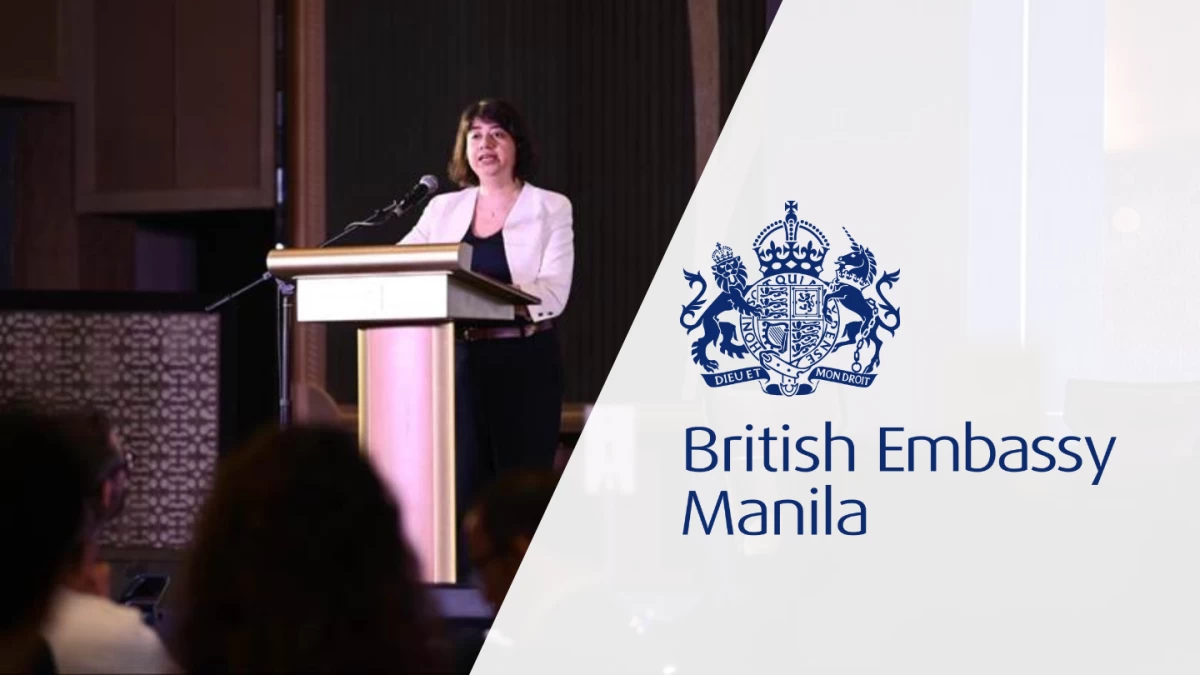
The United Kingdom and the Philippines formally inaugurated the UK-Philippines Growth and Investment Partnerships Plus (UK-PH GIP+) in Manila, marking an expanded commitment to mobilizing green capital and infrastructure development across the archipelago.
Under the GIP+ banner, the British government will deploy a coordinated suite of investment instruments, including British International Investment (BII), UK Export Finance (UKEF), the Private Infrastructure Development Group (PIDG), and MOBILIST.
These entities are tasked with providing end-to-end support for infrastructure projects, transforming raw proposals into bankable assets capable of attracting private institutional investors.
The initiative comes as the Philippines maintains its position as one of the region’s fastest-growing economies. Seema Malhotra, the UK Minister for the Indo-Pacific, said the Philippine economy is a dynamic match for British investment capabilities.
She noted the tangible impact of existing cooperation, pointing to a BII-supported solar project in South Cotabato that provides electricity to 82,000 households.
According to Malhotra, the goal of the partnership is to deliver sustainable benefits to local communities while fostering a resilient economic corridor between the two nations.
Institutional leaders involved in the partnership signaled a specific appetite for renewable energy and transport logistics.
Srini Nagarajan, BII managing director and head of Asia, said the Philippines presents an expanding pipeline of investable opportunities, particularly within the clean energy transition.
The GIP+ framework is designed to “crowd in” private capital, a process where public or blended finance is used to reduce risks for commercial lenders.
Financial firepower for the initiative is significant. UKEF Chief Executive Officer Tim Reid confirmed that £5 billion (approximately ₱366 billion) in export financing is available to support Philippine national priorities. This facility is expected to accelerate large-scale transport infrastructure and energy projects by providing the guarantees necessary to unlock private sector liquidity.
Nishant Kumar, head of coverage for Asia at PIDG, noted that the success of the partnership hinges on de-risking market engagement and ensuring projects are structured to meet international standards. This technical groundwork is bolstered by the MOBILIST program, which focuses on public market initiatives.
Ross Ferguson, MOBILIST’s senior responsible officer, emphasized that well-functioning capital markets are the bedrock of long-term finance, ensuring that the projects launched under GIP+ can eventually achieve scale and liquidity on public exchanges.