







Expert pushes wider value assessment for cancer medicines
By Jel Santos
Published Feb 23, 2026 02:33 pm


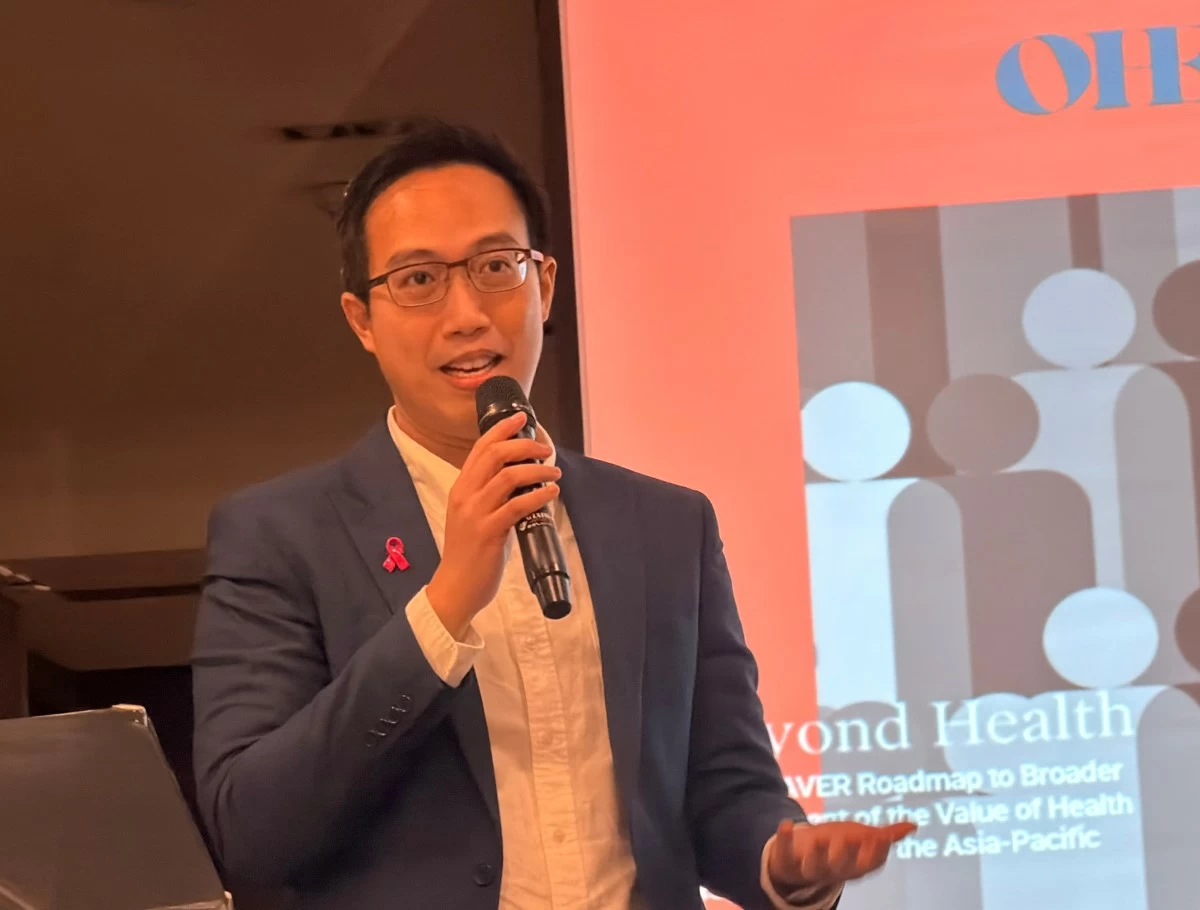
Dr. Frederic Ivan Ting (JEL SANTOS/MB PHOTO)
A Filipino oncologist has called for a broader framework in evaluating cancer medicines in the country, urging policymakers to look beyond survival rates and direct treatment costs when deciding which drugs should receive government financing.
Dr. Frederic Ivan Ting, a medical oncologist and member of the Philippine Society of Medical Oncology (PSMO), said the push comes as cancer incidence continues to rise globally, putting increasing pressure on health systems.
“In 2021, if you remember, the World Health Organization already released a projection that by 2050, the incidence will increase by 77%. And that’s more or less 24 years from today,” Ting said during a media roundtable interview in Pasig City on Feb. 18
With cases increasing, Ting noted that the Philippines allocates about P35 billion each year for cancer treatment.
“The country spends around P35 billion per year in treating patients with cancer,” he said.
Citing a 2023 presentation by health economist Dr. Val Ulep during the Philippine National Cancer Summit, Ting said most of this amount goes to direct treatment costs.
“Out of the P35 billion spent every year, P29 billion goes to the direct cost of treatment, which includes diagnosis, going to the clinics for treatment, paying for the fees, up to palliative and supportive care,” he said.
Ting explained that when government considers whether to fund a new medicine, it typically evaluates effectiveness, quality of life, and cost to the healthcare system, which is often anchored on overall survival and progression-free survival.
“In other words, gaano ba kahaba ‘yung binibigay ng bagong gamot, ano ba yung advantage in terms of the survival rate ng isang pasyente, ‘yung binibigay ng isang gamot (In other words, how long does the new drug allow a patient to live, what is the advantage in terms of survival rate that a medicine provides),” he stated.
“And when we talk about progression-free survival, gaano ba katagal kaya i-control ng gamot ang isang sakit, for example, breast cancer (how long can a drug control a disease, for example, breast cancer),” he added.
He said agencies also examine cost-effectiveness and budget impact- - -how much health benefit is gained for every peso spent, and how funding a drug could affect other programs.
“In other words, the government tries to look at the benefit in terms of quality-adjusted life years na mabibigay sa bawat piso na binabayad ng gobyerno galing sa atin, in a particular drug (the government looks at the quality-adjusted life years gained for every peso it spends on a particular drug),” the physician said.
However, Ting said this “traditional view” can miss other major impacts of cancer and treatment- - -prompting him to introduce the BRAVER framework, or “Broader Assessment of the Value of Health Interventions in the Asia-Pacific Region.”
“What Braver pushes for is looking at things from a broader value, from a broader perspective,” he said.
Under BRAVER, Ting said policymakers are encouraged to take into consideration factors such as the burden on caregivers, productivity losses, equity in access, and wider health sector benefits.
“So alam natin na pag ang pasyente nagpapagamot, may kasama din sila (We know that when a patient undergoes treatment, they are not alone),” he said, referring to family members and caregivers who may also face health and financial strain.
“Of course, we know that when a patient has cancer, for example, and is undergoing the cancer treatment journey, there is loss of income as well as loss of productivity [during treatment],” Ting added.
The oncologist said productivity should be understood beyond employment, noting that patients also lose the ability to perform other roles at home and in the community.
“A woman with breast cancer, for example, can also be a mom, can also be a sister, can also be an auntie,” he said.
Equity, he added, should also be part of decision-making, whether new medicines and technologies can reach those who need them regardless of social, age, or geographic factors.
“‘Pag may bagong gamot or bagong health technology na ino-offer, how would it be able to reach the people who need it, regardless of social, age, and geographical considerations (When a new drug or health technology is offered, how will it reach those who need it regardless of social status, age, or geography),” Ting said.
He also pointed to efficiency in treatment delivery, noting that innovations that shorten treatment time could ease the burden on both patients and healthcare institutions.
“Traditionally, these newer medicines were given IV. Sa suwero siya binibigay (They are given intravenously),” Ting said.
“But that causes… a lot of burden, not just to the patients themselves kasi upo sila rin ng ilang oras (because patients sit for several hours), but at the same time… if there are innovative options that can shorten the treatment time… mas maraming pasyente yung maseserving isang institution (more patients can be served by an institution),” he added.
Ting said the broader value approach is especially important for low- and middle-income countries like the Philippines in the Asia-Pacific region.
“Na mas masukat nang buo ang halaga ng mga bagong gamutan kasama na ang mas malawak na benepisyo para sa ating lipunan (So that we can fully measure the value of new treatments, including their broader benefits to society),” he said.
Ting said policymakers must view cancer care not only as a cost to be minimized but as an investment with wider benefits.
“From a health system’s perspective, we always look at cancer treatment. The objective is always to minimize cost. But I think it’s also, there’s a lot of value in looking at it as an investment towards national productivity,” Ting said.