







Foreign banks see BSP easing to 4% amid sub-potential growth
By Derco Rosal


At A Glance
- Foreign banks continue to expect another Bangko Sentral ng Pilipinas (BSP) interest rate cut by the end of 2026, citing a persistent negative output gap—a major gauge the central bank chief said allows room to lower lending costs without fueling consumer inflation.
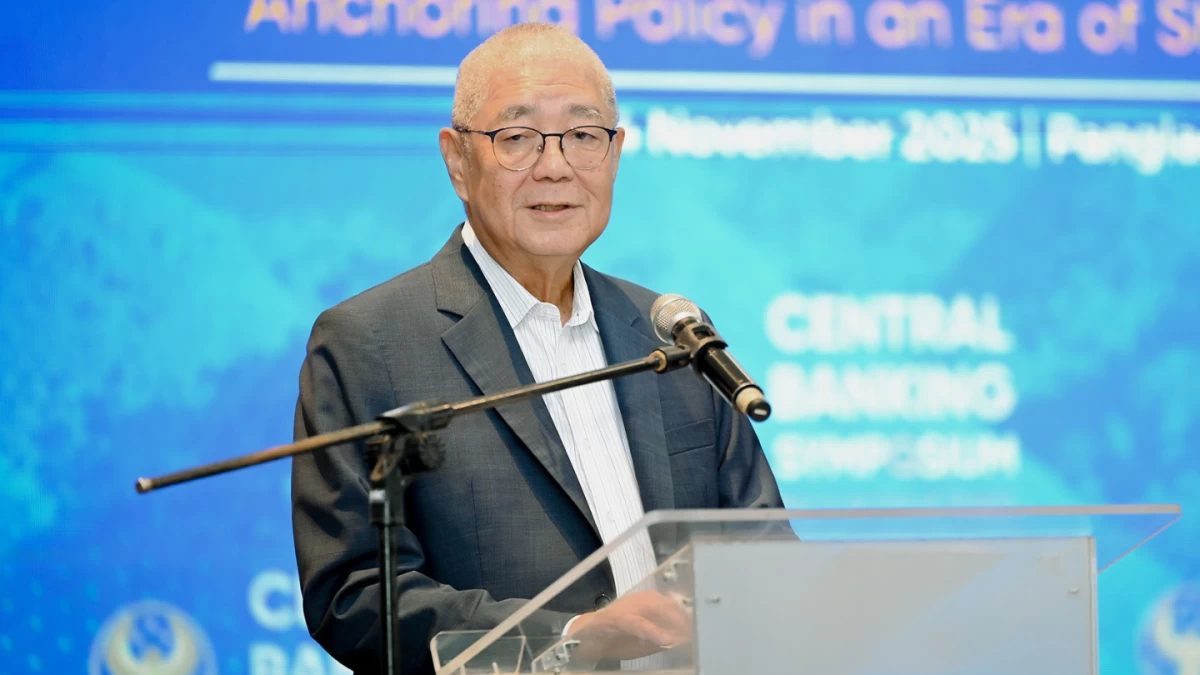
Foreign banks continue to expect another Bangko Sentral ng Pilipinas (BSP) interest rate cut by the end of 2026, citing a persistent negative output gap—a major gauge the central bank chief said allows room to lower borrowing costs without fueling consumer inflation.
“We think that the BSP will likely cut rates one more time in 2026,” Japanese financial giant MUFG Bank Ltd. wrote in a Feb. 20 commentary, following the fresh easing to 4.25 percent from 4.5 percent previously, as price pressures remain contained and the economy remains weak.
BSP Governor Eli M. Remolona Jr. said in a recent television interview that the policy-setting Monetary Board (MB) still has the capacity to lower rates further, as the country’s economy, measured by gross domestic product (GDP) growth, still stands around two percentage points (ppts) below its six-percent potential.
“So that gives us a lot of room to ease without causing higher inflation,” Remolona said. Prior to the February policy decision, he maintained that the monetary policy easing cycle was nearing its end, forward guidance he omitted in the latest signal.
Remolona did not provide a clear signal regarding the central bank’s future policy decisions, citing uncertainty surrounding the expected recovery of business and consumer confidence—both of which were dampened by the flood-control corruption controversy.
While MUFG still penciled in another cut, senior currency analyst Michael Wan noted that the timing could be delayed beyond the June meeting. “The BSP could opt to take a pause first before cutting in the following meeting,” Wan said.
Wan, however, believes this outlook could be wrong if local rice prices continue to accelerate from the current pace.
He noted that the BSP’s signal was “mixed, with a raising of the inflation forecasts due to higher rice prices, but with questions around how long the impact of weaker confidence will linger on the economy and, as such, weigh on growth moving forward.”
The BSP lifted its inflation forecasts to 3.6 percent for 2026 and 3.2 percent for 2027, above the three-percent level earlier flagged as a concern by Remolona. He noted that inflation remains the priority, with growth support pursued only if it does not risk higher prices.
Malaysia-based Maybank, like MUFG, still sees room for one final cut this year, bringing the benchmark rate down by a cumulative 250 basis points (bps) from its 6.5-percent peak in 2024.
Meanwhile, Singapore-based United Overseas Bank Ltd. (UOB) stands firm on its assumption that key borrowing costs will remain steady at the current rate through 2026, explaining that the central bank “brought forward” what was earlier expected to be a second-quarter cut into the first quarter.
“We reckon that the BSP had brought forward our projected final rate cut to this quarter (from the second quarter of 2026) to further restore confidence and revive growth momentum,” UOB senior economist Julia Goh and economist Loke Siew Ting wrote in a Feb. 20 commentary.
Among the developments UOB economists factored into their stance were the shift away from signaling a nearing easing cycle, rising price pressures, and narrowing interest rate differentials with the United States (US).
“Thus, we expect no further BSP policy moves for the rest of the year unless global conditions shift materially, or the upcoming first-quarter GDP [gross domestic product] data on May 7 deteriorates further,” the Singaporean lender said.