






Manila Bulletin
 Business
Trade & Industry
Philippine exporters see stronger demand after US Supreme Court strikes down Trump tariffs
Business
Trade & Industry
Philippine exporters see stronger demand after US Supreme Court strikes down Trump tariffs
Business
Trade & Industry
Philippine exporters see stronger demand after US Supreme Court strikes down Trump tariffs
Philippine exporters see stronger demand after US Supreme Court strikes down Trump tariffs
Published Feb 21, 2026 04:09 pm


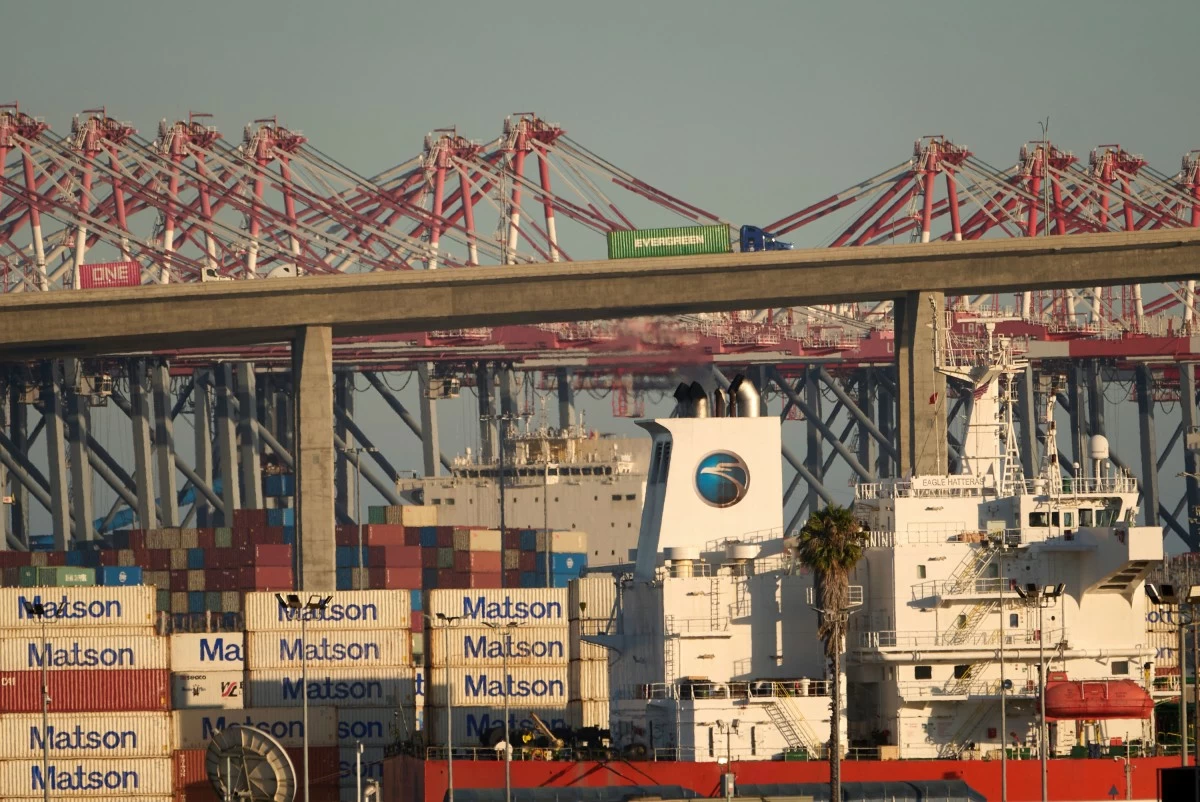
Shipping containers are stacked at the Matson terminal in the Port of Long Beach, Calif.,Thursday, July 31, 2025. (AP Photo/Damian Dovarganes)
The country’s umbrella group of exporters is anticipating increased demand for Philippine products after the United States (US) Supreme Court struck down the reciprocal tariffs imposed by the Trump administration, removing a major hurdle to export growth.
Philippine Exporters Confederation Inc. (Philexport) president Sergio Ortiz-Luis Jr. said the landmark ruling is a much-needed restoration of constitutional checks on American trade power following the implementation of tariffs last year.
“This ruling removes a major barrier that was unfairly penalizing Philippine craftsmanship and industry,” he said in a statement.
The US high court ruled on Friday, Feb. 20, that the reciprocal tariffs, imposed under the International Emergency Economic Powers Act (IEEPA), were unconstitutional, as Trump was not authorized to implement the sweeping tariffs.
This signals a major shift in global trade policy, as the US leveraged such tariffs throughout last year to address what it deemed unfair trade practices by most of its trading partners, including the Philippines.
Since August last year, the country’s exports to the US have been subject to a 19-percent tariff rate.
Ortiz-Luis said the nullification of these tariffs provides much-needed legal relief to local exporters, noting that it represents a “significant victory for a rules-based trading system.”
In the aftermath of the tariff ruling, Trump immediately slapped a 10-percent surcharge on almost all imports to the US, set to take effect on Tuesday, Feb. 24.
While this would incur additional costs, Ortiz-Luis said its “global” application means the Philippines would maintain its relative competitiveness against other trading countries.
He also noted that the new tariff rate, pursuant to Section 122 of the US Trade Act of 1974, is capped at 150 days unless extended by the US Congress.
“Philexport views this window as a crucial time for bilateral negotiation,” he said.
Philippine Ambassador to the US Jose Manuel Romualdez recently said that Manila will only pursue a free trade agreement (FTA) with Washington after it settles the trade deal involving reciprocal tariffs.
Ortiz-Luis also said that the temporary nature of the 10-percent tariffs means that Philippine exports remain primed for growth, especially since critical products remain shielded from Trump’s tariffs.
He said semiconductors will likely remain exempt from tariffs despite countless threats from Trump, given their critical role in the American technology supply chain.
Based on the latest data from the Philippine Statistics Authority (PSA), electronic products, which include semiconductors, were the country’s top export commodity last year, totaling $49.96 billion.
Ortiz-Luis added that more than $1 billion worth of Philippine agricultural exports remain under specific exemptions, helping maintain their competitiveness in the US market.
These exemptions and the growing demand for Philippine products boosted last year’s merchandise exports to a record-high $84.41 billion, up 15.2 percent from $73.27 billion in the previous year.
Earlier, Ortiz-Luis said the country’s exports of goods and services will likely hit the lower end of the government’s export target of between $116.1 billion and $120.2 billion for the year.
Under the lower 10-percent global tariff, Rizal Commercial Banking Corp. (RCBC) chief economist Michael Ricafort said this would lead to faster global trade and investment, since all countries would essentially be at the same level.
Still, Ricafort said the government should focus on diversifying export markets and products to address risks related to tariffs and potential uncertainties.
“All of these could indirectly benefit the Philippine economy and financial markets,” he said in a Viber message.