







Remolona: Monetary policy can no longer drive economic growth
By Derco Rosal
Published Feb 20, 2026 03:49 pm


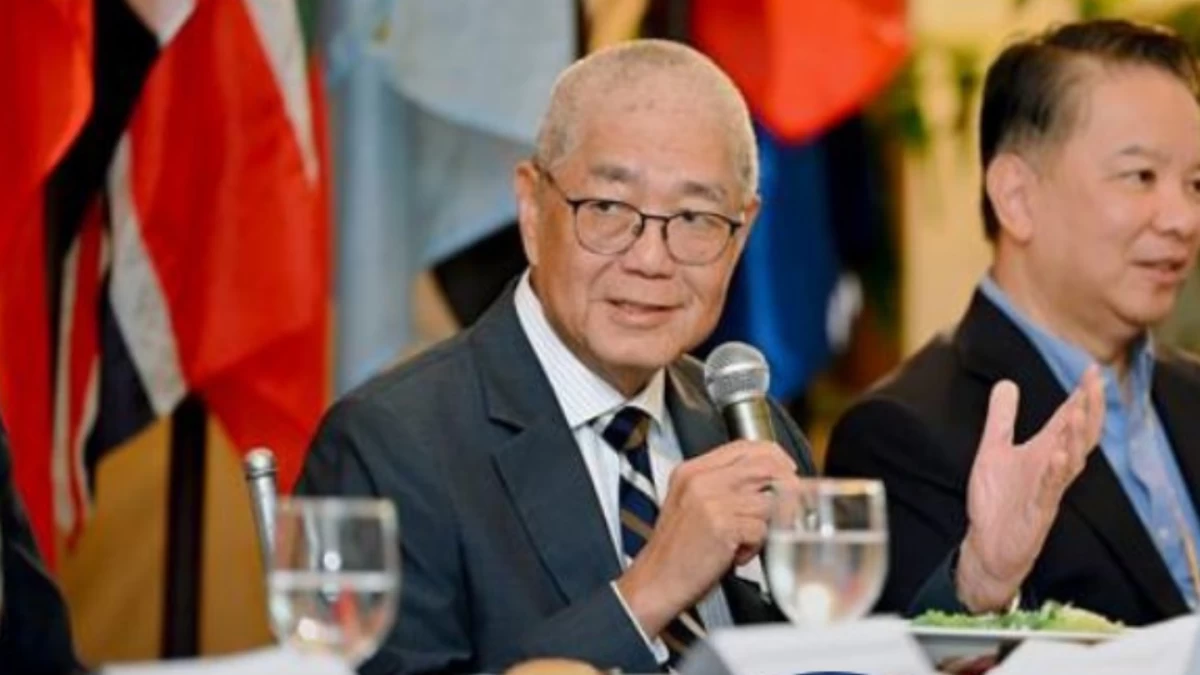
BSP Governor Eli M. Remolona Jr.
The Bangko Sentral ng Pilipinas (BSP) said monetary policy has reached the limits of its effectiveness in reviving the Philippine economy, shifting the burden to the government to implement fiscal reforms and address governance failures.
BSP Governor Eli Remolona Jr. said that while the central bank is doing its part to lower borrowing costs, interest rate cuts alone cannot compensate for the structural issues that triggered the sharp economic slowdown in 2025.
“We have very limited tools in monetary policy. We’re at the point where monetary policy cannot do much more,” Remolona said in a One News interview on Friday, Feb. 20.
Remolona’s statements follow the Monetary Board’s decision to reduce the key policy rate by 25 basis points to 4.25 percent, a move aimed at cushioning an output slump that the central bank had previously failed to anticipate.
“Interest rates [alone] can’t do the trick. We need support from other measures, and those come from the fiscal side,” Remolona said when asked if the focus on the BSP’s policy moves overlooked larger constraints, including project execution, governance issues, and external pressures.
He added that, in addition to lowering lending costs, the Philippines also needs credible reforms. The 2025 output slump was particularly blamed on the fallout from corruption, which crippled both public and private construction.
Remolona said in a separate interview with CNBC that the latest easing can be justified by still-tame price movements. “Inflation is under control… which means we have some leeway to do something about growth,” he said.
For the governor, the BSP’s dovish move was an “effort to water those green shoots” of confidence recovery, slowly reflected in sentiment indices.
He explained that growth and confidence feed off each other, noting that propping up growth and addressing governance issues could help restore public confidence and support further output expansion.
Confidence, he asserted, depends on how effectively the government addresses governance issues that the country has been facing since the flood control mess erupted last year.
While the central bank continues to prioritize inflation in its policy decisions, Remolona did not provide a clear signal on the policy direction.
“We will continue focusing on inflation. However, there’s a large element of uncertainty that we’re facing, particularly regarding how quickly confidence will come back. That is where we stand,” Remolona said.
From a rosier assumption earlier, the BSP revised its inflation forecast upwards to 3.6 percent from 3.2 percent for 2026, and to 3.2 percent from three percent for 2027. Remolona earlier said it would be a concern if inflation exceeded three percent.
The BSP also tweaked its 2026 gross domestic product (GDP) growth forecast downwards to 4.6 percent from 5.4 percent previously, and trimmed its 2027 projection to 5.9 percent from as high as 6.2 percent.