







DND deepens maritime cyber defense push with UK, Canada
Published Feb 20, 2026 01:40 pm


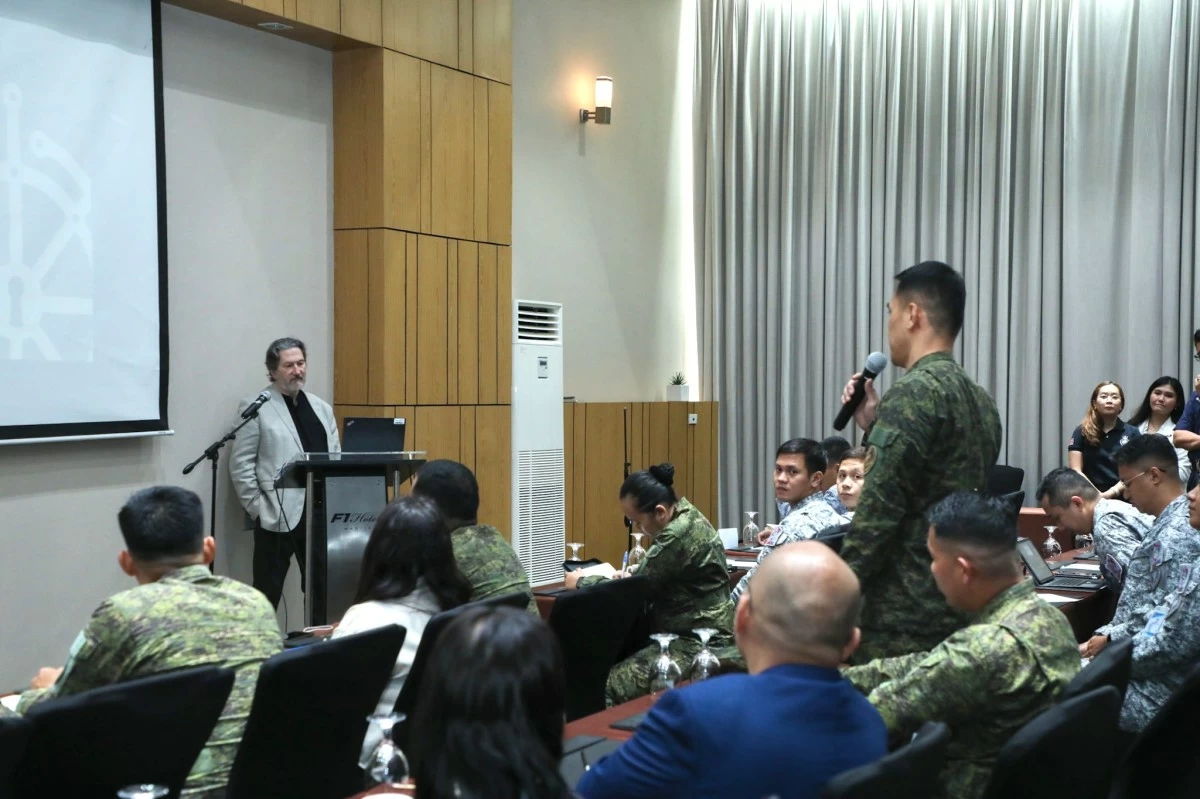
(PHoto: Department of National Defense)
The Department of National Defense (DND) stepped up its maritime cyber defense efforts through a specialized training course with the United Kingdom and a high-level cyber meeting with Canada.
The DND, together with the Armed Forces of the Philippines (AFP), joined a maritime cybersecurity training course in Taguig City on Feb. 18 to 19 which was jointly sponsored by the United Kingdom Embassy Manila, led by Ms. Pip Morgan, National Security Lead, in partnership with the University of Plymouth.
The event focused on emerging cyber threats in the maritime domain and vulnerabilities in operational technology.
In her remarks, Atty. Odessa Rossilyz L. Magisa, Officer-in-Charge of the Office for DND Information Security (ODIS), stressed the operational value of the training.
“We have explored emerging threats, applied practical exercises, and discussed strategies for resilience that will directly strengthen the AFP’s operational and cyber defense posture,” Magisa said.
The sessions were facilitated by Professor Kevin Jones, founder of the Maritime Cyber Threats Research Group and the Cyber-SHIP Lab, and Deputy Vice-Chancellor for Research and Innovation at the University of Plymouth. He shared expert insights on maritime cyber risks and operational technology vulnerabilities.
Dr. Kimberly Tam, associate professor in cybersecurity at the same university, discussed emerging risks linked to artificial intelligence in maritime systems and highlighted the need for safeguards in increasingly automated operations.
The DND said the activity supports efforts to fortify defense-wide cybersecurity standards and build institutional capacity in addressing emerging risks in a more digital security environment.
Meanwhile, DND Undersecretary Angelito M. De Leon, officer-in-charge of the Office of the Undersecretary for Information Systems and Cybersecurity, also met with Sami Khoury, Canada’s Senior Official for Cyber Security, at Camp Aguinaldo.
The engagement builds on the growing defense partnership between the Philippines and Canada followsing the signing of the Philippines–Canada Status of Visiting Forces Agreement (SOVFA) in November 2025.
During the meeting, De Leon cited previous cyber engagements and thanked Canada for its continued collaboration with the Philippines.
He also expressed the DND’s interest in learning from Canada’s best practices in cyber governance, operational coordination, and resilience-building mechanisms to strengthen national cyber capabilities.
Both sides discussed the regular exchange of strategic cyber threat landscape information and updates on evolving cyber threats. They also tackled plans to institutionalize joint training programs and professional exchanges.
They agreed to sustain cooperation through the regular convening of an Annual Philippines–Canada Cyber Working Group, saying this would ensure continuity, alignment of priorities, and measurable outcomes.
The two sides also cited cooperation in regional and international platforms, including Association of Southeast Asian Nations (ASEAN) initiatives, to promote a secure, open, interoperable, and rules-based cyberspace.
Khoury earlier visited the DND on March 9, 2025 as part of a Canadian delegation led by Ambassador David Hartman to advance bilateral cyber cooperation and capacity-building efforts.