







Stocks rise as traders brush off expected BSP rate cut
Published Feb 19, 2026 05:12 pm


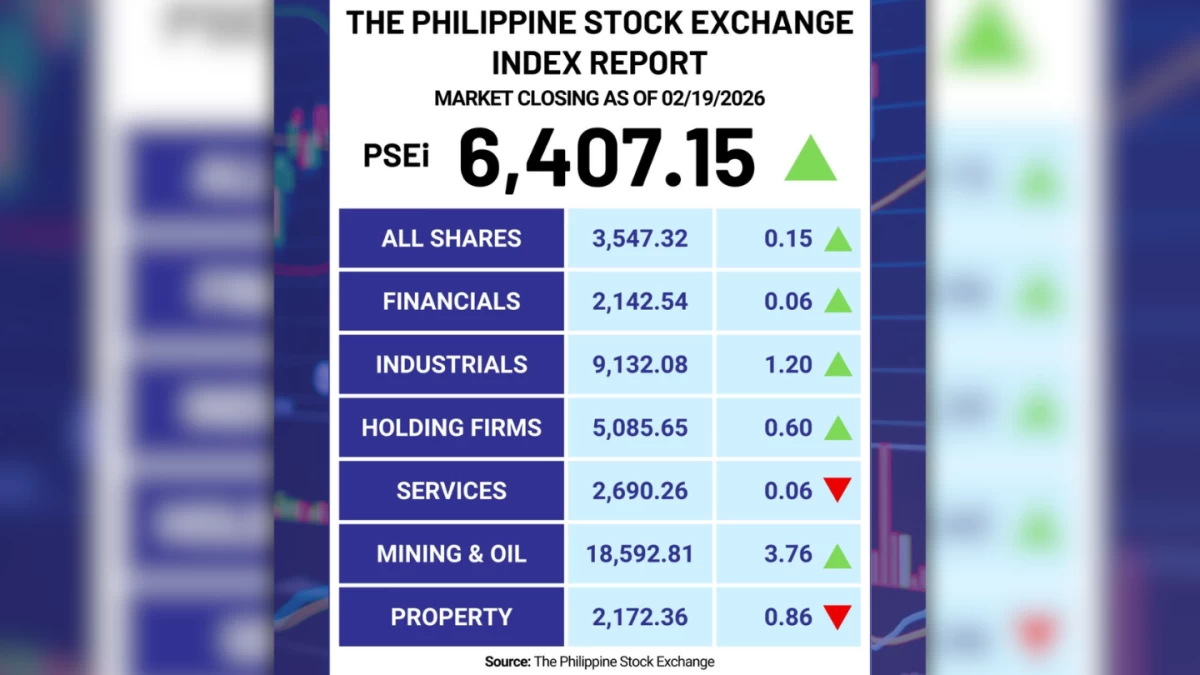
Local stocks edged higher Thursday, Feb. 19, as investors digested the widely anticipated interest rate cut by the central bank, looking past immediate growth concerns to hunt for bargains among beaten-down shares.
The Philippine Stock Exchange index (PSEi) climbed 12.38 points, or 0.19 percent, to close at 6,407.15. The move followed a decision by the Bangko Sentral ng Pilipinas (BSP) to lower borrowing costs, a pivot that many market participants had already priced into valuations over recent sessions.
Trading remained characterized by caution, with volume totaling 928 million shares valued at ₱5.26 billion. While the headline figure showed a modest gain, the underlying market breadth was more positive, as 119 stocks advanced compared with 89 that declined. Another 55 issues remained unchanged.
The mining sector led the day’s advance, providing the primary upward momentum for the index. Conversely, the property and services sectors lagged, finishing the session in the red as investors rotated out of interest-rate-sensitive real estate stocks following the formal announcement of the central bank's policy shift.
“The PSEi ended higher as bargain hunters resumed to take advantage of attractive valuations following recent declines,” said Luis Limlingan, managing director at Regina Capital Development Corp.
He noted that while the rate cut supports liquidity and broader market sentiment, the gains were capped as the market continues to weigh the potential for a rebound against subdued growth forecasts. The move helped improve risk appetite at the margins, allowing the benchmark to finish in positive territory.
Japhet Tantiangco, research manager at Philstocks Financial Inc., said the local market extended its gains backed by positive cues from Wall Street.
He added that expectations for further easing by the BSP in the coming months provided an additional tailwind during the Thursday climb.
The central bank’s move is seen as a crucial step in supporting the domestic economy, though the modest reaction in the equity market suggests that traders are now looking for further catalysts, such as improved corporate earnings or more aggressive fiscal support, to drive the next leg of the recovery.