






Manila Bulletin
 Philippines
National
Marcos hails Japan as key trade, infra partner; stronger PH-Japan economic surge eyed
Philippines
National
Marcos hails Japan as key trade, infra partner; stronger PH-Japan economic surge eyed
Philippines
National
Marcos hails Japan as key trade, infra partner; stronger PH-Japan economic surge eyed
Marcos hails Japan as key trade, infra partner; stronger PH-Japan economic surge eyed
Published Feb 19, 2026 11:06 am
|
Updated Feb 19, 2026 04:19 pm


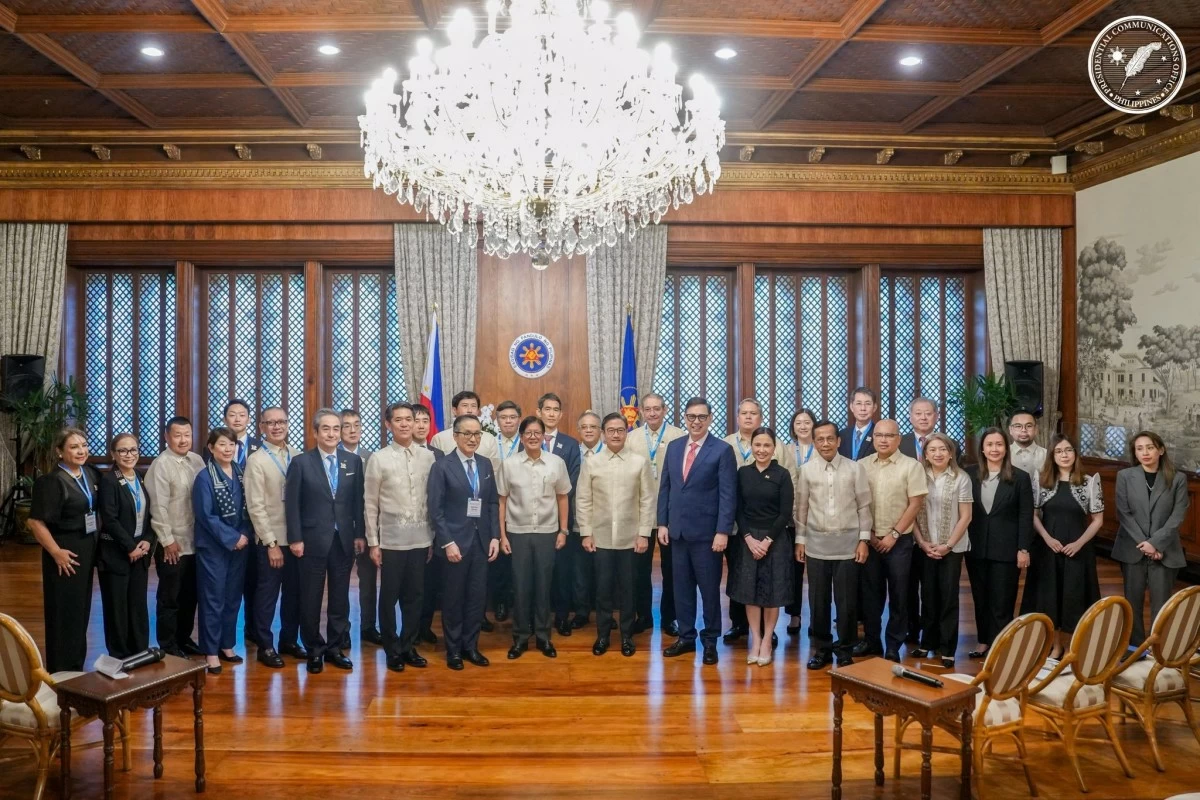
PCO photo
President Marcos underscored Japan’s role as a strategic partner in advancing trade, investments, and quality infrastructure collaboration as he met with Japanese and Filipino business leaders in Malacañan on Wednesday, Feb. 18.
The President welcomed delegates of the Japan-Philippines Economic Cooperation Committee (JPECC) and the Philippines-Japan Economic Cooperation Committee, Inc. (PHILJEC) during a courtesy call ahead of their 42nd Annual Joint Meeting in Manila.
In his remarks, Marcos said their presence reflects the “strong and enduring economic partnership” between the Philippines and Japan and a shared commitment to regional growth and stability.
During the meeting, the delegates and President Marcos exchanged views on the Philippines’ economic priorities, ongoing reforms, and investment pipeline, while identifying concrete opportunities to expand trade, increase investments, and strengthen business partnerships.
Japan remains one of the country’s most valued strategic partners, particularly in trade, investment, and quality infrastructure, with both sides working to promote resilient supply chains, inclusive growth, and deeper regional economic integration.
Key investment areas highlighted for Japanese firms include semiconductors and electronics, automotive manufacturing, including electric vehicles, aerospace, and the renewable energy value chain.
The government has also implemented reforms to liberalize priority sectors and broaden foreign participation in industries critical to long-term growth.
For the 42nd Joint Meeting, PHILJEC and JPECC said they will tackle pressing issues affecting bilateral economic cooperation and advance practical measures to further strengthen trade, investment, infrastructure, human resource development, and tourism.
Recto bullish on trade, tourism
Meanwhile, Executive Secretary Ralph Recto, in a welcome dinner for Filipino and Japanese government and business leaders at the Goldenberg Mansion on Feb. 18, said conditions are ripe for a surge in Philippine-Japan trade.
“The Philippines is ready to do more business with Japanese partners,” he said.
“You want clear rules. You want a coordinated government. And you want decisions made, without delay. That is exactly what we are working to deliver,” he added.
Recto stressed that investors do not need to ask for favors, only fairness, predictability, and speed.
“Our answer is to make doing business in the Philippines easier, faster, and more reliable,” he said.
Trade between the two nations reached about P1.27 trillion last year, with the Philippines posting a surplus, making Japan the country’s second-largest trading partner.
Recto said Japan is also the top source of foreign direct investments, pouring in P42.5 billion in the first 11 months of 2025.
He cited the Metro Manila Subway as “Exhibit A of Japan being a premium brand,” saying its reputation precedes it because of its Japanese provenance.
Recto also highlighted the Philippines’ skilled and adaptable workforce and its “strategic location in a rapidly growing region” as key attractions for Japanese investors.
He said people-to-people exchanges are likewise increasing, with nearly 407,000 Japanese visiting the Philippines in the first 11 months of 2025, while 825,000 Filipinos traveled to Japan last year following relaxed visa rules.
“If you come here for sand, sea, and surf, we go there for Sapporo, Shibuya, and Shinsaibashi,” Recto said, describing the exchanges as “luxury experiences, yet affordable, that deepen the bonds of the two friendliest peoples on earth.”