






Manila Bulletin
 Business
Trade & Industry
Philippine carriers back Marcos move to scrap ₱1,620 travel tax
Business
Trade & Industry
Philippine carriers back Marcos move to scrap ₱1,620 travel tax
Business
Trade & Industry
Philippine carriers back Marcos move to scrap ₱1,620 travel tax
Philippine carriers back Marcos move to scrap ₱1,620 travel tax
Published Feb 18, 2026 03:22 pm


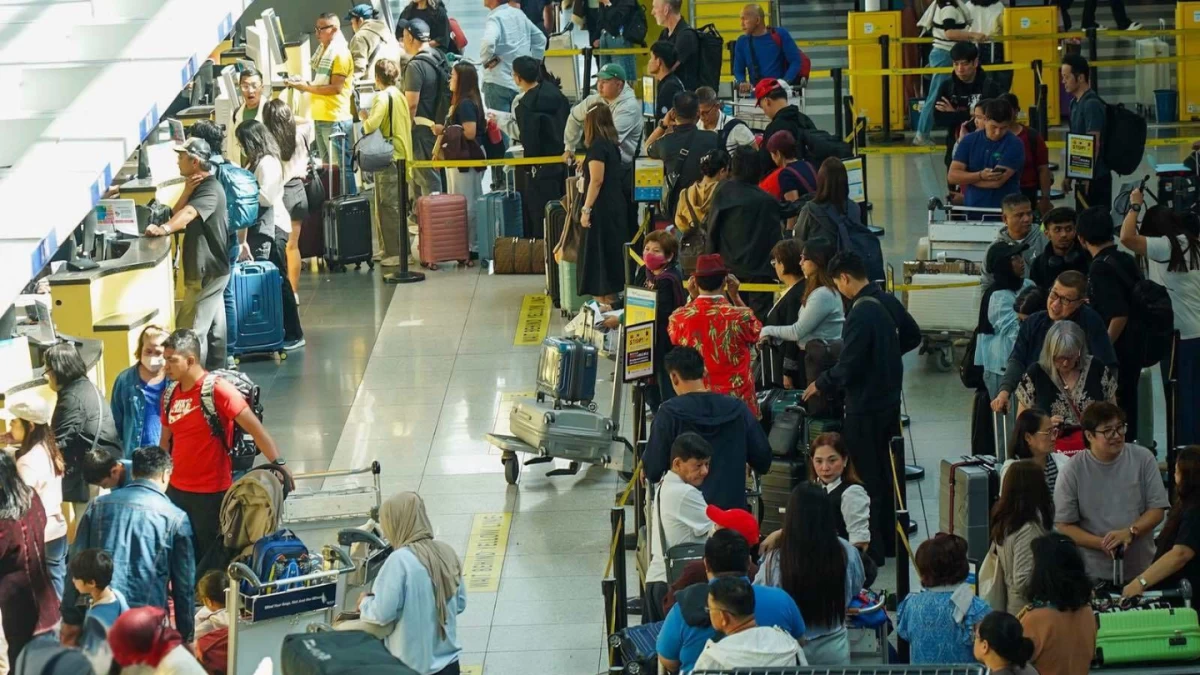
The country’s major airlines are throwing their weight behind the government proposal to scrap the long-standing travel tax, arguing that the move is essential to lower the cost of international flights and spur broader economic activity.
In a statement, the Air Carriers Association of the Philippines (ACAP) lauded the decision of President Ferdinand “Bongbong” Marcos Jr. to include the proposed abolition of the travel tax in his administration’s priority legislative measures.
“The ACAP member airlines support the reform as a meaningful step toward making international travel more affordable for Filipino passengers and boosting tourism activity,” the industry group said.
ACAP represents the country’s biggest players, including Philippine Airlines Inc., Cebu Air Inc., and the local unit of AirAsia Aviation Group Ltd.
ACAP said removing the tax will directly lower the overall cost of international travel, further enhancing passenger demand.
Currently, the Philippines is the only Southeast Asian country that imposes a travel tax on departing citizens, in addition to other fees that increase the cost of international travel.
Filipinos leaving the country are charged ₱1,620 for economy class and ₱2,700 for first class, a levy that has long been cited as unnecessarily increasing travel costs.
By removing the travel tax, ACAP said it would encourage more Filipinos to travel abroad, creating more prospects for growth across the tourism value chain.
For one, increased foreign travel would likely create new trade and commerce opportunities for businesses, which ACAP said would further strengthen the country’s competitiveness on the global stage.
ACAP assured the government that the proposed abolition of the travel tax would be accompanied by complementary efforts by airlines, such as expanding hubs to accommodate more flights to international destinations.
Alongside this, the industry group said it is open to working with the government to advance other reforms to make travel more accessible and sustain the long-term development of the country’s aviation and tourism sectors.
Earlier this month, ACAP urged the government to focus on long-term solutions, such as building longer runways to make domestic travel to island destinations like Siargao more affordable.
Airports with shorter runways can accommodate only smaller turboprops, which are more expensive to operate than larger jets that carry more passengers.
On the government's part, Acting Transportation Secretary Giovanni Lopez earlier said they are studying the possibility of reducing the passenger service charge (PSC) included in tickets for airports managed by the Civil Aviation Authority of the Philippines (CAAP).
Similar to the travel tax, PSCs (or terminal fees) are charged to each departing passenger and are already included in the ticket price at booking.
The PSC for international flights is currently set at ₱900. Meanwhile, for domestic flights, passengers pay ₱350 at international airports, ₱300 at principal class 1 airports, ₱200 at principal class 2 airports, and ₱100 at community airports.
Lopez said the 12-percent value-added tax (VAT) imposed on plane tickets will also be put under scrutiny to make air travel more accessible.