






Manila Bulletin
 Business
Trade & Industry
DA leverages road budget to support Philippine tourism goals
Business
Trade & Industry
DA leverages road budget to support Philippine tourism goals
Business
Trade & Industry
DA leverages road budget to support Philippine tourism goals
DA leverages road budget to support Philippine tourism goals
Published Feb 16, 2026 06:19 pm


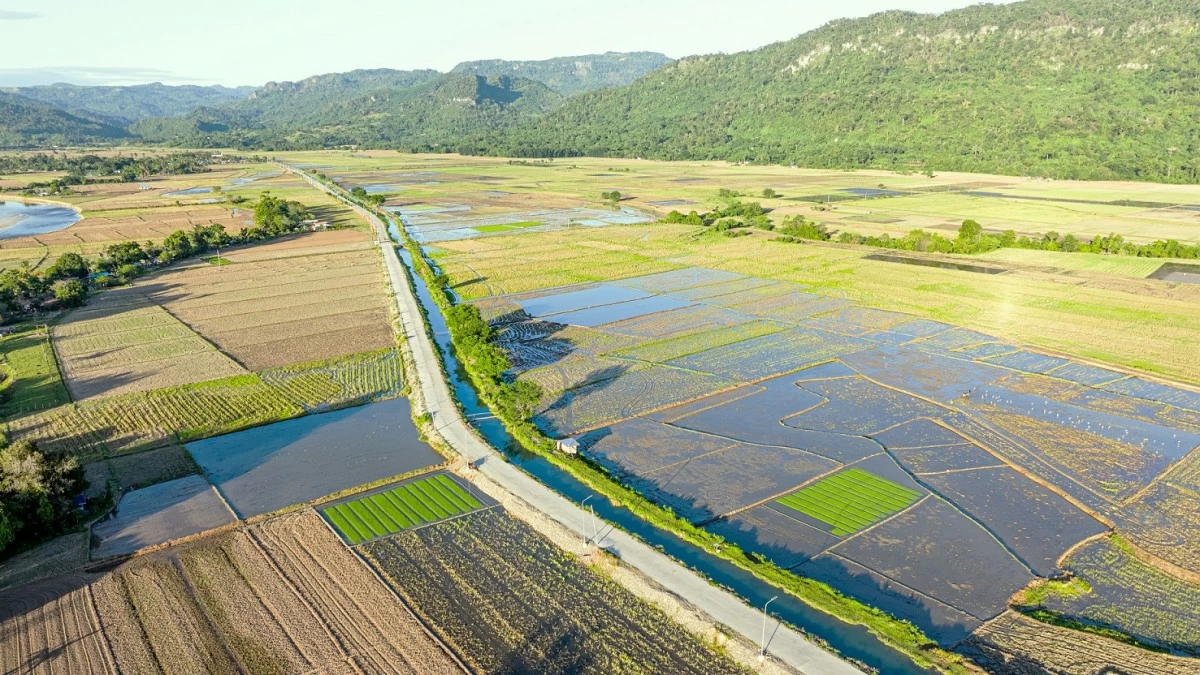
(DPWH photo)
The Department of Agriculture (DA) will align the construction of farm-to-market roads (FMRs) with tourism road projects nationwide to position the country as a major food destination and attract more visitors.
In a statement, the DA said it signed a “wide-ranging” memorandum of agreement (MOA) with the Department of Tourism (DOT) aimed at linking food production to the country’s expanding travel industry.
Under the MOA, both agencies will collaborate to expand the country's farm tourism destinations by promoting Filipino cuisine and integrating agricultural priorities into tourism planning.
To achieve this, the DA looks to align FMR projects with tourism circuits under the Tourism Road Infrastructure Program (TRIP) implemented by the DOT and the Department of Public Works and Highways (DPWH).
Under TRIP, both agencies coordinate road projects to improve access to tourist destinations across the country. While the DPWH still oversees public infrastructure projects, the DOT’s partnership with the DA coincides with the latter’s assumption of FMR projects.
Under this year’s national budget, TRIP has been earmarked ₱4 billion, its lowest level yet. The DA, on the other hand, will receive ₱33 billion in funding to implement the FMR program.
Agriculture Secretary Francisco Tiu Laurel said the DA’s agreement with the DOT is a structural intervention to strengthen both the agriculture and tourism industries.
He said this does not only mean adding tourist spots to farms, it is also about creating stable institutional demand for local produce while encouraging value-adding.
"When hotels and restaurants source consistently from Filipino farmers, we stimulate rural investments, generate employment, and expand economic activity beyond primary production,” said Tiu Laurel.
“Linking agriculture to tourism also incentivizes higher standards in quality, food safety, and sustainability, positioning local producers to compete in premium markets,” he added.
Tiu Laurel said both agencies will now move forward to form a joint technical working group to oversee implementation, draft work plans, and coordinate stakeholders across both sectors to achieve the agreement’s objectives.
The DA and DOT are expected to shoulder each other’s own costs to reflect a convergence model “built on coordination rather than pooled funding.”