






Manila Bulletin
 Philippines
National
Health workers rally in Mendiola, decry 'heartless' neglect of sector
Philippines
National
Health workers rally in Mendiola, decry 'heartless' neglect of sector
Philippines
National
Health workers rally in Mendiola, decry 'heartless' neglect of sector
Health workers rally in Mendiola, decry 'heartless' neglect of sector
By Jel Santos
Published Feb 13, 2026 04:12 pm


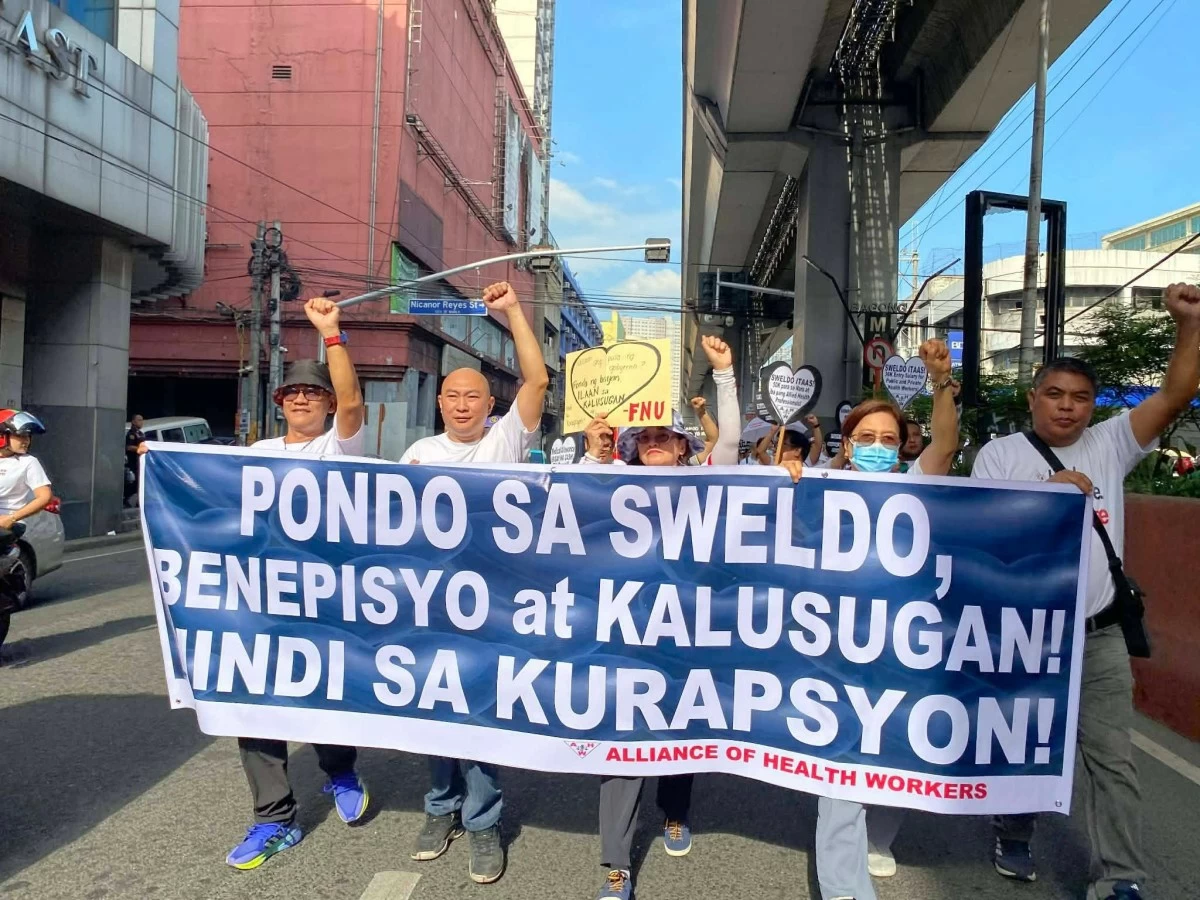
(AHW PHOTOS)
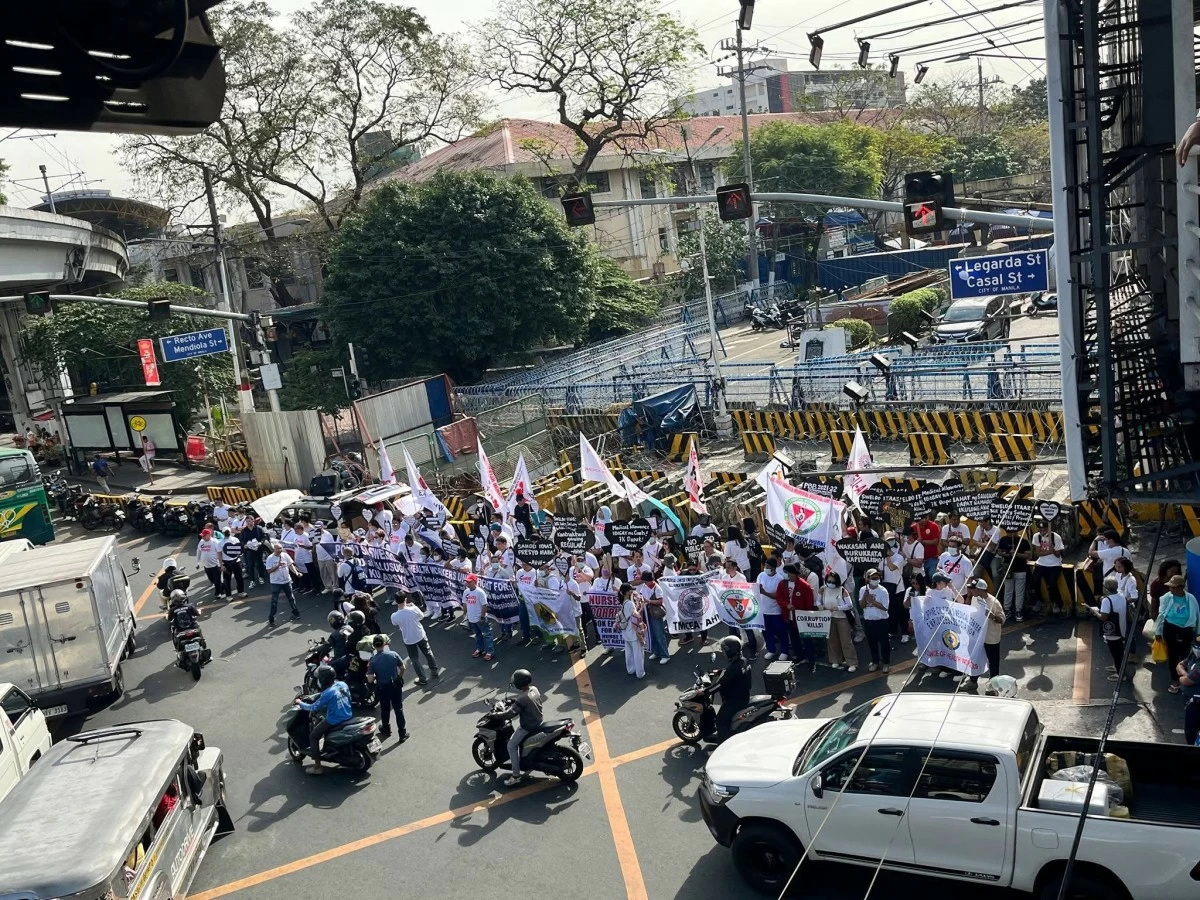
Calling out what they described as “heartless” neglect, health workers from various public and private hospitals in the National Capital Region staged a “Black Hearts Day Protest” in Mendiola, Manila on Friday, Feb. 13, denouncing what they claimed was the government’s failure to protect their rights and ensure accessible, quality health care for the public.
Members of the Alliance of Health Workers (AHW) carried “black heart placards” bearing messages that reflected their collective outrage and urgent demands.
The group called for a P36,000 entry-level living wage for health workers in both the public and private sectors, as well as the immediate release of delayed benefits such as the P7,000 medical allowance for GOCC personnel and the 2021–2022 performance-based bonus for DOH hospital workers.
They also pressed for the regularization of contractual staff, sufficient funding for public health services, an end to corruption, and full government accountability.
“For nearly four years under the administration of President Ferdinand Marcos Jr., there has been no significant improvement in the conditions of health workers and the Filipino people in terms of health care. Instead, the situation has worsened,” AHW representative Ernesto Bulanadi said in a statement.
(AHW PHOTOS)
The group noted that in the first week of January 2026, President Marcos Jr. signed the 2026 General Appropriations Act, allocating a total of P448.125 billion for the health sector.
“Of this amount, P297.857 billion was allocated to the Department of Health (DOH), P13.551 billion to specialty hospitals, and P129.782 billion to PhilHealth,” it stated.
AHW pointed out that the P297.85 billion DOH allocation constitutes only 4.4 percent of the overall national budget.
“Even with increased subsidies for specialty hospitals and DOH-retained hospitals, this remains insufficient to address the extremely long queues, overcrowded outpatient departments (OPD) and emergency rooms (ER), and the shortages of hospital beds, equipment, and health personnel,” the group said.
AHW added that the government allocated P52 billion to the Medical Assistance for Indigent and Financially Incapacitated Patients (MAIFIP) instead of providing adequate funding for public health programs and the maintenance and other operating expenses (MOOE) of public hospitals.
“MAIFIP is one of the largest forms of political patronage in health. Instead of allocating sufficient funds and making health services free, poor Filipinos are made to rely on aid programs endorsed by politicians,” Bulanadi stated.