






Manila Bulletin
 Business
Trade & Industry
Recto takes charge of council to boost Philippine computer chip exports
Business
Trade & Industry
Recto takes charge of council to boost Philippine computer chip exports
Business
Trade & Industry
Recto takes charge of council to boost Philippine computer chip exports
Recto takes charge of council to boost Philippine computer chip exports
Published Feb 11, 2026 09:21 pm


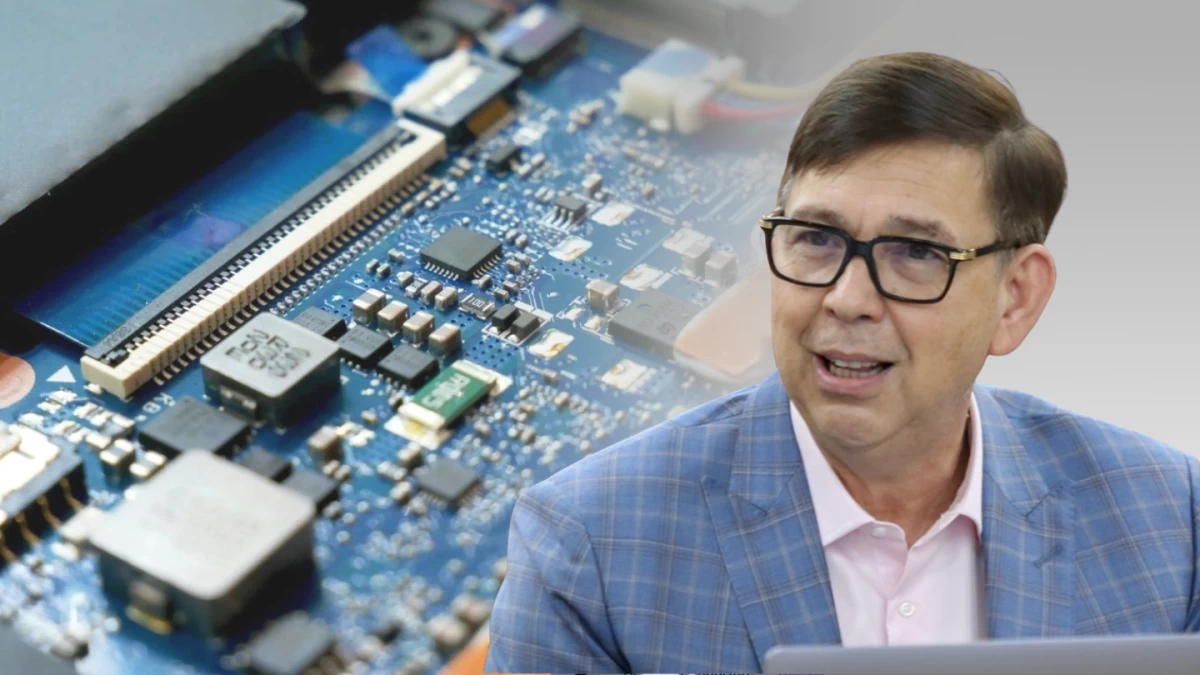
Executive Secretary Ralph Recto
The appointment of Executive Secretary Ralph Recto as the new head of the advisory body for the semiconductor and electronics industry is expected to sustain the upward trajectory of the country’s top export commodity, the Department of Trade and Industry (DTI) said.
In a statement, the DTI welcomed the designation of Recto as the new chairperson of the Semiconductor and Electronics Industry Advisory Council (SEIAC), as embodied in Executive Order (EO) No. 108.
“The transition ensures stronger direction and sustained momentum for the Philippines’ flagship technology export sector,” the DTI said.
Under EO No. 108, signed by Recto himself by authority of President Ferdinand “Bongbong” Marcos Jr., a leadership change in SEIAC was implemented to streamline the administrative structure within the Office of the President (OP).
This was to establish a more robust monitoring system over investment and economic affairs of the OP amid “diverse economic challenges currently confronting the nation.”
To achieve this, the Office of the Special Assistant to the President for Investment and Economic Affairs (OSAPIEA) was officially abolished, with its powers and functions integrated into the Office of the Executive Secretary (OES), except for those falling under the mandates of other concerned agencies.
OSAPIEA, headed by now-Finance Secretary Frederick Go, previously chaired SEIAC.
Based on EO No. 108, the Executive Secretary will now serve as chairperson of the council. There will be no changes to the membership structure or the vice chairperson, which is the DTI.
As the chairperson of the council, the DTI said Recto will now be in charge of overseeing policy reforms aimed at boosting the competitiveness of the electronics industry, especially after its strong performance last year.
Based on data from the Philippine Statistics Authority (PSA), electronic products accounted for nearly 60 percent of the record-high export revenues of $84.41 billion in 2025.
The commodity group, which includes semiconductors, posted $49.96 billion last year, up 27.8 percent from the $39.09 billion recorded in 2024.
The SEIAC is expected to maintain this momentum this year by attracting high-value investments and unlocking innovation-driven growth for the electronics industry.
According to the DTI, the council will particularly focus on accelerating the industry’s shift from traditional assembly, test, and packaging (ATP) toward higher-value Integrated Circuit (IC) design.
“This will move the Philippines up the global semiconductor value chain, strengthen the nation’s technological capability, and expand opportunities for skilled Filipino talent,” it said.
Industry stakeholders have been urging the government to guide the semiconductor industry’s pivot toward advanced manufacturing, as the Philippines risks falling behind its peers in the Association of Southeast Asian Nations (ASEAN).
With its chairmanship of the ASEAN Summit this year, the country will push semiconductors as one of its priority economic deliverables, particularly in developing strategies to attract investments.
“Among Executive Secretary Recto’s immediate priorities is leveraging the Philippines’ 2026 ASEAN Chairmanship to position the country as an emerging semiconductor hub in the region,” the DTI said.
In addition, the SEIAC will pursue its five-year workforce development plan to train and upskill over 128,000 semiconductor professionals by 2030.
This is in line with the goal of reaching $110 billion in annual export revenues by the same year.
Earlier, the DTI announced that ₱70 million has been earmarked to strengthen the talent pipeline for the electronics industry.
The funding, which will be overseen by the SEIAC, will support a new coordinated strategy to upgrade classrooms and teaching standards, ensuring that students are aligned with global benchmarks in advanced manufacturing and electronics.