






 Business
Trade & Industry
Philippines eyes No. 1 banana crown, seeks Japan tariff cuts to challenge Ecuador
Business
Trade & Industry
Philippines eyes No. 1 banana crown, seeks Japan tariff cuts to challenge Ecuador
Philippines eyes No. 1 banana crown, seeks Japan tariff cuts to challenge Ecuador


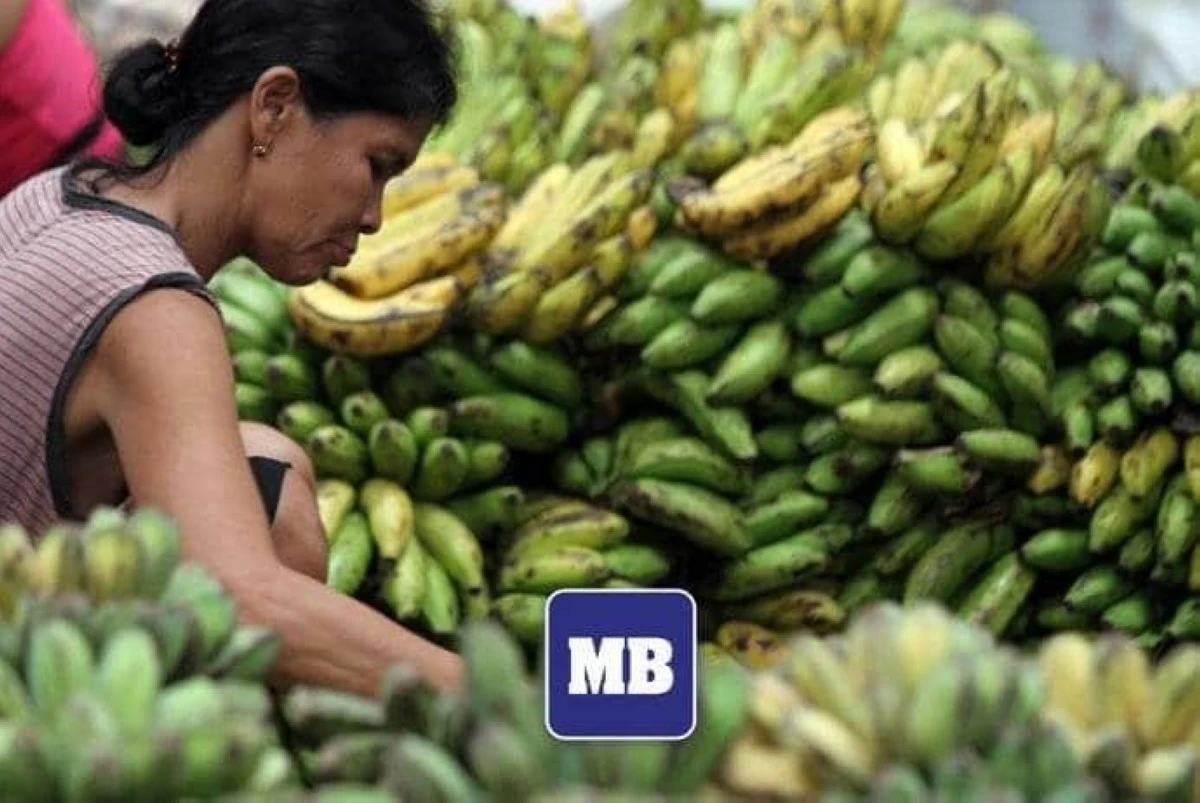
Reducing tariffs on banana shipments to Japan could help the Philippines compete with Ecuador for the title of the world’s largest banana exporter, according to the Department of Trade and Industry (DTI).
After reclaiming its position as the second-largest banana exporter last year, Trade Secretary Cristina Roque said the DTI will push for amendments to the Japan-Philippines Economic Partnership Agreement (JPEPA) to expand the market for Philippine bananas abroad.
“Our bananas, we have already reclaimed No. 2 position. So we’re hoping with the Japanese support… we could really get the top spot,” said Roque.
The government has been pushing to amend the JPEPA framework to potentially lower or even remove the tariffs imposed on Philippine banana exports.
At present, Japan imposes an eight-percent tariff on bananas from the Philippines between October and March, and a higher duty of 18 percent from April to September.
Japan is the largest market for Philippine bananas, accounting for around 80 percent of its banana import demand.
While this remains a significant figure, demand has been slowly declining in recent years as other countries with much lower tariffs flood the market with banana exports.
Countries such as Vietnam, Thailand, and Mexico are slowly gaining ground in the Japanese market due to their respective preferential tariff agreements.
Roque said she has been in contact with her Japanese counterpart to formally start talks on potential changes to banana tariffs and other provisions of JPEPA.
She said the government is hoping to launch discussions on the matter as early as the first quarter of the year.
Last month, Agriculture Secretary Francisco Tiu Laurel said the Philippines stands to benefit from lower tariffs if it succeeds in its bid to join the Comprehensive and Progressive Agreement for Trans-Pacific Partnership (CPTPP).
In the meantime, he said the government should aim to lower duties to between five and eight percent as a stopgap measure.
Based on a preliminary report by the Food and Agriculture Organization (FAO), the Philippines shipped 2.93 million metric tons (MT) of bananas in 2025, up 26 percent from 2.33 million MT in the previous year.
Ecuador retained its longstanding crown as the top banana exporter last year, with total exports of 6.41 million MT, based on FAO data.
FAO attributed the growth in Philippine exports to stronger domestic banana production, which recovered from the impact of plant diseases and weather disturbances that kept the country in third place in 2023 and 2024.
Roque, meanwhile, pointed to the country’s free trade agreement (FTA) with South Korea, which entered into force in late 2024, as another boost to banana exports.
For the year, the recently signed FTA with the United Arab Emirates (UAE) is expected to further drive demand for banana shipments.
“We’ve just signed the FTA with UAE. So for the preferential tariff, it starts already now, especially for agriculture products, semiconductors, minerals, and so many other products,” said Roque.
About 95 percent of the country’s exports to the UAE will enjoy preferential treatment, meaning lower tariffs will be imposed on these goods.
For the year, the Philippines is also targeting trade deals with Chile and Canada, while the FTA with the European Union (EU) is up for signing next year.