






 Business
Trade & Industry
Philippines still weighing entry into US-led critical minerals trade bloc
Business
Trade & Industry
Philippines still weighing entry into US-led critical minerals trade bloc
Philippines still weighing entry into US-led critical minerals trade bloc


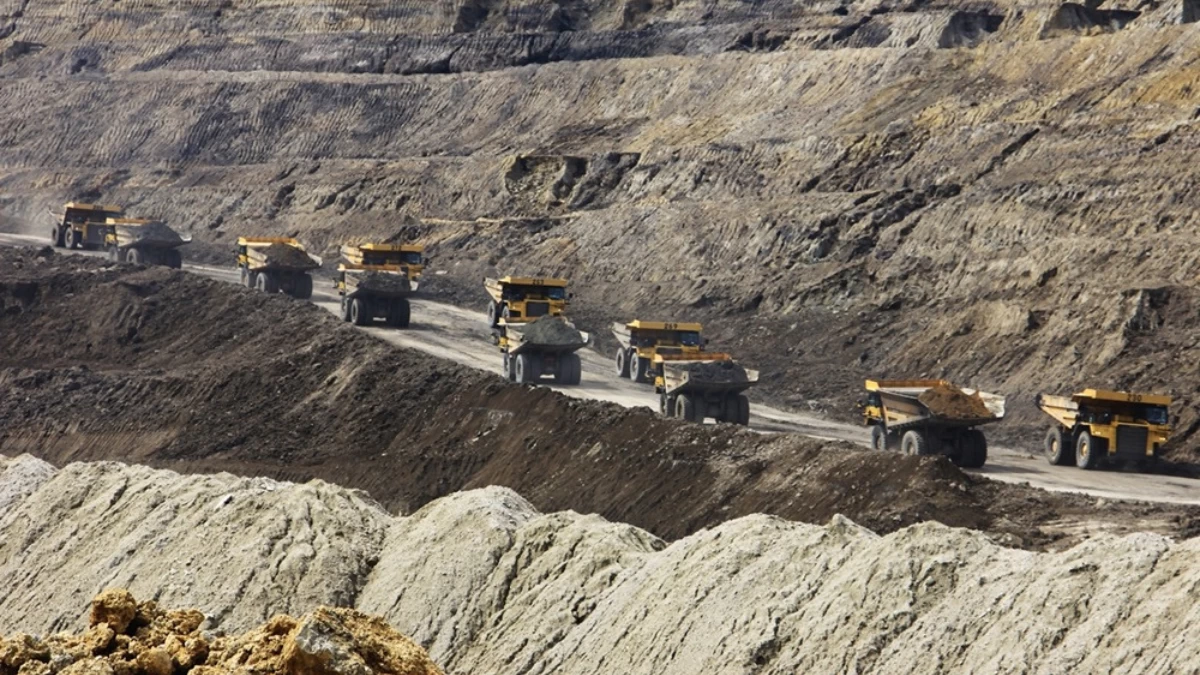
The government has yet to decide whether the Philippines will participate in the proposed preferential trade bloc for critical minerals recently put forward by the United States (US), according to the country’s envoy to Washington.
“None, not yet,” Philippine Ambassador to the US Jose Manuel Romualdez said on Tuesday, Feb. 10, when asked whether the country is willing to join the US-led bloc.
“What we did in Washington was merely to facilitate and make sure that the Philippines was included among the 10 countries they signed up with,” he said.
Last week, the Philippines was among the countries that the US signed a memorandum of understanding (MOU) with involving critical minerals.
According to the Department of Trade and Industry (DTI), the agreement establishes a framework that facilitates investments to support the country’s mineral processing, refining, and downstream manufacturing industries.
The agreement is also expected to reduce overreliance on a single buyer by connecting the country’s minerals to a broader network of more than 50 countries.
Romualdez said diversifying the country’s export markets would likely weaken China’s dominance over Philippine mineral exports, such as nickel.
He said the Philippines has been shipping around 90 percent of its nickel exports to China due to limited domestic processing capacity.
“Minerals are very important. We want to develop them, and we have been talking about being part of the critical minerals supply chain—not only for the United States, but for other countries as well,” he said.
During the Critical Minerals Ministerial last week, US Vice President JD Vance announced that the US is pursuing the creation of a preferential trading bloc aimed at breaking China’s dominance in the critical minerals market. It was during this event that the Philippines signed the MOU with the US.
Romualdez, however, did not confirm whether the agreement effectively amounts to the Philippines’ endorsement of the US proposal to form a trade bloc.
This comes as the US Department of State (DOS) said the framework lays the groundwork for countries to collaborate on pricing challenges, spur development, create fair markets, close gaps in priority supply chains, and expand access to financing.
While there is still no decision on the country’s potential participation in the trade bloc, Trade Secretary Cristina Roque said the opportunity is now in place to move the Philippines from a raw ore exporter to a high-value processing hub.
“The MOU is a major enabler for the Philippines to shift from simply exporting raw mineral ores to becoming a significant player in value-added processing,” the DTI chief said in a statement on Tuesday.
Through the agreement, she said the country will unlock “substantial and diverse investments” to develop the local workforce and strengthen the mining and related industries.
For its part, the Philippine Exporters Confederation Inc. (Philexport) expects the agreement to bolster the country’s role in global supply chains for emerging technologies reliant on rare earths.
“The MOU strengthens ties for Filipino-led mining companies to access the US market and secure supply chains,” the group said on Monday, Feb. 9.