ADVERTISEMENT

What's the most Filipino way of saying 'I love you?'

What's the most Filipino way of saying 'I love you?'

Published Feb 7, 2026 01:54 pm
It is rare to hear “I love you” in Filipino homes, but it can be felt through everyday reminders, warm meals, and sacrifices. For many families, love is expressed not through big words, but through small, steady acts of care that are passed down from one generation to the next. 
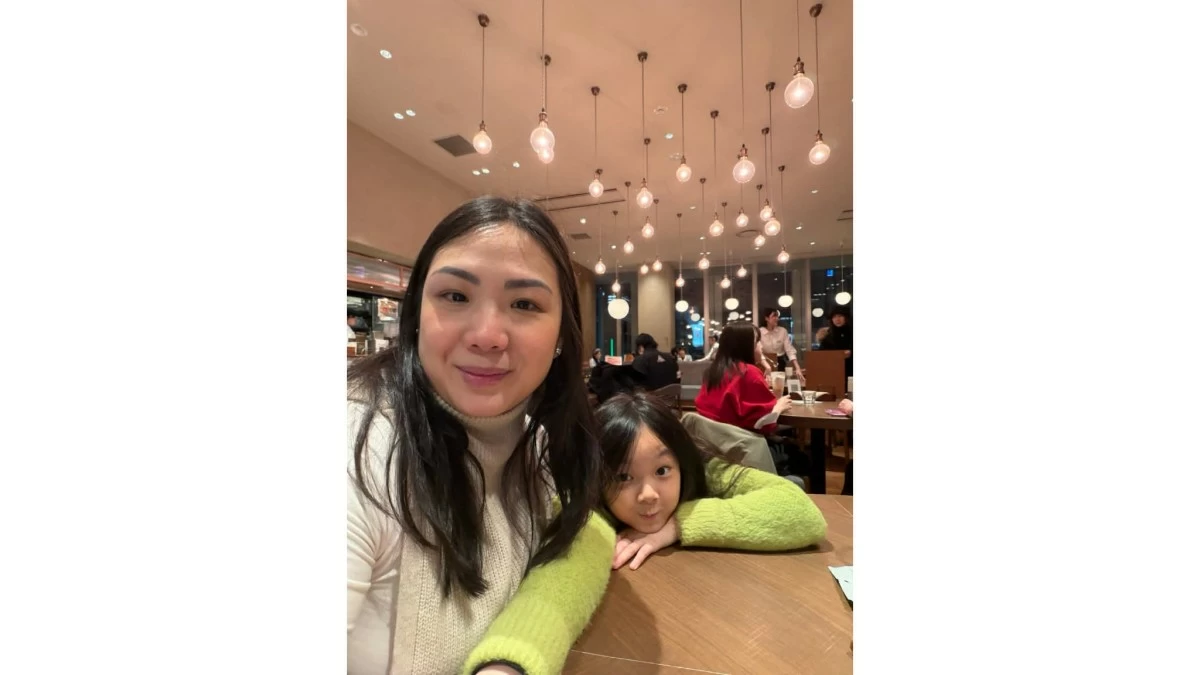
Kato and daughter Georgie, 9
‘Mag-jacket ka malamig’
Bringing a jacket for your child wherever you go, even when they insist they are not cold, is a very Filipino mom’s way of saying “I love you.” It is less about the weather and more about care, protection, and foresight. I grew up hearing “Mag-jacket ka, malamig,” and now I find myself saying the same thing to my own child. It is a quiet habit passed down through generations, rooted in love and concern for a child’s health long before they realize they need it.—Kato Lim, Momzilla co-founder, mom of one

Micah with husband Rommel and daughters Luna, 6, and Astrid, 3
‘Para sa inyo’
For me and my kids, the most Filipino way of saying “I love you” is simply, “Para sa’yo, anak, oo.” It is not expressed through big words, but through acts of service and quiet patience. Every time they ask me to pick them up from school, help with small tasks, tie their hair in the morning, or get them ready for the day, I show up. Even while juggling work, home, and business, I make the time. No matter how busy life gets, they will always come first.—Micah Alvarez-Diaz, Here and There PH - Kaleia country director, mom of two

Sarabeth and husband Jake with their children
‘Kumain ka na ba?’
For me, the most Filipino way to show love is through food, especially by preparing meals for the whole family. Thinking about what someone would like to eat is not just about serving something delicious. It is an act of care, a way of knowing a person deeply and being attentive to their wants and needs. Asking “Kumain ka na ba?” carries a deeper meaning. When a meal is prepared, it does not have to be expensive. As long as it is made with love, it becomes a way of saying, “You matter to me, and I love you.”
Sharing meals brings everyone closer, and salu-salo is a very Filipino term that we Filipinos like to celebrate not just with family, but with friends, teammates, and workmates. The table where we sit around to eat is a place where stories and laughs are freely shared, making social bonds stronger. These salu-salos don't need to be grand. Even simple ones are enough to show that you appreciate their presence and that you want everyone to have a great time.—Sarabeth Salcedo Soriano, Baliwag Lechon Manok operations director, mom of three

Related Tags

Parenting
ADVERTISEMENT
.most-popular .layout-ratio{ padding-bottom: 79.13%; } @media (min-width: 768px) and (max-width: 1024px) { .widget-title { font-size: 15px !important; } }

{{ articles_filter_1561_widget.title }}

.most-popular .layout-ratio{ padding-bottom: 79.13%; } @media (min-width: 768px) and (max-width: 1024px) { .widget-title { font-size: 15px !important; } }

{{ articles_filter_1562_widget.title }}

.most-popular .layout-ratio{ padding-bottom: 79.13%; } @media (min-width: 768px) and (max-width: 1024px) { .widget-title { font-size: 15px !important; } }

{{ articles_filter_1563_widget.title }}

{{ articles_filter_1564_widget.title }}

.mb-article-details { position: relative; } .mb-article-details .article-body-preview, .mb-article-details .article-body-summary{ font-size: 17px; line-height: 30px; font-family: "Libre Caslon Text", serif; color: #000; } .mb-article-details .article-body-preview iframe , .mb-article-details .article-body-summary iframe{ width: 100%; margin: auto; } .read-more-background { background: linear-gradient(180deg, color(display-p3 1.000 1.000 1.000 / 0) 13.75%, color(display-p3 1.000 1.000 1.000 / 0.8) 30.79%, color(display-p3 1.000 1.000 1.000) 72.5%); position: absolute; height: 200px; width: 100%; bottom: 0; display: flex; justify-content: center; align-items: center; padding: 0; } .read-more-background a{ color: #000; } .read-more-btn { padding: 17px 45px; font-family: Inter; font-weight: 700; font-size: 18px; line-height: 16px; text-align: center; vertical-align: middle; border: 1px solid black; background-color: white; } .hidden { display: none; }
function initializeAllSwipers() { // Get all hidden inputs with cms_article_id document.querySelectorAll('[id^="cms_article_id_"]').forEach(function (input) { const cmsArticleId = input.value; const articleSelector = '#article-' + cmsArticleId + ' .body_images'; const swiperElement = document.querySelector(articleSelector); if (swiperElement && !swiperElement.classList.contains('swiper-initialized')) { new Swiper(articleSelector, { loop: true, pagination: false, navigation: { nextEl: '#article-' + cmsArticleId + ' .swiper-button-next', prevEl: '#article-' + cmsArticleId + ' .swiper-button-prev', }, }); } }); } setTimeout(initializeAllSwipers, 3000); const intersectionObserver = new IntersectionObserver( (entries) => { entries.forEach((entry) => { if (entry.isIntersecting) { const newUrl = entry.target.getAttribute("data-url"); if (newUrl) { history.pushState(null, null, newUrl); let article = entry.target; // Extract metadata const author = article.querySelector('.author-section').textContent.replace('By', '').trim(); const section = article.querySelector('.section-info ').textContent.replace(' ', ' '); const title = article.querySelector('.article-title h1').textContent; // Parse URL for Chartbeat path format const parsedUrl = new URL(newUrl, window.location.origin); const cleanUrl = parsedUrl.host + parsedUrl.pathname; // Update Chartbeat configuration if (typeof window._sf_async_config !== 'undefined') { window._sf_async_config.path = cleanUrl; window._sf_async_config.sections = section; window._sf_async_config.authors = author; } // Track virtual page view with Chartbeat if (typeof pSUPERFLY !== 'undefined' && typeof pSUPERFLY.virtualPage === 'function') { try { pSUPERFLY.virtualPage({ path: cleanUrl, title: title, sections: section, authors: author }); } catch (error) { console.error('ping error', error); } } // Optional: Update document title if (title && title !== document.title) { document.title = title; } } } }); }, { threshold: 0.1 } ); function showArticleBody(button) { const article = button.closest("article"); const summary = article.querySelector(".article-body-summary"); const body = article.querySelector(".article-body-preview"); const readMoreSection = article.querySelector(".read-more-background"); // Hide summary and read-more section summary.style.display = "none"; readMoreSection.style.display = "none"; // Show the full article body body.classList.remove("hidden"); } document.addEventListener("DOMContentLoaded", () => { let loadCount = 0; // Track how many times articles are loaded const offset = [1, 2, 3, 4, 5, 6, 7, 8, 9, 10]; // Offset values const currentUrl = window.location.pathname.substring(1); let isLoading = false; // Prevent multiple calls if (!currentUrl) { console.log("Current URL is invalid."); return; } const sentinel = document.getElementById("load-more-sentinel"); if (!sentinel) { console.log("Sentinel element not found."); return; } function isSentinelVisible() { const rect = sentinel.getBoundingClientRect(); return ( rect.top < window.innerHeight && rect.bottom >= 0 ); } function onScroll() { if (isLoading) return; if (isSentinelVisible()) { if (loadCount >= offset.length) { console.log("Maximum load attempts reached."); window.removeEventListener("scroll", onScroll); return; } isLoading = true; const currentOffset = offset[loadCount]; window.loadMoreItems().then(() => { let article = document.querySelector('#widget_1690 > div:nth-last-of-type(2) article'); intersectionObserver.observe(article) loadCount++; }).catch(error => { console.error("Error loading more items:", error); }).finally(() => { isLoading = false; }); } } window.addEventListener("scroll", onScroll); });

Sign up by email to receive news.