

ADVERTISEMENT

How Filipino parents show love through action and words

From practical daily care to verbal encouragement, it's all about balancing tradition with emotional awareness

Published Feb 7, 2026 01:52 pm
Filipino parents, like many Asian parents, have a special way of showing love—it’s in what they do more than what they say. Affection is expressed by preparing meals and managing daily chores.
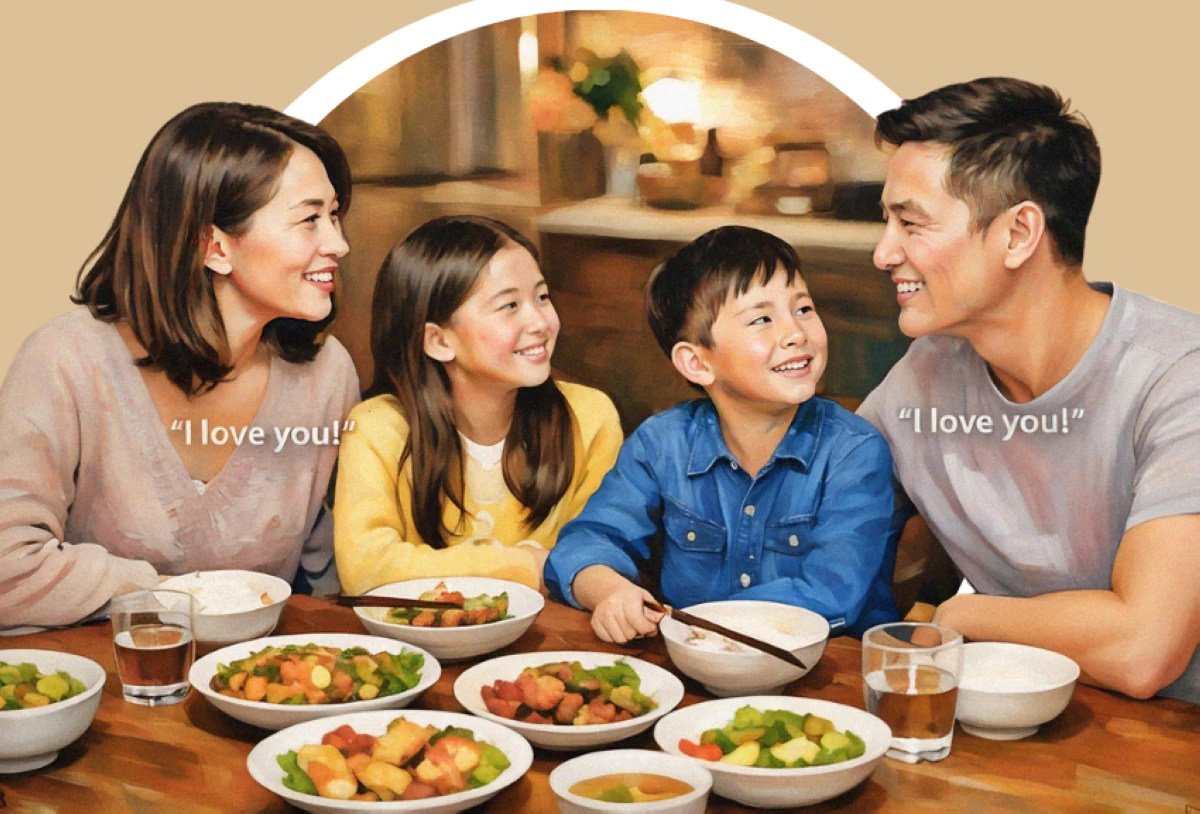
A study by Lydia B. Aguilar and colleagues, “Cultural Values, Parenting, and Child Adjustment in the Philippines” in the International Journal of Psychology, explains why. In a collectivist culture like ours, family needs often take priority over words. Love is felt more, not heard, through daily acts.
Say it
Things have been changing lately. The younger generation of parents are increasingly saying “I love you” and encouraging children to share their feelings. The study “Emotional Socialization Practices Across Cultures” by Claudia A. Haight and Nancy L. Benson, published in the Journal of Cross-Cultural Psychology, shows that exposure to verbal emotional expression encourages open communication, even in traditionally reserved households.
“I make it a point to tell my kids I love them every morning,” says Marivic Santos, 32, marketing manager and mother of one. “It wasn’t something my mom did, so I’m trying to add it to our daily routine.”
Actions are still equally important. Reminding a child if they’ve eaten, checked their homework, cleaned their room are gestures that communicate care without saying it out loud. Maria Teresa A. Edillon’s research, “Filial Care Patterns Among Filipino Adults” in the Philippine Journal of Psychology, confirms that children recognize these as expressions of love.
Best of both
This evolution comes from a mix of cultural and modern influences. Exposure to different parenting styles through online resources, social media, and global discourse has given mothers the freedom to choose what works best for their families.
A 2024 study in Frontiers in Psychology, “How parenting styles affect primary school students’ subjective well‑being? The mediating role of self‑concept and emotional intelligence,” found that supportive and responsive parenting is linked with higher emotional intelligence and self‑concept in children. These qualities help kids grow more confident, socially aware, and emotionally resilient.
“I try to combine what I grew up with and what I learn online,” shares Anna Reyes, 38, school teacher and mother of two. “I prepare our meals and check homework like my mom did, but now I also ask my kids how they feel about school and friends. It’s a little of both old habits and new approaches.”
Balancing act
Parents, including younger grandparents, see the value of both showing and saying how much they love their children. Practical care builds a foundation of trust. Words give children the tools to understand their feelings. Together, they help kids feel secure and confident. This balance sums up how a parents’ love reveals itself in a Filipino home.

Related Tags

Parenting
ADVERTISEMENT
.most-popular .layout-ratio{ padding-bottom: 79.13%; } @media (min-width: 768px) and (max-width: 1024px) { .widget-title { font-size: 15px !important; } }

{{ articles_filter_1561_widget.title }}

.most-popular .layout-ratio{ padding-bottom: 79.13%; } @media (min-width: 768px) and (max-width: 1024px) { .widget-title { font-size: 15px !important; } }

{{ articles_filter_1562_widget.title }}

.most-popular .layout-ratio{ padding-bottom: 79.13%; } @media (min-width: 768px) and (max-width: 1024px) { .widget-title { font-size: 15px !important; } }

{{ articles_filter_1563_widget.title }}

{{ articles_filter_1564_widget.title }}

.mb-article-details { position: relative; } .mb-article-details .article-body-preview, .mb-article-details .article-body-summary{ font-size: 17px; line-height: 30px; font-family: "Libre Caslon Text", serif; color: #000; } .mb-article-details .article-body-preview iframe , .mb-article-details .article-body-summary iframe{ width: 100%; margin: auto; } .read-more-background { background: linear-gradient(180deg, color(display-p3 1.000 1.000 1.000 / 0) 13.75%, color(display-p3 1.000 1.000 1.000 / 0.8) 30.79%, color(display-p3 1.000 1.000 1.000) 72.5%); position: absolute; height: 200px; width: 100%; bottom: 0; display: flex; justify-content: center; align-items: center; padding: 0; } .read-more-background a{ color: #000; } .read-more-btn { padding: 17px 45px; font-family: Inter; font-weight: 700; font-size: 18px; line-height: 16px; text-align: center; vertical-align: middle; border: 1px solid black; background-color: white; } .hidden { display: none; }
function initializeAllSwipers() { // Get all hidden inputs with cms_article_id document.querySelectorAll('[id^="cms_article_id_"]').forEach(function (input) { const cmsArticleId = input.value; const articleSelector = '#article-' + cmsArticleId + ' .body_images'; const swiperElement = document.querySelector(articleSelector); if (swiperElement && !swiperElement.classList.contains('swiper-initialized')) { new Swiper(articleSelector, { loop: true, pagination: false, navigation: { nextEl: '#article-' + cmsArticleId + ' .swiper-button-next', prevEl: '#article-' + cmsArticleId + ' .swiper-button-prev', }, }); } }); } setTimeout(initializeAllSwipers, 3000); const intersectionObserver = new IntersectionObserver( (entries) => { entries.forEach((entry) => { if (entry.isIntersecting) { const newUrl = entry.target.getAttribute("data-url"); if (newUrl) { history.pushState(null, null, newUrl); let article = entry.target; // Extract metadata const author = article.querySelector('.author-section').textContent.replace('By', '').trim(); const section = article.querySelector('.section-info ').textContent.replace(' ', ' '); const title = article.querySelector('.article-title h1').textContent; // Parse URL for Chartbeat path format const parsedUrl = new URL(newUrl, window.location.origin); const cleanUrl = parsedUrl.host + parsedUrl.pathname; // Update Chartbeat configuration if (typeof window._sf_async_config !== 'undefined') { window._sf_async_config.path = cleanUrl; window._sf_async_config.sections = section; window._sf_async_config.authors = author; } // Track virtual page view with Chartbeat if (typeof pSUPERFLY !== 'undefined' && typeof pSUPERFLY.virtualPage === 'function') { try { pSUPERFLY.virtualPage({ path: cleanUrl, title: title, sections: section, authors: author }); } catch (error) { console.error('ping error', error); } } // Optional: Update document title if (title && title !== document.title) { document.title = title; } } } }); }, { threshold: 0.1 } ); function showArticleBody(button) { const article = button.closest("article"); const summary = article.querySelector(".article-body-summary"); const body = article.querySelector(".article-body-preview"); const readMoreSection = article.querySelector(".read-more-background"); // Hide summary and read-more section summary.style.display = "none"; readMoreSection.style.display = "none"; // Show the full article body body.classList.remove("hidden"); } document.addEventListener("DOMContentLoaded", () => { let loadCount = 0; // Track how many times articles are loaded const offset = [1, 2, 3, 4, 5, 6, 7, 8, 9, 10]; // Offset values const currentUrl = window.location.pathname.substring(1); let isLoading = false; // Prevent multiple calls if (!currentUrl) { console.log("Current URL is invalid."); return; } const sentinel = document.getElementById("load-more-sentinel"); if (!sentinel) { console.log("Sentinel element not found."); return; } function isSentinelVisible() { const rect = sentinel.getBoundingClientRect(); return ( rect.top < window.innerHeight && rect.bottom >= 0 ); } function onScroll() { if (isLoading) return; if (isSentinelVisible()) { if (loadCount >= offset.length) { console.log("Maximum load attempts reached."); window.removeEventListener("scroll", onScroll); return; } isLoading = true; const currentOffset = offset[loadCount]; window.loadMoreItems().then(() => { let article = document.querySelector('#widget_1690 > div:nth-last-of-type(2) article'); intersectionObserver.observe(article) loadCount++; }).catch(error => { console.error("Error loading more items:", error); }).finally(() => { isLoading = false; }); } } window.addEventListener("scroll", onScroll); });

Sign up by email to receive news.