






Manila Bulletin
 Business
The Economy
Philippines' long Christmas celebration lifts consumer spending as emerging Asia cools—Visa
Business
The Economy
Philippines' long Christmas celebration lifts consumer spending as emerging Asia cools—Visa
Business
The Economy
Philippines' long Christmas celebration lifts consumer spending as emerging Asia cools—Visa
Philippines' long Christmas celebration lifts consumer spending as emerging Asia cools—Visa
Published Feb 5, 2026 06:00 pm
|
Updated Feb 5, 2026 02:38 pm


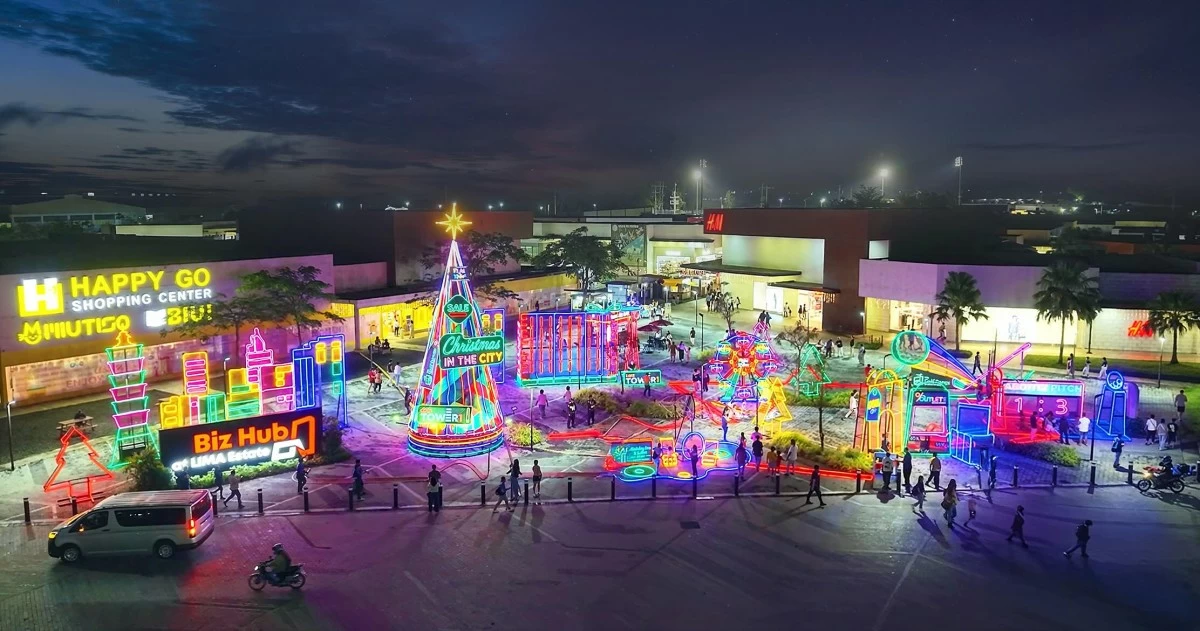
The Outlets at LIMA Estate
Renowned worldwide for celebrating what many regard as the longest Christmas season, the Philippines saw a boost in consumer spending during the final three months of 2025, reversing the prior quarter’s weakness and bucking the trend among its regional peers, according to global financial giant Visa.
Visa Business and Economic Insights’ Asia-Pacific Spending Momentum Index (SMI) for the fourth quarter of 2025 showed that emerging Asian economies “saw a broad pullback in spending momentum, with the regional SMI contracting by 3.4 points in the fourth quarter and no market remaining above the expansion threshold.”
“The slowdown reflects a normalization after an unusually strong post-pandemic rebound, with Indonesia and Thailand facing the sharpest declines, while India and Vietnam softened more moderately,” Visa principal Asia-Pacific economist Simon Baptist and Asia-Pacific economist Minakshi Barman said in their report published on Thursday, Feb. 5.
But in emerging Asia, only the Philippines and Malaysia recorded a “modest” SMI improvement, both up by 1.8 points, during the October-to-December 2025 period, Visa noted.
As Manila Bulletin earlier reported, the Philippines’ SMI declined by 3.7 points in the third quarter of last year, outpacing the 1.1-point contraction across emerging Asia from July to September and reversing the country’s 3.2-point increase in the second quarter, which had bucked subdued consumer spending momentum among regional peers during the April-to-June period.
Emerging Asia’s SMI stood at 94—below the 100 threshold indicating contraction—in the fourth quarter of 2025, lower than advanced Asia’s 97.2 as well as Australia and New Zealand’s 102.5. Advanced Asia includes Hong Kong, Japan, and Singapore.
As of end-December 2025, the Philippines’ discretionary spending momentum further declined to 92.8 from 93.5 at end-September.
Meanwhile, non-discretionary spending momentum in the country rose to 91 at end-December from 87.3 a quarter earlier.
Discretionary spending covers non-essential categories such as travel, retail, leisure, entertainment, and personal and professional services, while non-discretionary spending includes essentials such as food, healthcare, utilities, education, and logistics.
Restaurant and fuel spending are excluded from both discretionary and non-discretionary groupings due to their unique characteristics, but they are included in the overall Visa SMI.
Scored on a zero-to-200 diffusion index scale, SMI readings above 100 signal broad-based acceleration in economic momentum, while values below 100 indicate year-on-year contraction.
The Philippines’ monthly SMIs from October to December last year were all classified as “contracting,” or below 94, continuing the quarterly trend that began in the first quarter of 2024, based on Visa’s latest Asia SMI heatmap.
In the fourth quarter of 2023, the country’s SMI was considered “weakening,” or between 94 and 97, following a “steady state” (97-103) during the third quarter of 2023 and a “strengthening” (103-106) reading in the second quarter of 2023.
During the first quarter of 2023, the Philippines posted an “expanding” SMI, or above 106.
Visa’s regional and national SMIs, which compare each quarter with the same period in the previous year, measure year-on-year changes in consumer spending using Visa bankcard data.
Visa’s SMI tracks the breadth of year-on-year changes in household spending, showing whether more households are spending more or less, using population-weighted VisaNet transaction data filtered to remove business-related noise.